Skip to content

Alternate Models Studio

Studio Description: 

A learning opportunity in this class is for students to increase their ability to use physical modeling and drawing as architectural design tools, as well as a range of digital tools. The broader goal is to enable architectural ideas that have material presence, at a full range of scales.


The advancements of digital models and renders have liberated the physical model from the imperatives of literal description. Massing models in actual materials can be used to embody and present architectural ideas. Narratives can be made emphatically legible.


In a series of exercises we will produce a set of studies and artifacts exploring architectural expression in the time of Covid. An emphasis on fresh air circulation will be developed in detail and section. These studies will build on each other to form an architectural construct. Content will be cumulative, reviews will be weekly rather than a mid term emphasis.


The exploration will be a full range of scales, from site, through building, to human scale, all equally explored. Examples from both architecture and furniture will act as guides. Concepts will be encouraged to be ‘emergent’ coming from the study and working of the problem, and based on individual analysis of site, program and precedents.


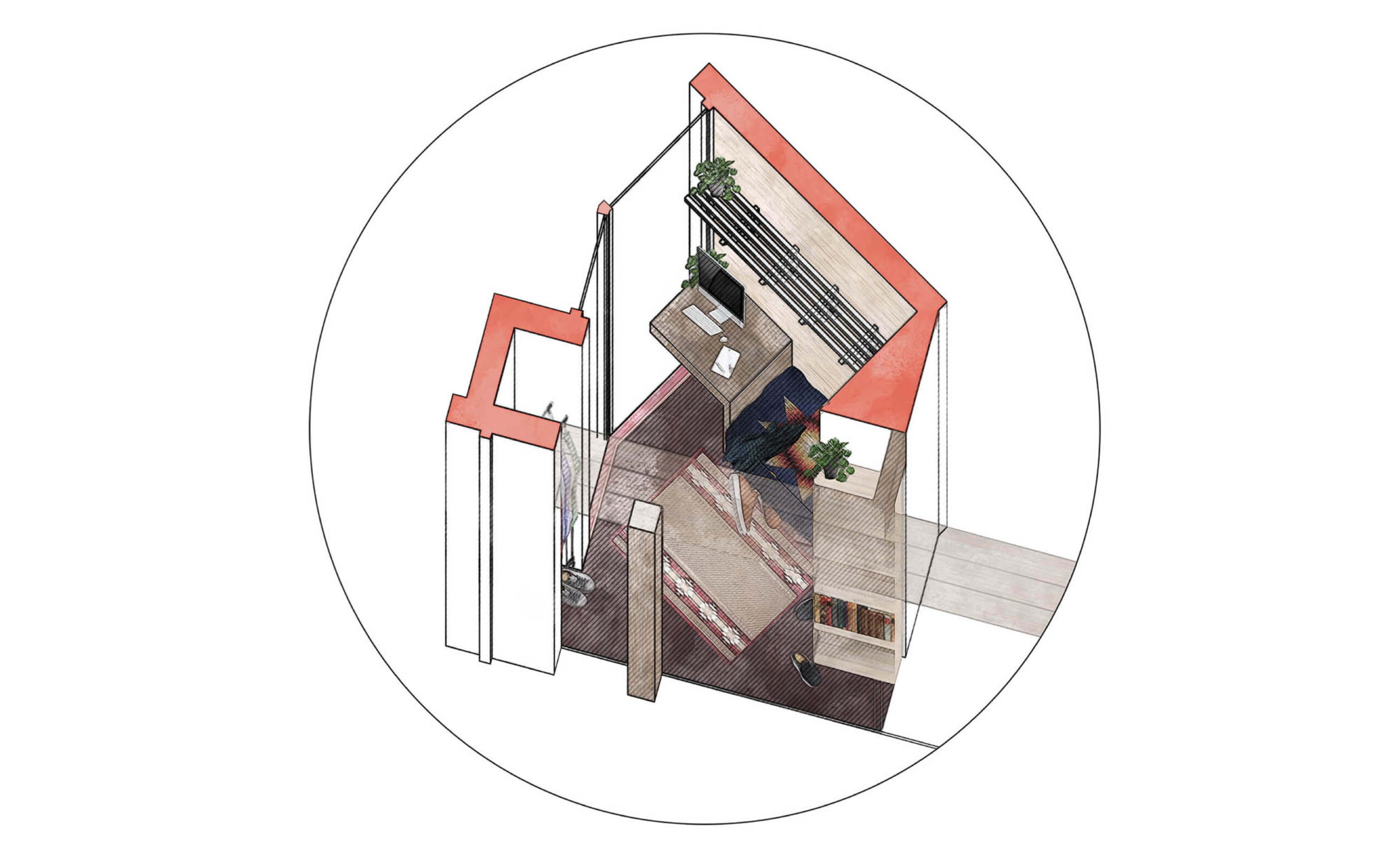
Images 1-7: Forest Clearing School, Blue Jo

Images 8-12: Magic Tree Village, Amanda Hosmer

Images 13-18: Modular Hill, Diego Pineda

Mixed-use Multifamily Housing

Studio Description: 

In this studio, students concentrating on the mixed-use building, from concept to welldeveloped schematic design that will convey site strategy, plan layout, form, materials, and structural approach. The building shall be responsive to the conditions including but not limited to, code requirements for both life safety and zoning, environmental conditions, street life and character as it is and as it could be, and a changing demographic. The building design portion of your work will be composed of a mixed-use building composed of commercial space and residential units and a institutional building.

Images 1-6: Lightwells, Eric Luth

Images 7-10: Market Terrace, Intergenerational Learning Center, Jake Woll

Images 11-14: The Canopy, Addison Peabody

Images 15-19: Boxhuas Apartment, Anastasia Ciorici

Images 20-23: Common Passage, Nicole Cousins

Images 24-27: Ballardian Complex, Weiyu Liao

Images 28-36: Urban Developement, Andreas Bakkeboe

Seattle Exposed // AU 20

Studio Description: 

In this studio, students will be concentrating on the mixed-use building, from concept to welldeveloped schematic design that will convey site strategy, plan layout, form, materials, and structural approach. The building shall be responsive to the conditions including code requirements for both life safety and zoning, environmental conditions, street life and character as it is and as it could be, and a changing demographic. The building design will be composed of a mixed-use building composed of commercial space and residential units and an institutional building.

Images:  Eric Luth

Who’s Looking After The Kids?

Studio Description: 

The pandemic has put in high relief the fact that many Americans, particularly women, are reliant on childcare in order to attend work or school. Single and multi-parent households rely on childcare to survive financially, yet care is often provided in substandard facilities.

-How can we reimagine what a joyful and playful space might look like for young children?
-How can we design for different sizes and shapes of bodies in space?
-What is the role of children in the city?

The site is at 3100 Broadway in upper Manhattan, in a neighborhood which is underserved. The Morningside Heights Housing Corporation has agreed to reduce the size of their current parking garage by 50% and have received funding to develop half of the area. Students will have the option to retain the existing structure, or to demolish up to 50%. The project will face the busy street of Broadway, as well as the residential towers of the MHCC co-op.

Images 1-7  Who’s Looking After The Kids?, Elena Zhu

It is designed for both public and private use, taking into account materials and structure. Preschool kids are the main focus of this project. The objective is to create a building that allows the kids to be able to have the chance to make more movement in one space.

Seismic Design Studio

Earthquakes are a fundamental part of life in the Pacific Northwest. Every year, our collective understanding of the geological faults underneath Washington and Oregon improves, giving a more detailed picture of the seismic risks of our region. While unsettling at times, this reality is both a design responsibility and opportunity. Embracing seismic risk as a fundamental part of building design opens up new modes of thinking, and can reveal new possibilities. Seismic design can accommodate new technologies, new design strategies, and new conceptualizations of building themselves. Students will be challenged to consider seismic issues not simply as a problem to be solved, but as a prompt to re-consider many aspects of building design. This studio will consult with current leading professionals in understanding seismic hazards, and produce an innovative, seismically-advanced, building design proposal. This work will require interdisciplinary thinking, and cooperation between geologists, engineers, architects, policy makers and others.

Images 1-5  Kinetic Canopy, Nathan Brown 

Washi Paper Mill Studio

The important question to ask is not “what” but “how.”  – Mies van der Rohe 


WHAT:

A cooperative washi paper mill and workshop in Ballard.

HOW:

Rules of the game:

1 – construct geo-narratives of site forces at four scales from neighborhood to region

2 – construct a deck of cards based on site analysis and synthesis; deal 8 cards and discard 2

3 – construe the site and program forces as gesture via the cards dealt and touchstone image
4 – construe the poetic logic of structure; add 4 cards from tectonic case studies to complete the hand

5 – join site, program, structure and material in the building, keeping all the forces in play 


Images 1-5  Ballard Paper Mill, Mariele Alarilla 
Images 6-10  Ballard Paper Mill, Luke Barbieri 

PPEH Studio – Housing & Counseling

Place for People Experiencing Homelessness (PPEH) is a 24/7 facility providing walk-in services to those experiencing homelessness. As part of a continuum of services provided throughout the city, the PPEH serves as a place for immediate relief for basic services and care, while working with other agencies and organizations in the region that focus on longer-term housing and counseling solutions.

Images 1-7  The Garden, Andrew Baltimore 

Urban Design for Resilience

Urban Design for Disaster Risk Reduction and Resilience

This interdisciplinary studio supports efforts by the City of Westport and South Beach Community to achieve resilience in the face of earthquakes, tsunamis, sea level rise, and other coastal hazards. Students explore combinations of architectural, landscape, community design, transportation, and land use strategies that anticipate future environmental changes. Such strategies include the design and programming of tsunami vertical evacuation structures (VAS) and their integration into the landscape and community; integrating Westport’s Complete Streets program with its evacuation plan; and envisioning ecologically low-impact uphill developments for current amenity and future refuge and resettlement.

The graduate section of the studio also coordinates with an on-going National Science Foundation (NSF) Coastlines and People (CoPe) project to develop a visual and textual geo-narrative of past and future hazards and environmental change in the community. The student design explorations and the geo-narrative – a platform for engaging community members in resilient strategy development – make use of a high-resolution 3D digital model of the community and its landscape.

Student work is of direct use to the community in on-going planning projects; receive national attention through the NSF CoPe project, “Coastal Hazard Planning in Time”; and receive international attention through the inter-university ArcDR3 Initiative, including presentation at the 10th anniversary of Japan’s 2011 Tohoku earthquake and tsunami in March 2021. Lessons from that and other disasters and recoveries around the Pacific also inform the studio work.

Images 1-6  Cedar Retreat: Coming Full Circle (Or Almost), Amanda Hosmer

Images 7-13  Floating Neighborhoods: Amphibious Housing Prototypes, Variell Limas

Images 14-21  The Westport Ocean Market VES, Lucy Zhong


Institute for the Blind & Visually Impaired

Tiresias Institute for the Blind & Visually Impaired

According to the Centers for Disease Control, approximately 12 million people 40 years and over in the United States have vision impairment, including 1 million who are blind, 3 million who have vision impairment after correction, and 8 million who have vision impairment due to uncorrected refractive error. This particular set of conditions also effects growing numbers of youth and young adults, and together they form a community of all ages, genders races and ethnicities. The mission of the Washington State School for the Blind is to provide specialized quality educational services to visually impaired and blind youth ages birth-21 within the state of Washington. It is located in Vancouver, WA with a regional office in Pasco.

The Tiresias Institute will be a satellite facility and outreach center aimed at the entire spectrum of the visually impaired community. It will offer educational opportunities and career services, along with cultural and community support services for blind and visually impaired youth and adults in Seattle. It will also serve as a site to host short-term programs for students visiting from the main campus and throughout the state, so that they can benefit from engaging in the urban culture of Seattle. Although relatively small, this facility will provide vital educational, cultural and social opportunities to blind, visually impaired and sighted constituencies, and will be universally accessible. This project aspires to set the highest standards of architectural quality and environmental responsibility while also striving to physically inspire its students and visitors to explore and appreciate built and natural environments with all of their senses.


Images 1-6 Gateway Tiresias Institute for the Blind and Visually Impaired, Andreas Bakkeboe

Images 7-12  Tiresias Center for Visually Impaired and Blind; Multifamily Housing, Peter Ostergaard


Re-Building Community

In ARCH 404 “Re-Building Community”, student design teams produced design proposals for a community-based brief in Seattle’s Central Area–a neighborhood striving to preserve affordable and socially connected communities that have been threatened by rising real estate costs and other threats to long-time residents. The main focus of the project was a community center in support of area seniors and youth aging out of foster care. Additional community amenities such as a community kitchen and a food coop will serve all residents of the neighborhood.

The site, located on the corner of 30th Ave. S. and S. King St., currently supports an existing center that is beyond repair, and its parking lot. The real-world concept for the project is to re-build the center with an updated social vision and remove parking from the surface to increase the usefulness of the beautiful property. The current plan calls for affordable housing on a substantial portion of the site to provide initial development and construction funding, as well as ongoing long term revenue. However, for this studio we substituted complementary programming in order to maintain uniform planning and construction logic in support of the main goals of the 404 studio: sustainability, integrated structural planning, and focused design of the building envelope in consideration of energy and daylighting goals, the structural scheme, and façade composition, materiality, and character in relation to place.

This studio introduced students to the collaborative aspects of building design as encountered in contemporary practice. Teams of 3 or 4 students produced a single design solution to the project brief. The studio team worked together to develop proposals, but each member would also have an issue on which they are expected to develop research and take the lead in applying research to the group’s design.

Images 1-9 Heartwood Community Village, Sean Eakman

Images 10-15 Dune Bridge, Blue Jo

Images 16-22  The Coffee Lounge, Nicole Mygatt


Positive / Negative Studio

The general requirements of the program – making and displaying photography – need individual interpretation. Each of you will determine the idea of visual art that will inform and guide the design of the building. You will each develop your own program depending on the selected photographer, process and idea, but you must include space for making and showing the work and telling the story of the project. Program elements need to be given a hierarchy and interpreted according to a story or poem. Light is both fundamental to photography and to our understanding of void or space. The rooms for displaying and making photographs will respond to particular qualities of natural light and shadow throughout the day, season and year, guided by ideas and processes of photography explored in the project. The display/gallery need not be on Shilshole Avenue, but it should be readily accessible from the street. Room for making images will vary with the photographer. For some, studios and workshops may be important, for some traditional dark rooms are needed while others will explore digital techniques of development and reproduction. The diversity of activities broadens the scope of the photographer’s work, and adds a degree of complexity and flexibility to the character and quality of the space.

Images 1-5 Positive / Negative, Angus Bastone

Images 6-10 Positive / Negative, Nayana Cardoso

Images 11-14 Positive / Negative, Nathanel Alex Cohen 

Images  Positive 15-20 / Negative, Trong Luong

Seattle Science Fiction

The Comprehensive Plan SEATTLE 2035 is: “A 20-year vision and roadmap for Seattle’s future. Our plan guides City decisions on where to build new jobs and houses, how to improve
our transportation system, and where to make capital investments such as utilities, sidewalks, and libraries. Our Comprehensive Plan is the framework for most of Seattle’s big-picture
decisions on how to grow while preserving and improving our neighbor-hoods.” Basing its plan on the data of demographic, social, economic, and environmental change, the city’s office of
urban planning extrapolates from facts to create a vision of Seattle’s urban future.

What if we don’t base our design on given facts but on speculative fiction? What if we don’t begin by analyzing present conditions to predict future settings but start by imagining future possibilities – however fantastic – to reveal our hopes, dreams, and desires? What if we translate our imaginaries into architectural design, into a project of social, cultural and environmental change? In this studio, we will use a variety of science fiction and fantasy movies, suggested and self-selected, to learn from their imaginativeness, from their narrative strategies, from their visionary and visual powers — to rethink our design strategies for Downtown Seattle.

Slide 1, Emily Pratt

Slide 2-4, Madhurima Manchala

Slides 5-6, Tera Ponce

Slides 7-9, Tova Samantha Beck

Positive / Negative Studio

A photographer has purchased a 25′ X 100′ lot at 5223 Ballard Avenue NW, thus realizing a lifelong dream of constructing a place to make and exhibit photographic work on one site. This building will foster the photographer’s exploration of ideas and techniques of a particular photographer whose work has been inspirational, and will present the artist’s idea of image making to the public.

Students were challenged to go beyond the traditional graphic representations of the site – plan, section and elevation – each student individually analyzed the larger site context photographically. Students evoked the style of a particular photographer in documenting the neighborhood allowing for an unconventional way to explore the context of the site and draw inspiration for the resulting architecture.

Image 1, Jenny Salas-Robles

Image 2-5, Maggi Su

Image 6-8, Hailey Alling

Image 9-12, Bao Vo

The Nehemiah Studio 2.0

Student design teams will be producing proposals for a community-based initiative in Seattle’s historic Central District. The Nehemiah Initiative is pursuing multiple strategies to mitigate gentrification and displacement through the development of the real estate assets of historically Black churches. Graduate students in an interdisciplinary Autumn studio have been working on several sites to articulate the social, urban, and economic issues and test feasibility for development scenarios with the goal of providing affordable mixed-use projects according to community needs and desires to retain, bring back, and attract new residents. Our studio will focus on one of the sites.

This project has the capacity to show long-term residents a successful path to maintaining their community in the face of urban transformation. The site, located on the corner of 23rd and Olive, currently supports the Ebenezer AME Zion Church and a YMCA. These institutions are taking a bold step to re-make themselves in order to provide the community with increased amenities and badly needed affordable housing. You will have the benefit of the Autumn studio’s research and analysis. And, you will have the opportunity to work with real-world client to help solve challenges they face today.

Images 1-4, Aubree Nichols

Images 5-7, Camille Fain

Images 10-12, Kendal Schorr

Furniture Studio – Design & Fabricate

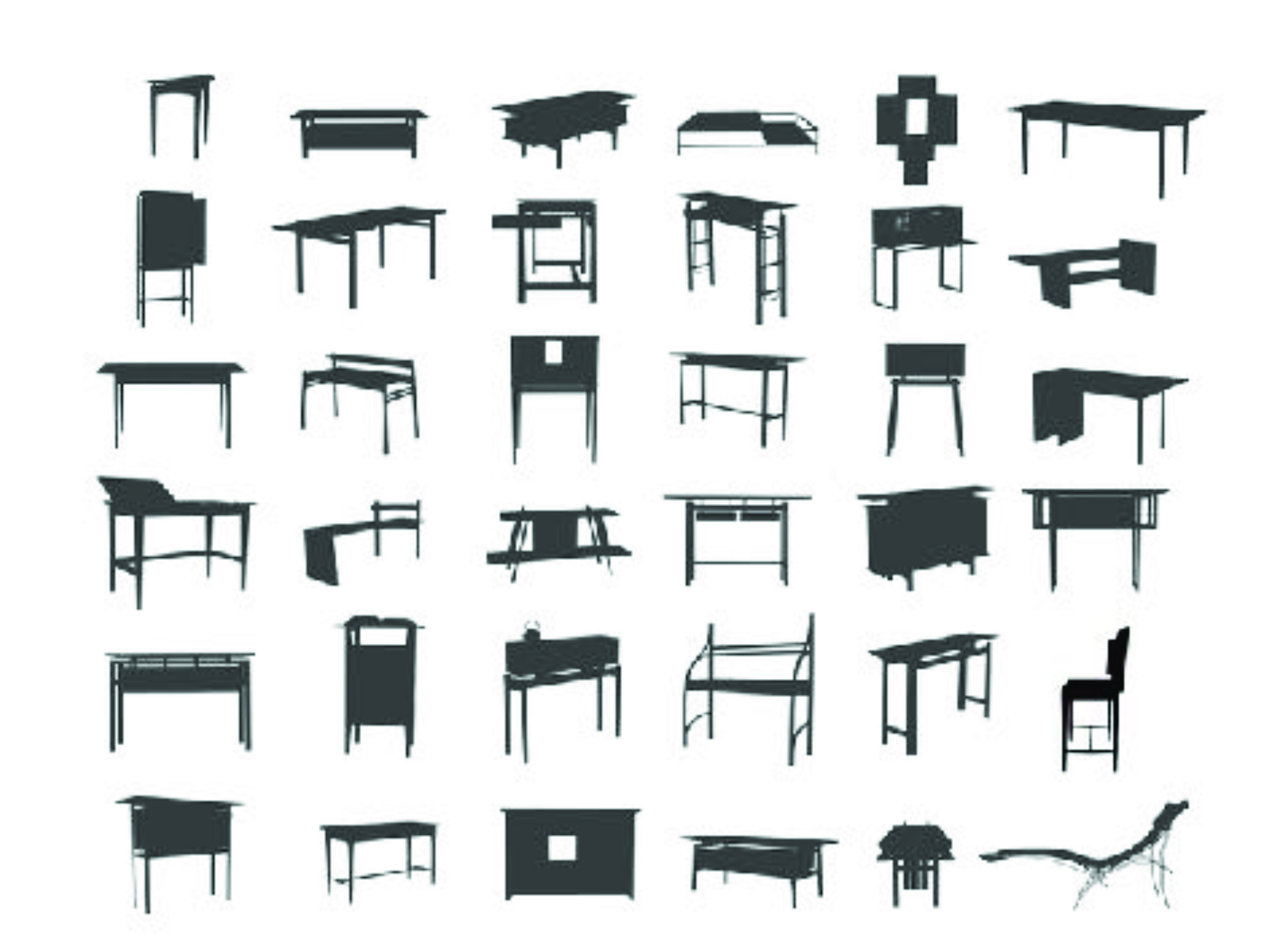
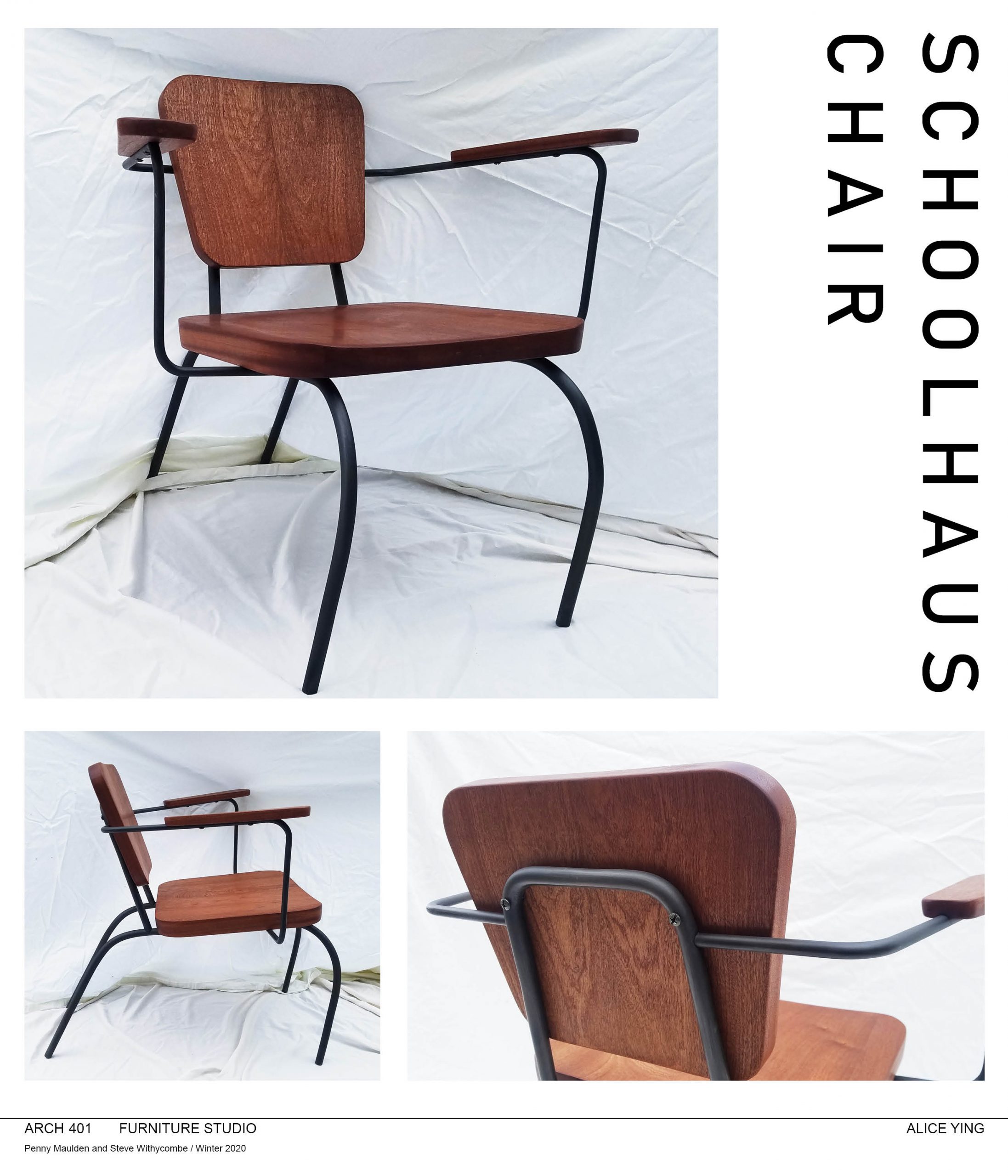
This course involves the design and construction of a piece of furniture such as a small table, case, chair, bench or stool or an architectural element such as a door or screen. The approach to the studio is based on the “Studio Furniture” movement in the United States, where individuals with small shops design and build one-of-a-kind or limited production furniture pieces. In this way, the furniture that is designed is intimately associated with the tools and processes that are available in the CBE metal and wood labs, giving direction as well as setting constraints for the project.

Materials in past projects have varied, but have been predominately wood or a combination of wood and steel since the shops are better equipped for working with these materials. The course will require completion, final review and presentation of a project. The objective is to understand designing and making as inter-dependent processes.

Images 1-5  , Schoolhaus lounge chair, Alice Ying

Urban Waters Research Station

Studio Description: 

An international consortium of activists, philanthropists, scientists, and artists has established an endowment to fund a deep and broad study of Puget Sound waterways and to ponder the future relationship of all life forms in the region in the face of the mounting climate crisis. They know that the only way to do this is to harness the power of science and art together. Science sets out to separate parts and pieces, look closely, count and measure, identify and analyze problems, and offer pointed solutions. The artist is seen as the one who intuits a whole from fragments of perception – offering visual and verbal languages that evoke narratives for our place in the world. But scientists also intuit and envision, artists also take things apart, analyze, remix, and repurpose. By inviting artists and scientists to share space in-residence at the water’s edge, vital links between natural processes (destruction, restoration, transformation) and human populations in the Puget Sound will be made.

The research station at Magnusson Park will be one of many stations arrayed along the water’s edge from Tacoma, WA to Victoria, BC. These stations will host artists-in-residence and scientists-in-residence to live and work together for 3 to 6-month stays. It will include lab spaces for the scientists, studios for the artists and common spaces where they can discuss their interests and discover possible synergies between them. The station will be fully equipped for different types of scientific and artistic exploration, including a number of research vessels that will be kept in a boat shed on the water. An observation space will allow for the recording of atmospheric and experiential data.

Images 1-7  Urban Waterways Research Center, Eric Luth

Images 8-11 Explore/ Retreat, Lara Tedrow

Images 12-13 Open Waters Research Center, Nathan Brown

Images 14-15 The Research Station, Kim Lusk

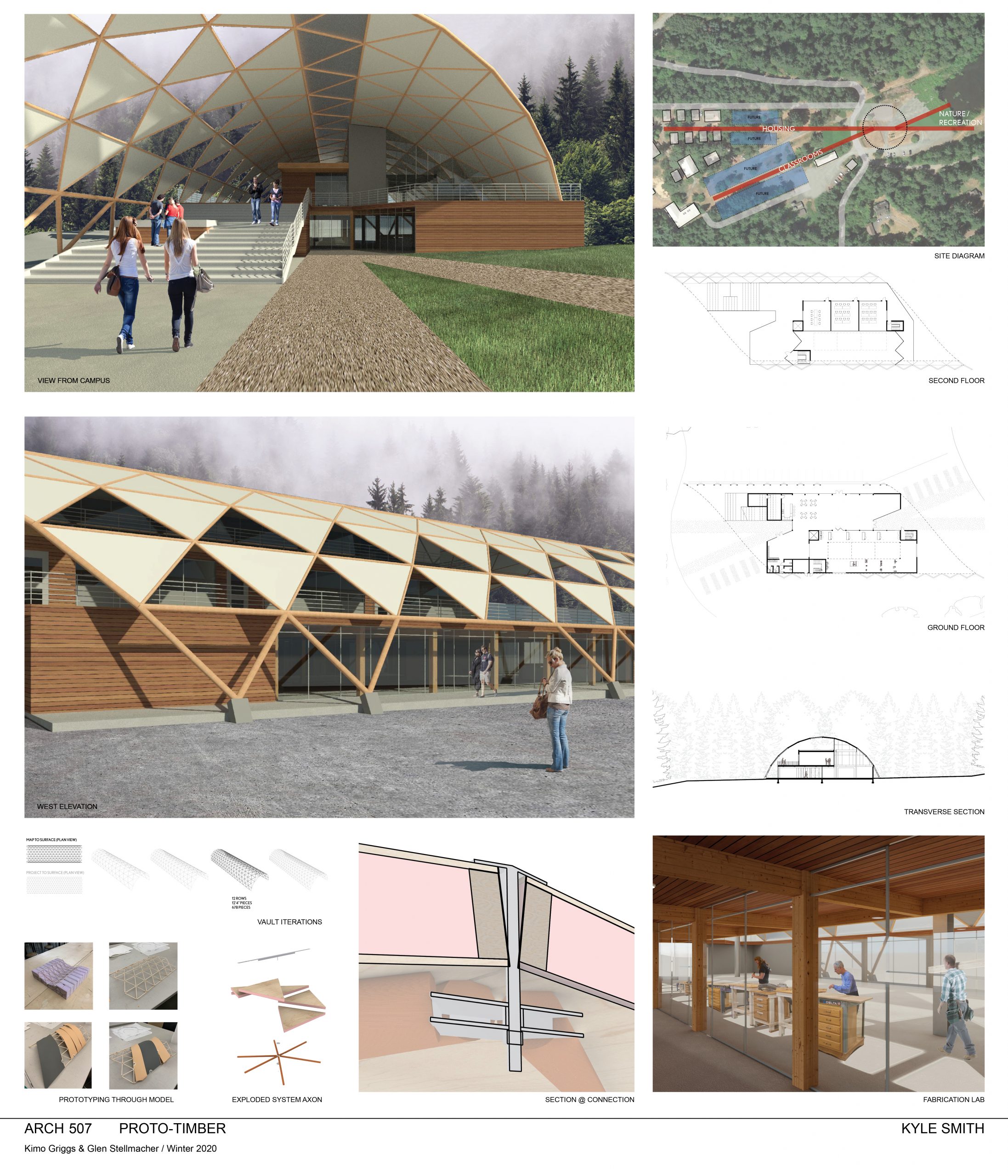
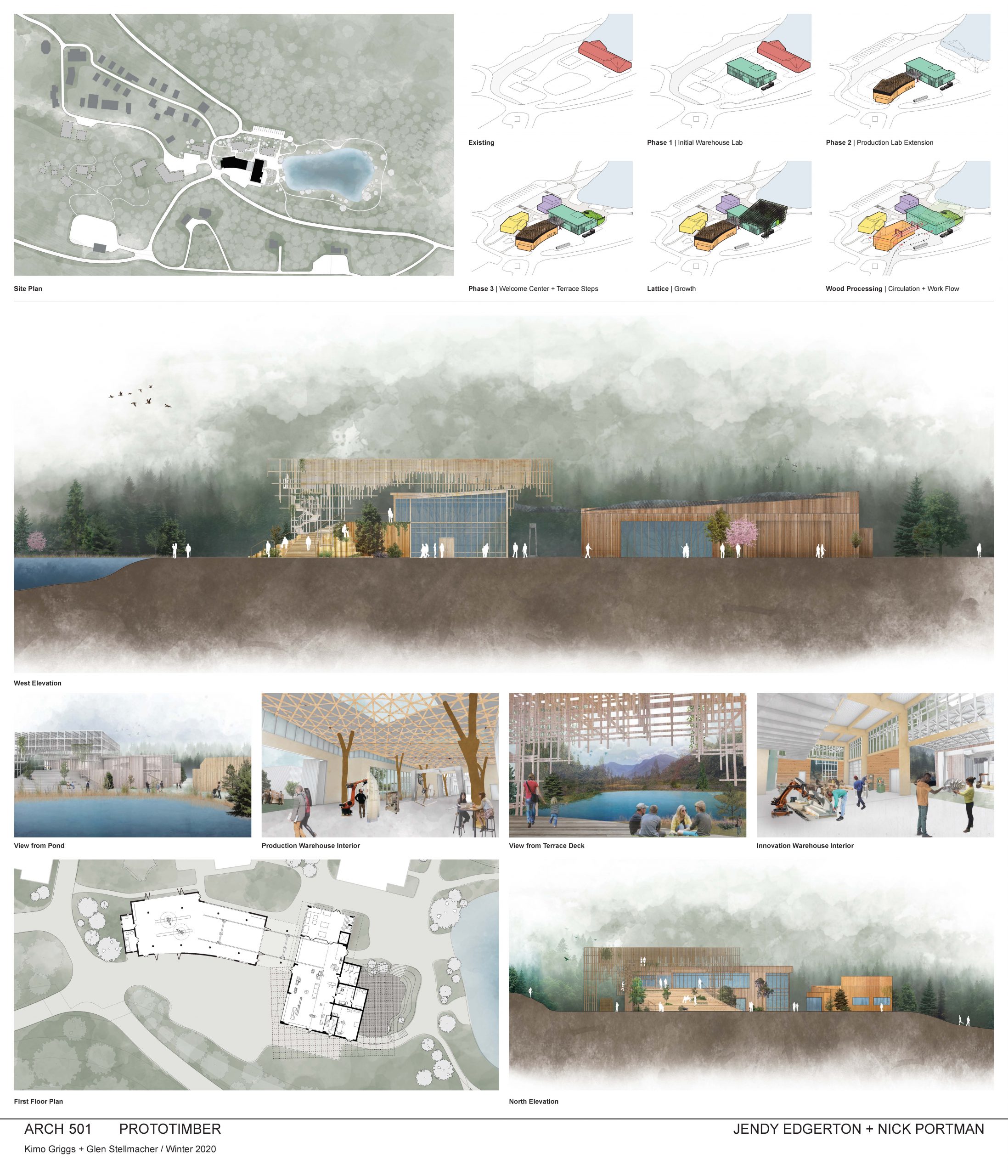
ProtoTimber


Kimo Griggs, Glen Stellmacher Winter 2020

Course Description

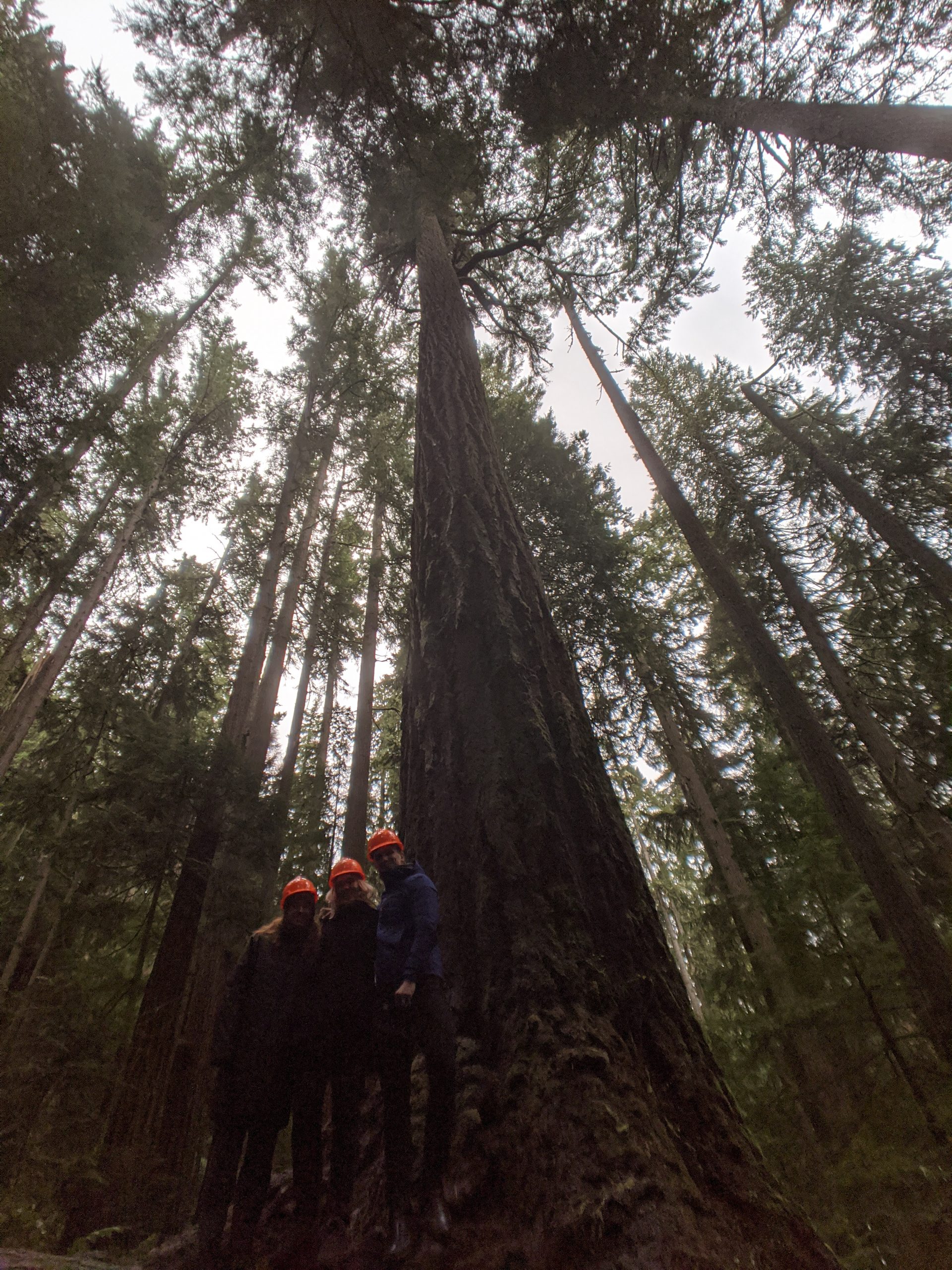
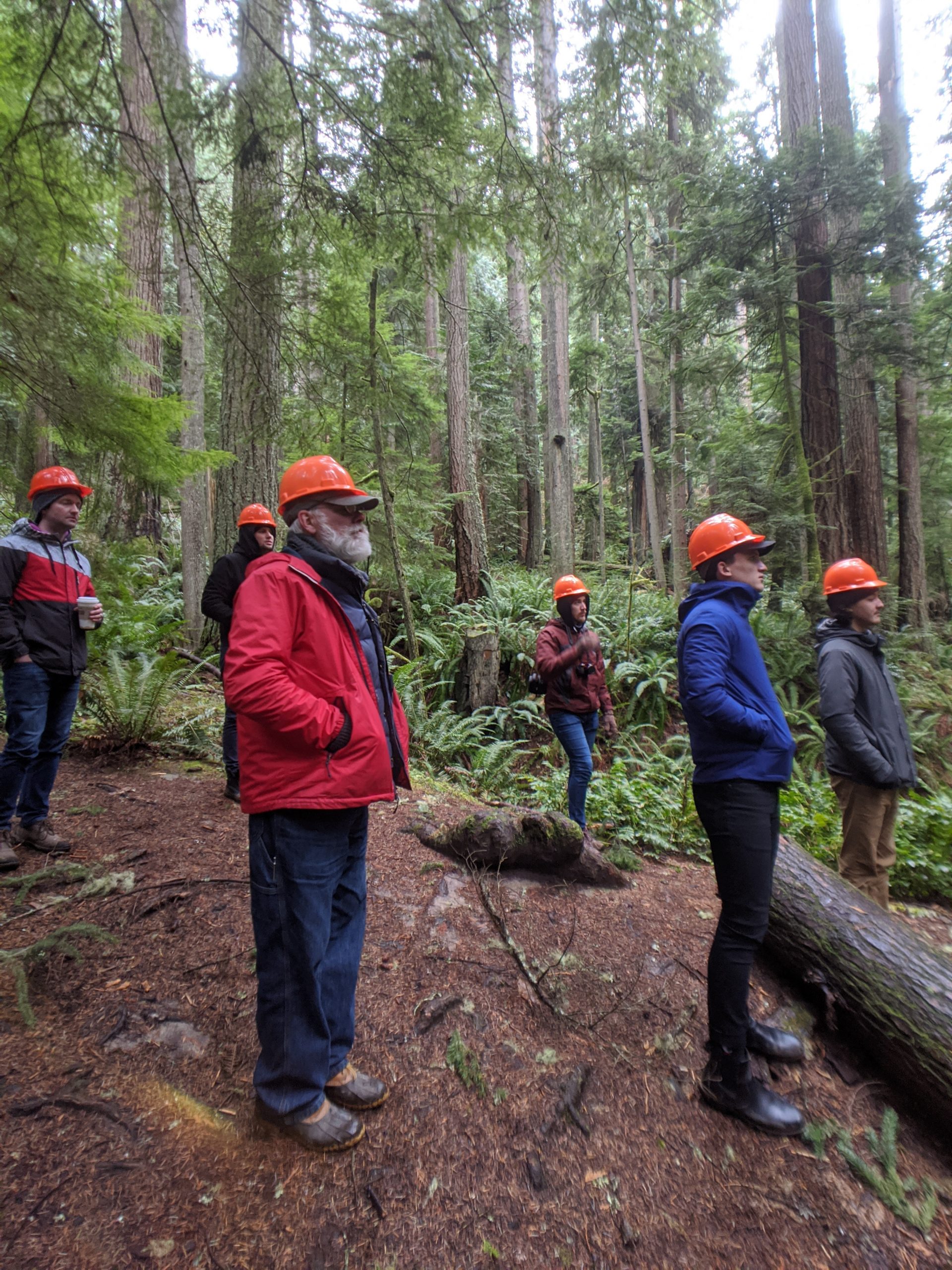
As our world has evolved from flat and personal to round, interconnected and interdependent, the decisions we make as architects affect broad systems rather than isolated or discrete moments. We employ a broad, systems approach to examine the consequences and potential of architectural design, including ecology, structural design, silviculture, social value, embodied carbon, economic empowerment, material properties, empirical desires and more. The proposed studio will use design as a mechanism to prototype broad systematic processes within this context. The intent of the studio is to propose and develop alternative methods of architectural practice and project delivery, specifically including design and prototyping related to the new Rural Forest Technology Hub at the UW Center for Sustainable Forestry (UWCSF) in Eatonville, WA. During the design process students will engage directly with UWCSF staff to propose and develop tectonic systems that engender sustainable forest management and ecologies. Additionally, students will develop new methods for scanning forest resources and integrating forest resource criteria into the design process. Students will source material directly from UWCSF and use the landscape as an open-air lab. This Studio will require an applied, prototypical approach to architectural design that addresses questions of how architects and stewards of the landscape can operate on an integrated level.

Making the Invisible Visible


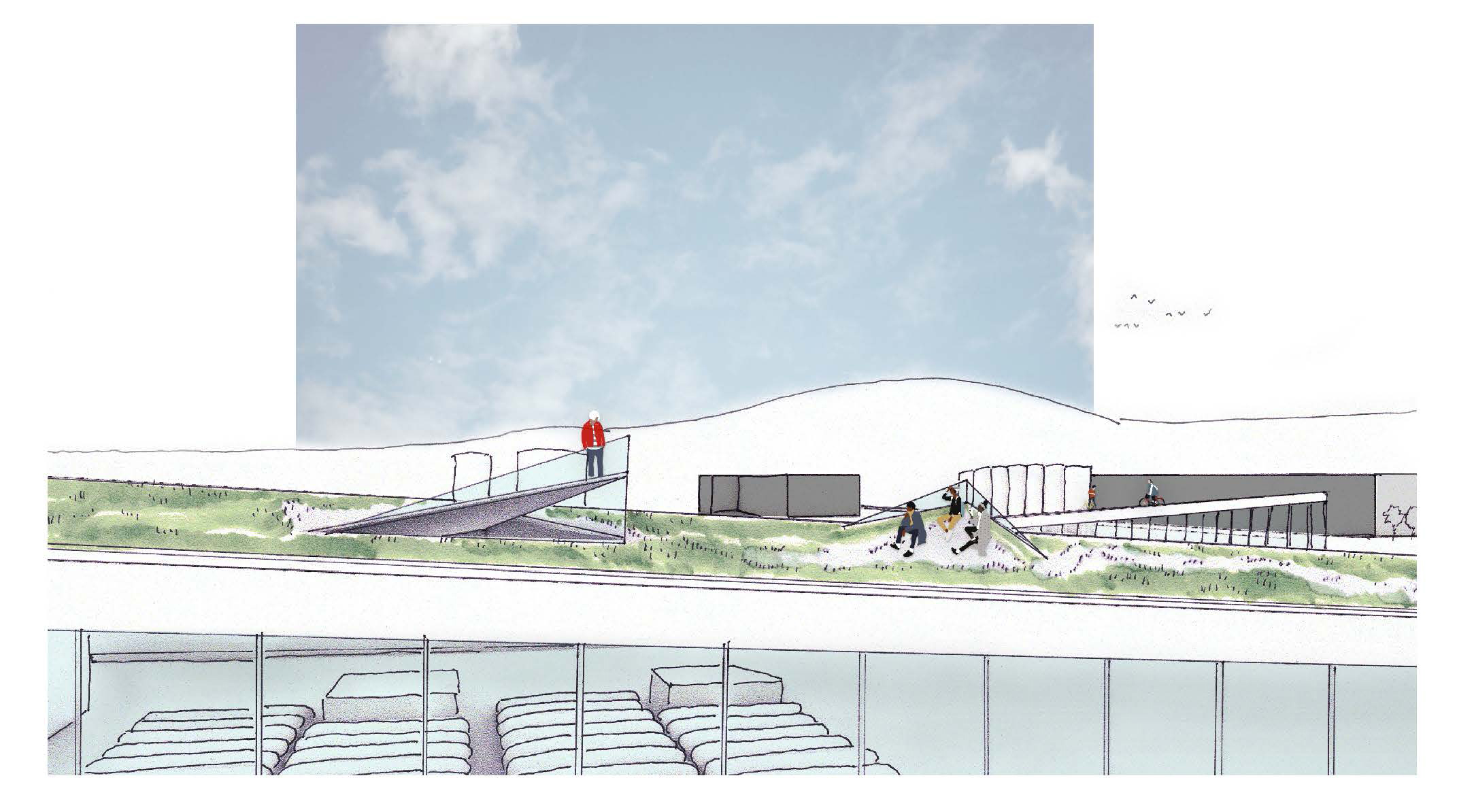
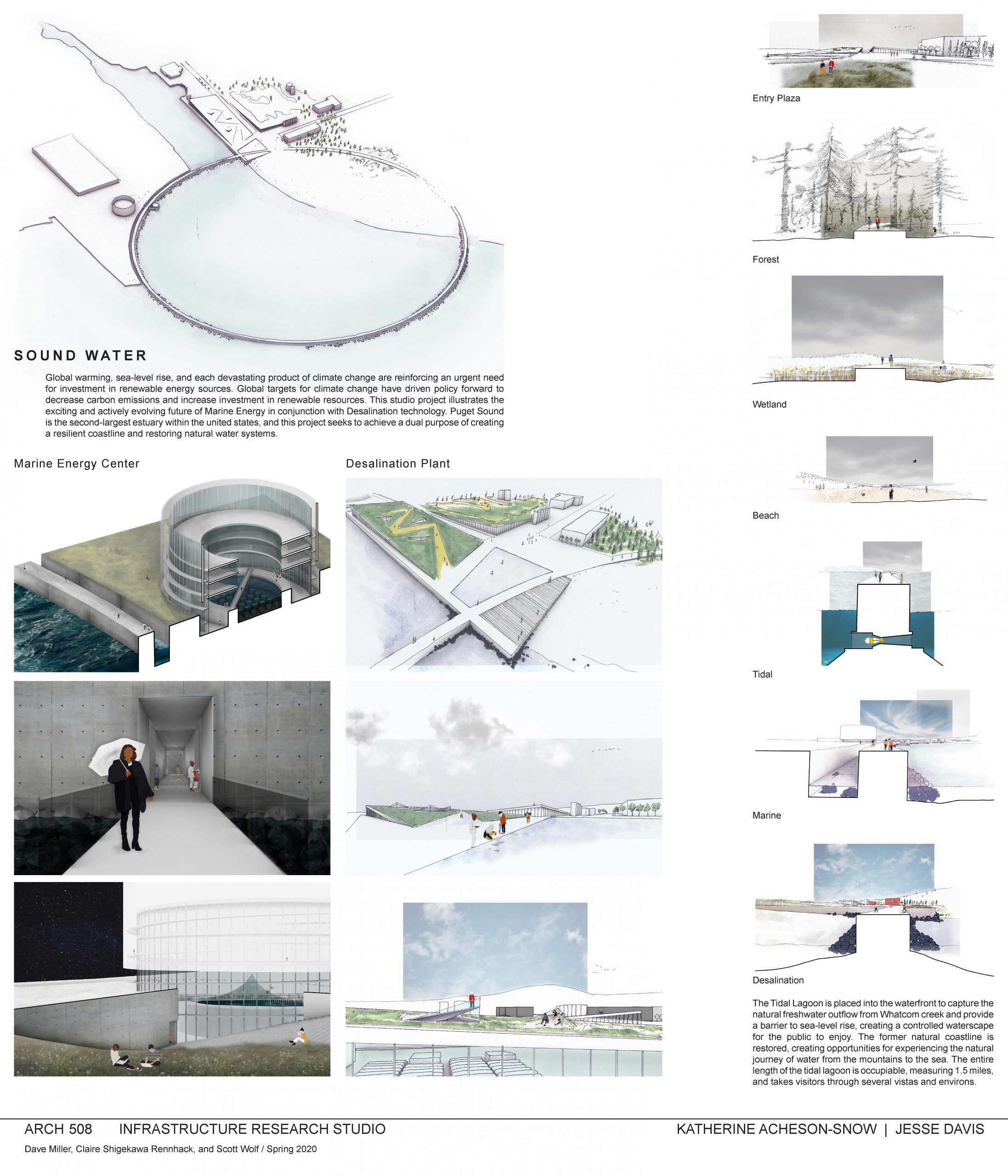
Dave Miller/Claire Shigekawa Rennhack/Scott Wolf

Course Description

The studio objective is to expose students to Infrastructure as Architecture. This Arch 508, Research Studio is a design laboratory investigating the architectural potential of critical infrastructure projects. Infrastructure facilities – waste disposal, transfer stations, water treatment plants, energy facilities, transportation hubs – are too often regarded as utility complexes without architectural merit. In reality, they are architectural problems with tremendous design upside. Historically, large scale infrastructure projects have been approached with a segregated, three-step process – they are first designed by engineers to efficiently and effectively meet performance criteria, then” wrapped” by architects in a cost-effective manner, and lastly hidden from public view by landscape architects. In this typical model the design process is focused almost solely on solving the engineering problem with limited focus on design or how the facility relates to the context in which it is placed, resulting in
projects that miss significant opportunities to positively contribute to their surrounding built environments.

This studio will explore the potential of a more integrated approach with strong design concepts that frame infrastructure as public architecture. Students will explore issues of urban context, site analysis, urban design, state-of-the -art infrastructure technologies and the architectural design of an infrastructural facility including the development of professional communication skills in architecture. While challenging the students to envision what the infrastructure problem might become, this course also requires students to design buildings that fulfill the functional requirements of a diversity of occupants, while addressing life safety, structural and tectonic issues.

Waterfront Recreation Center


Senan Choe Winter 2020

Course Description

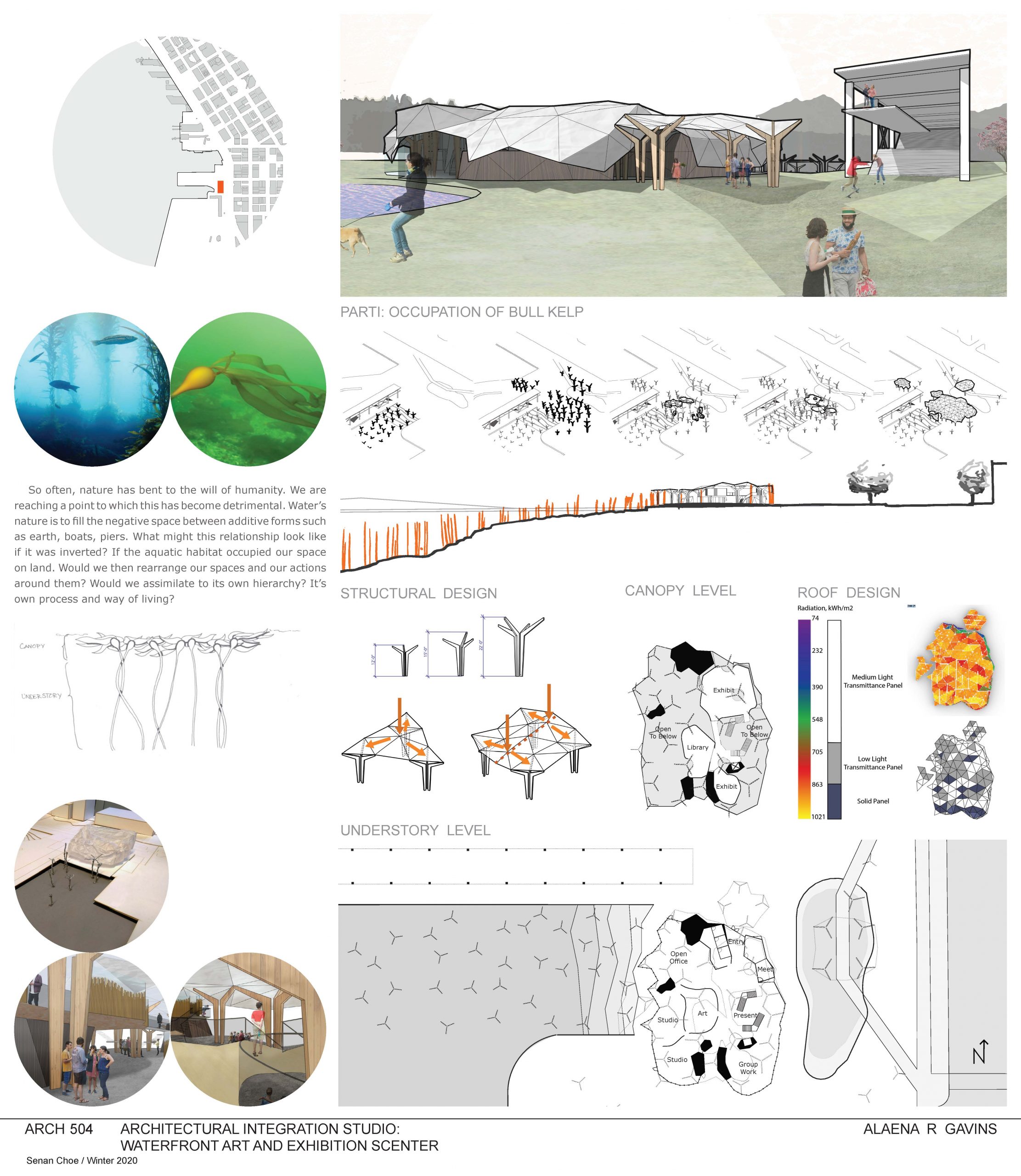
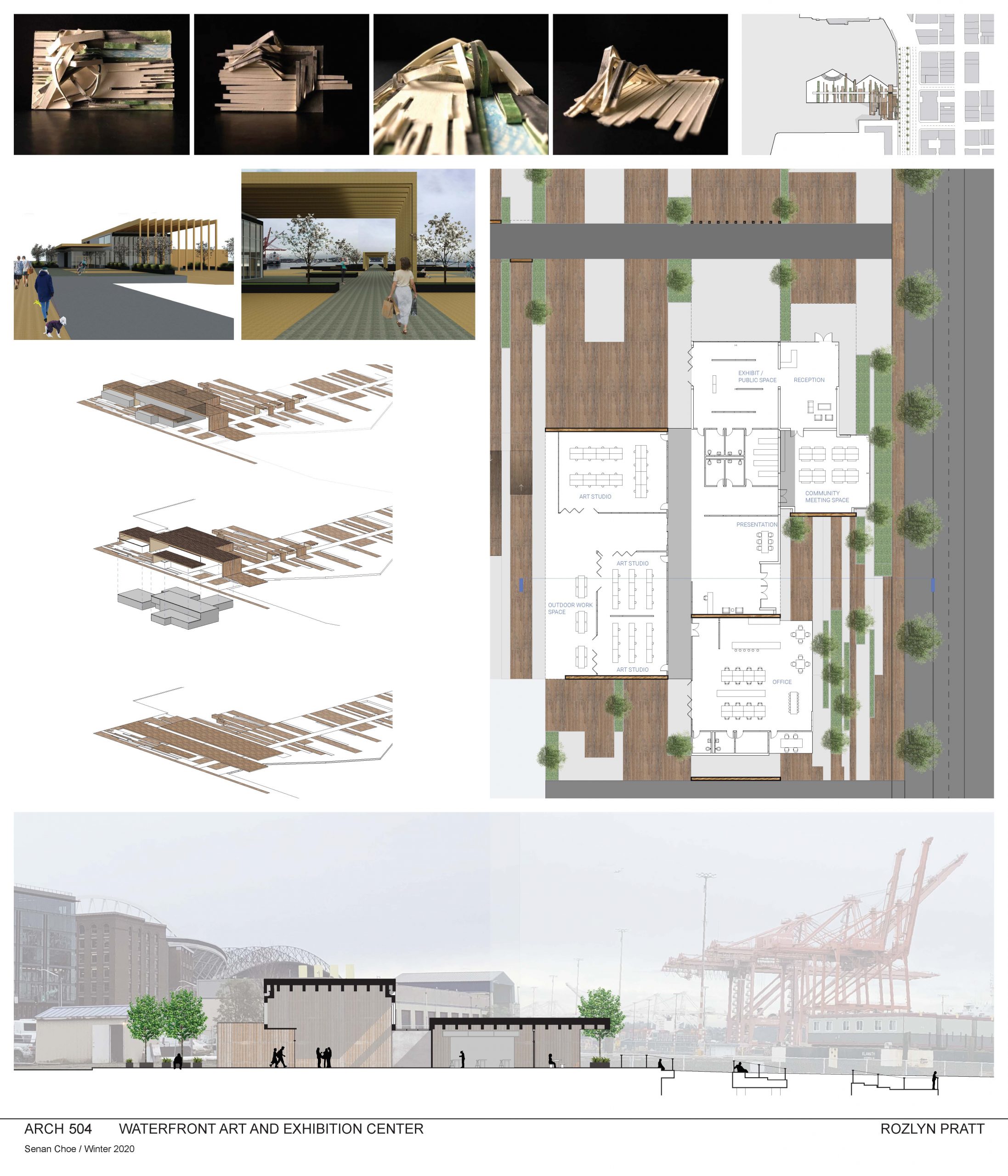
The project is a new public arts and exhibition center that provides educational, production and display venues for local youth artists at the site and along the new pier. The new public arts and exhibition center is home to a local non-profit organization, such as Urban Artworks, The Creative Advantage, and Sawhorse Revolution, that provides opportunities for Seattle youth to work with their hands in learning new skills and finding outlet for their creative spirits. Educational and production facilities are integrated with rotating exhibition spaces on site, with the option to extend to the new waterfront pier component of the Seattle Waterfront Project, and beyond. The project site anchors the southern end of the new waterfront development and is at the intersection of Pioneer Square, SODO, and the International District. The location sets the stage for a public celebration of the power of making, and of the creative collaboration possible between the community and the city youth.

Habits + Habitats


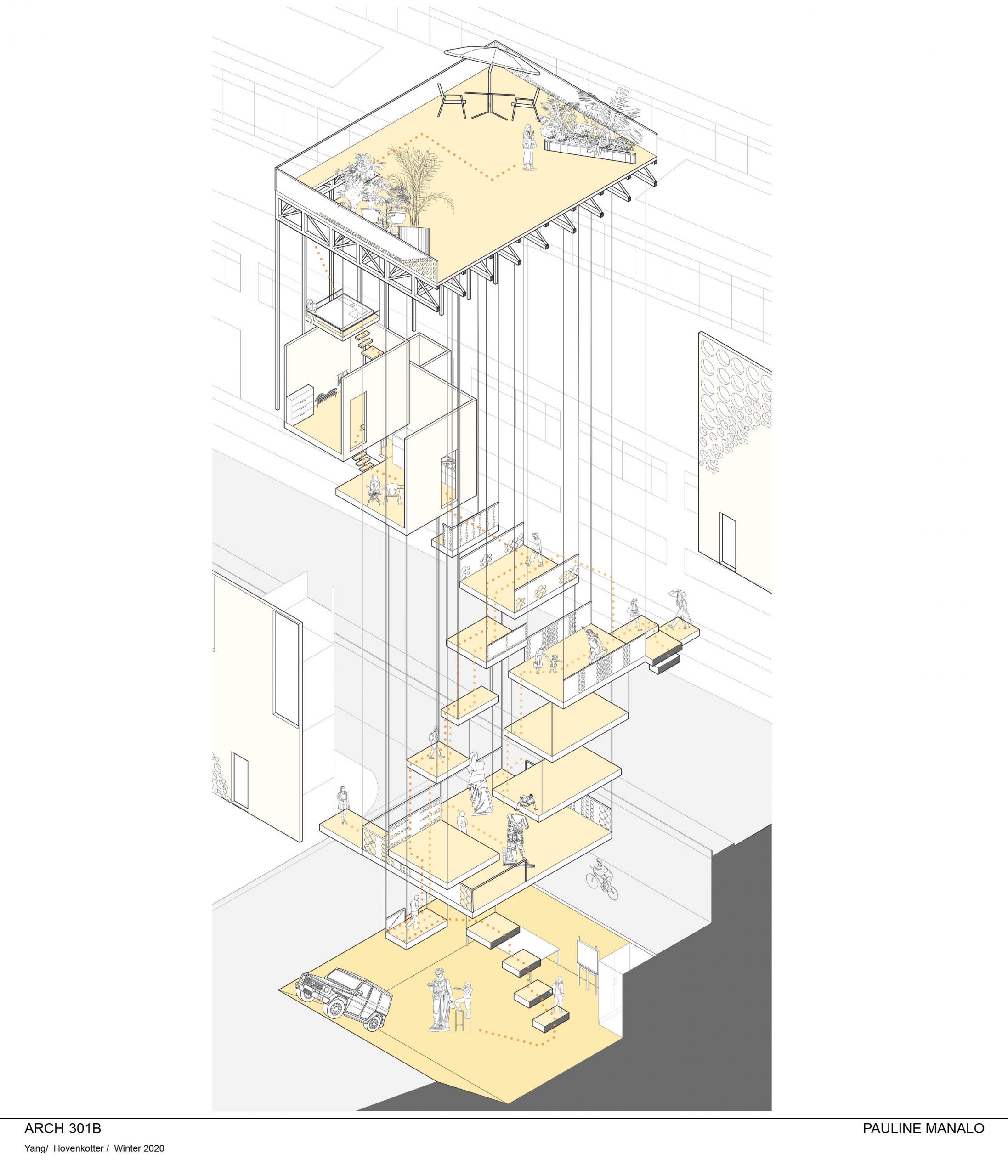
Angela Yang and Kyle Hovenkotter Winter 2020

Course Description

The production of art is inextricably linked to architecture. Beyond the overlap of methods between the two disciplines (Conception, Design, Iteration, Craft, Representation), both art and architecture fundamentally rely on considered experience and the establishment of a relationship between viewer and content.

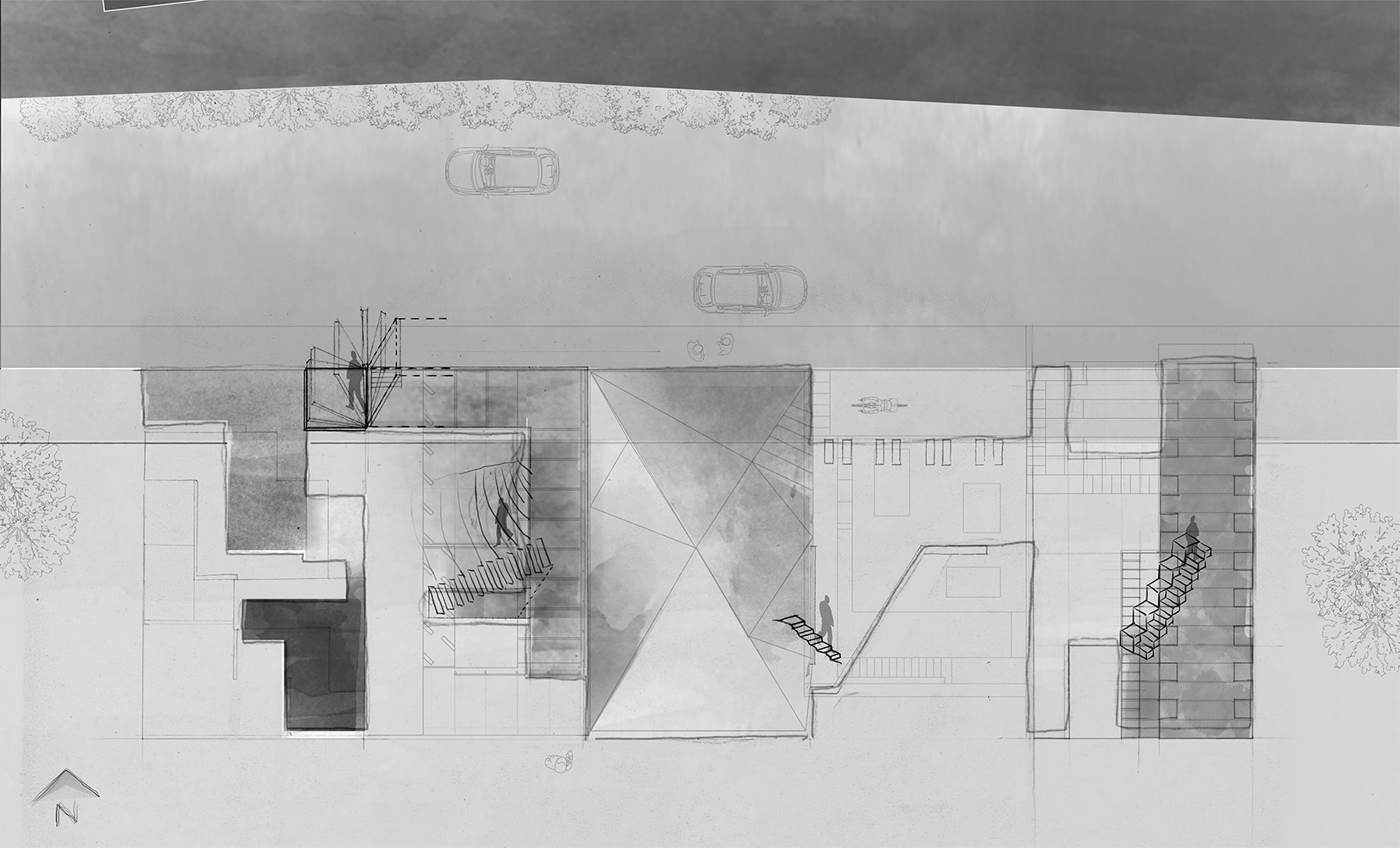
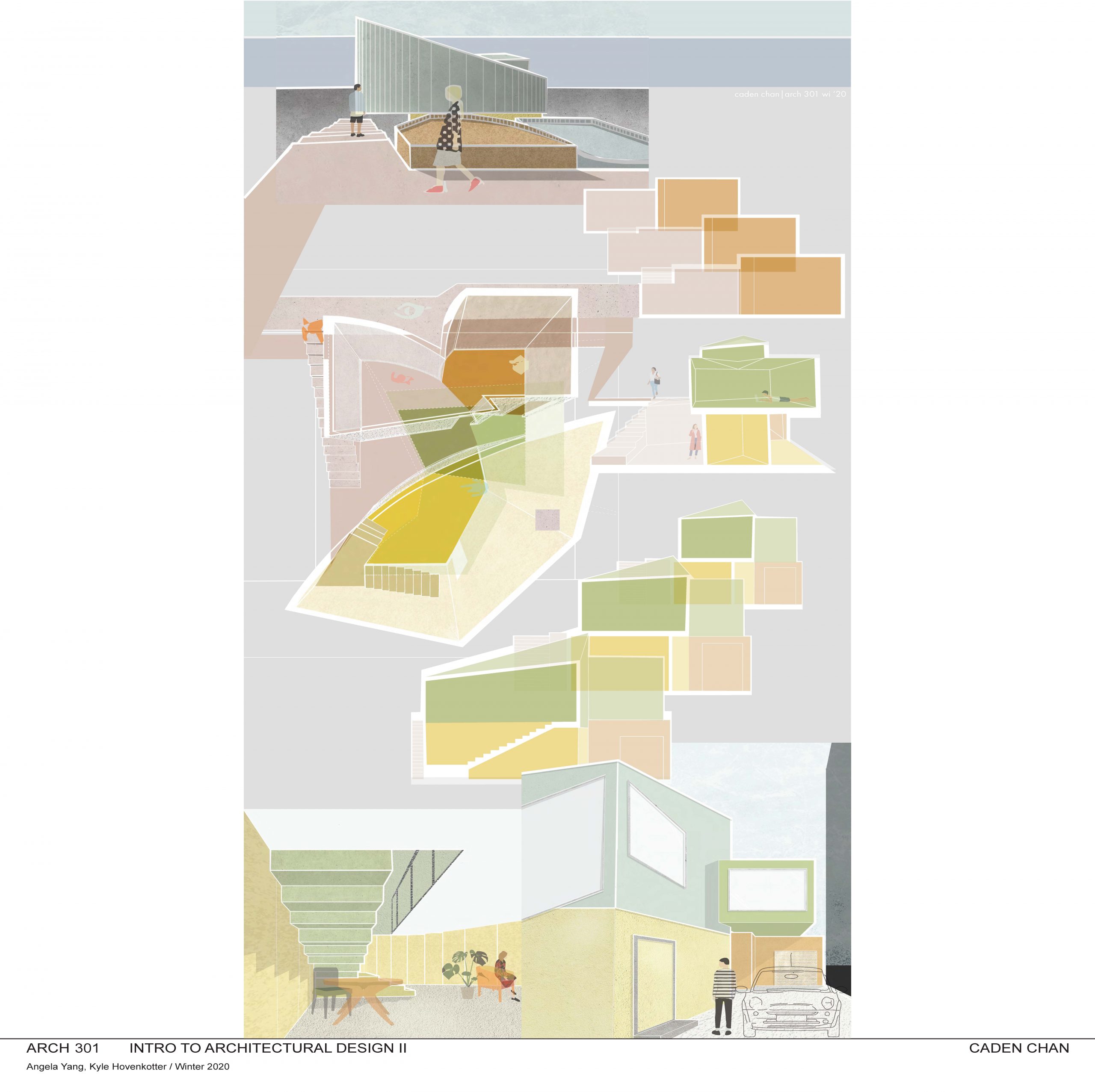
In their final project, students take advantage of these similarities as a means to impact their designs conceptually, tectonically, experientially and urbanistically in the form of 5 collectives of live/work units for hypothetical artists. Composed in a rowhouse-style subdivision, each collective consists of 5 live/work units, each designated to a student and designed using the work of a prominent immersive sculptor of choice as the basis for an architectural language and concept. Programmatically, each unit houses spaces for living, working, and exhibiting, and collectively, all exhibition spaces are connected, allowing users to move from one gallery to the next. The site is located in the Northlake neighborhood in Seattle, just west of Gasworks Park. Consideration of the elevation change from Northlake Way to Northlake Place and the necessity to incorporate but not disturb the Burke Gillman Trail added the urbanistic dimension to the final project.

The 25 live/work units are manifested into 1:2 composite drawings (originally planned to be 36”x72” banners for the review) and the 5 collectives are expressed in one diagrammatic drawing per group, illustrating the connective path between their projects. “Habits and Habitats” is a dichotomy between inspiration and individual expression, private and public space, interior and exterior, and individual and collective efforts.

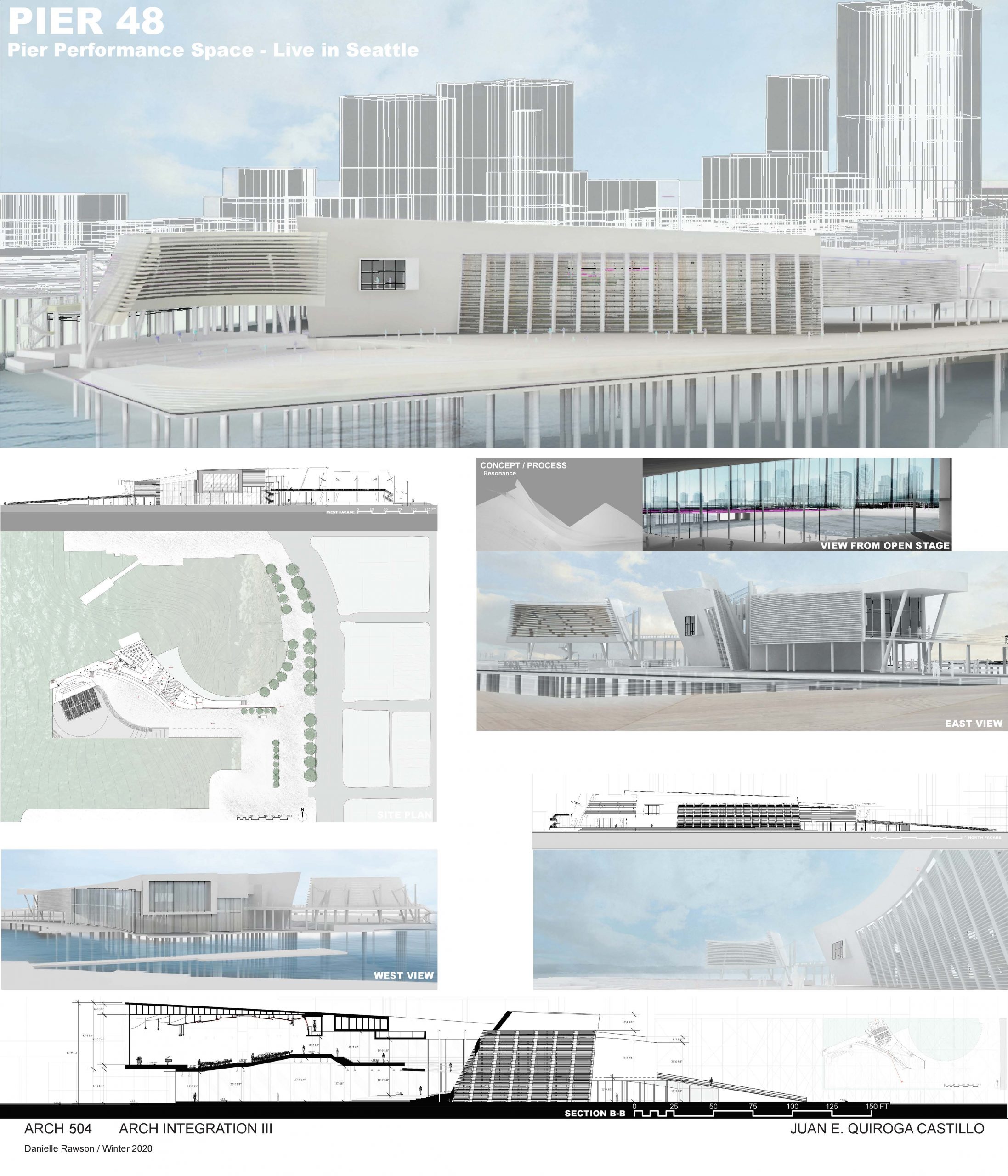
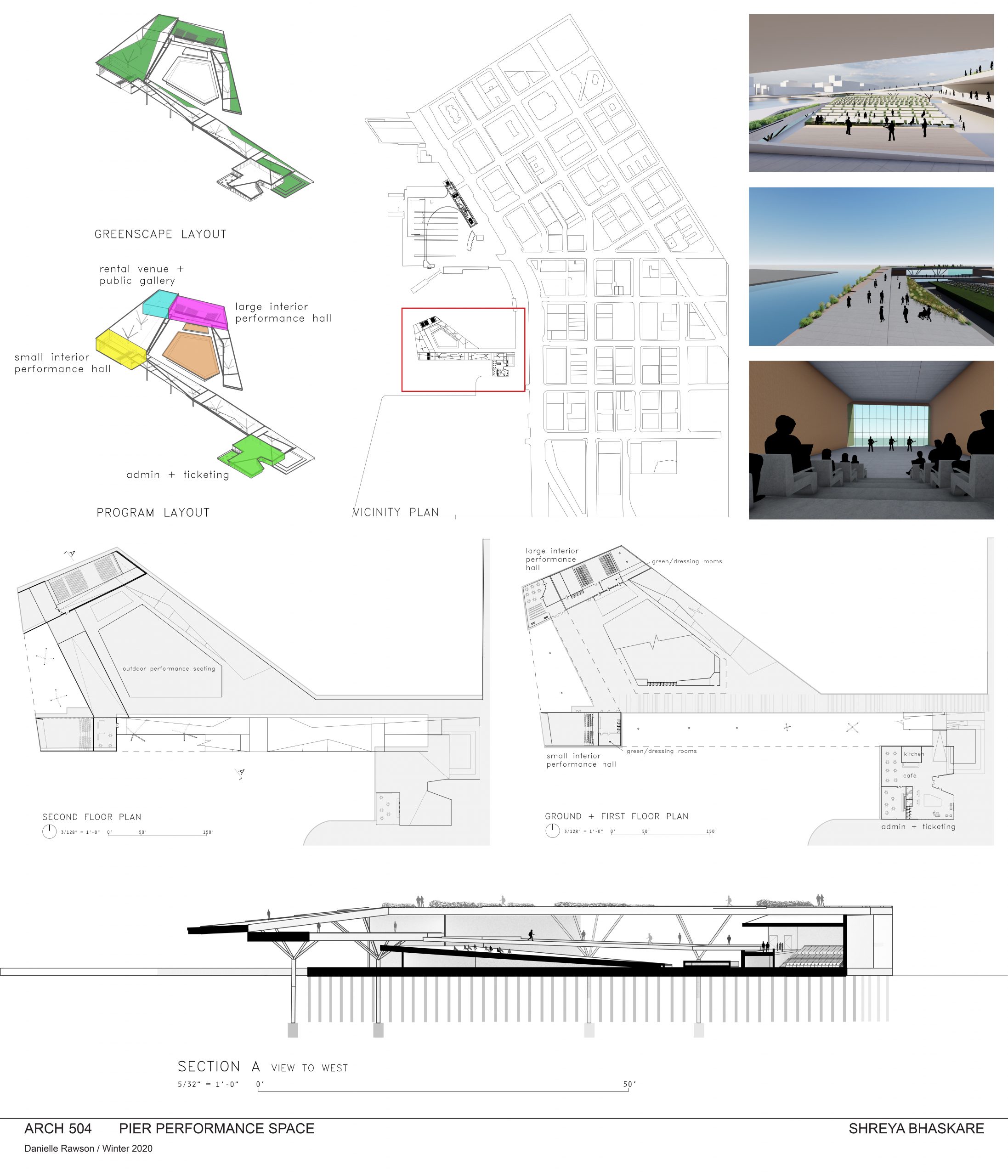
Performance Space at Pier 48


Danielle Rawson Winter 2020

Course Description

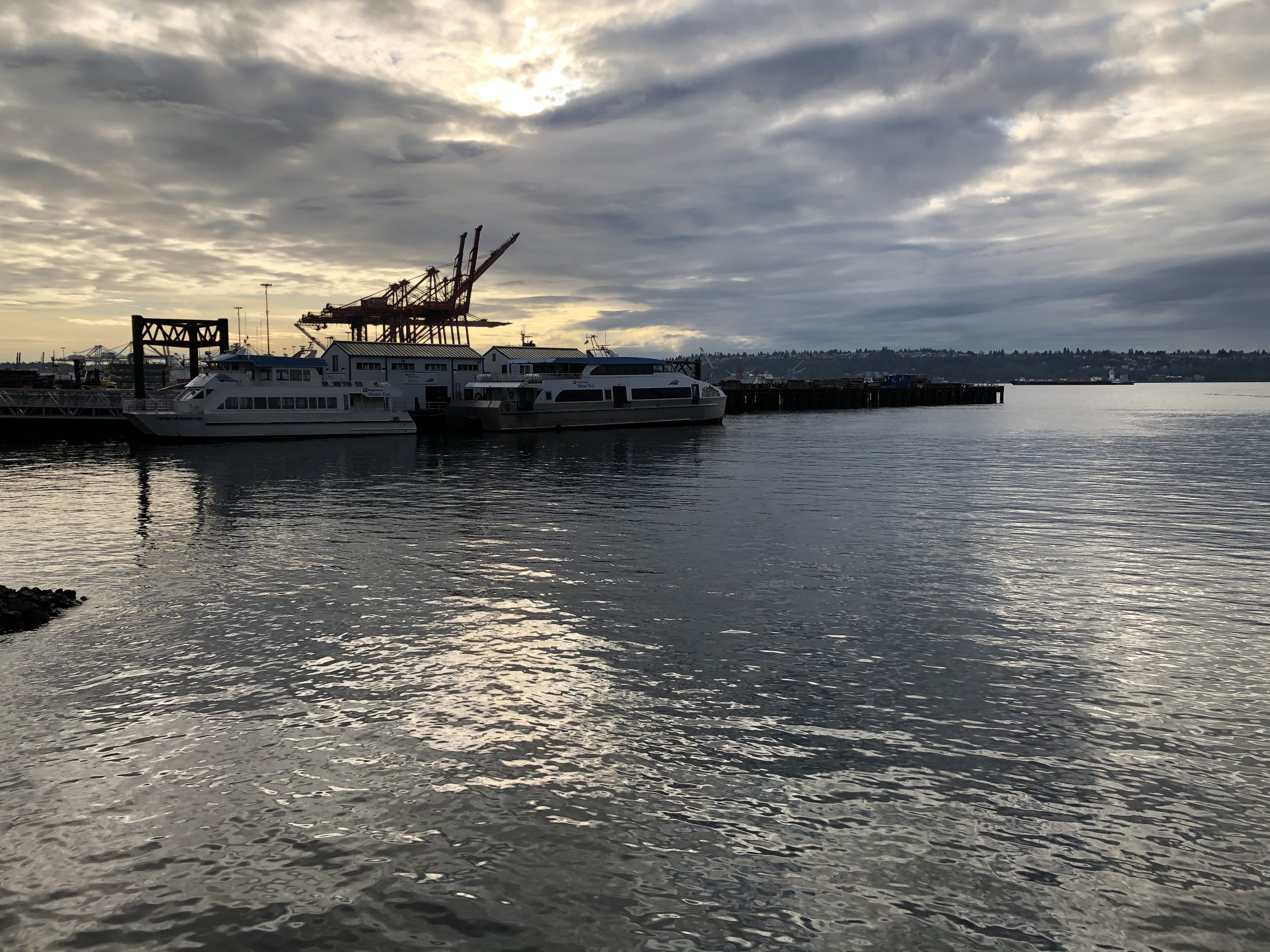
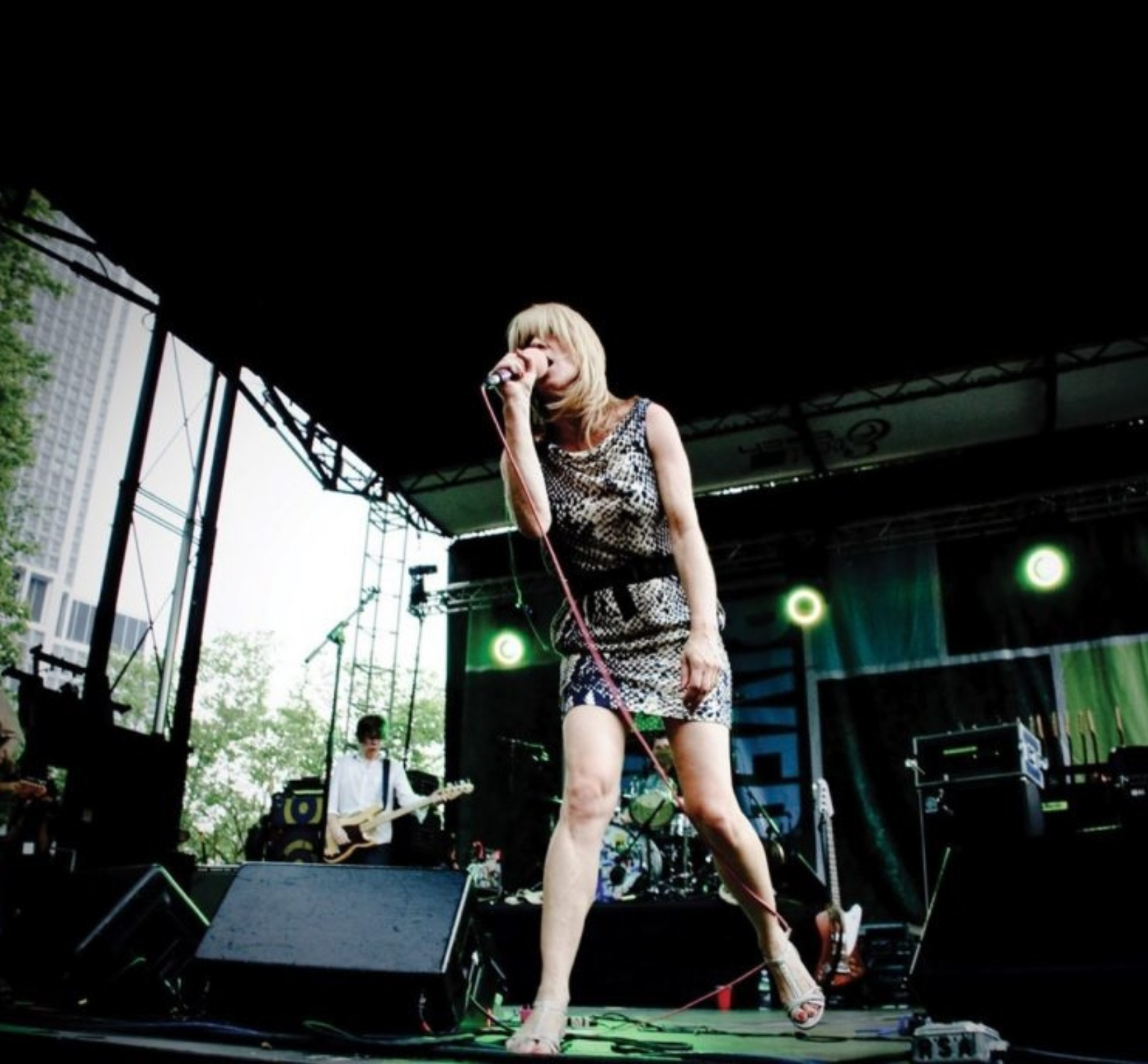
The focus of this studio will be an interior / exterior performance shell on Pier 48; providing opportunity for engagement and activity at the southern boundary of the newly redeveloped Seattle waterfront. For most of its history, Pier 48 has been part of the industrial port; managing shipped goods or boats…but for a brief moment in 1993, it was a venue for music. Nirvana, the Breeders, and Cypress Hill performed a New Year’s Eve show, live on this Pier, in an old warehouse (now demolished). This was an isolated event. As it was before and still remains, Pier 48 is the boundary between the Port of Seattle shipping terminal and the Colman Dock ferry terminal; both very active and necessary infrastructure elements within the City. The proposed performance shell is meant to re-capture this moment and this space, in between these industrial elements, providing opportunity for people to re-inhabit the water’s edge; adjacent the more pedestrian oriented streetscape to the east and north. The shell and related program spaces will need to beresponsive to the marine environment and the redevelopment happening along the waterfront.

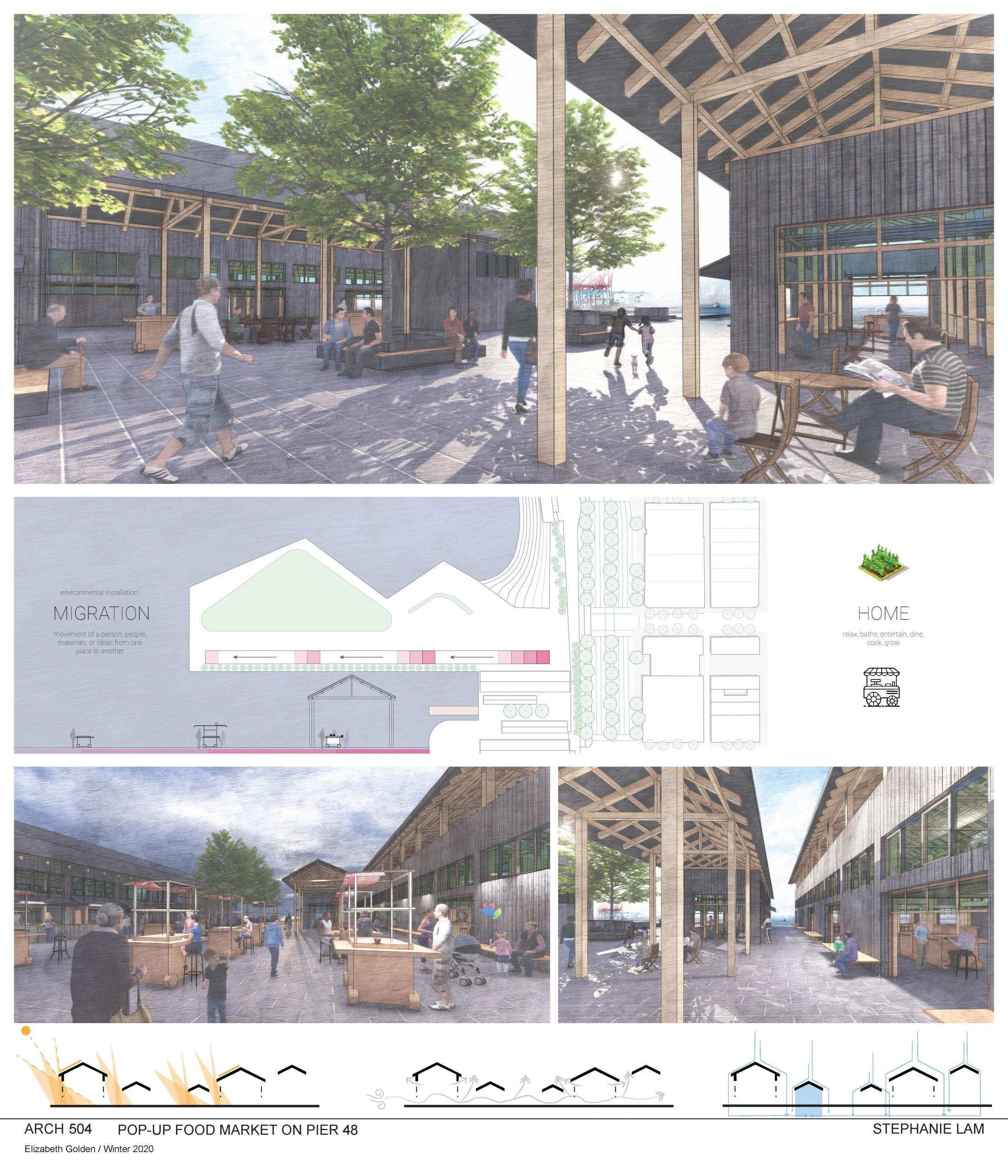
Pop-Up Food Hall // WI 20

 
Elizabeth Golden Winter 2020

Course Description

The Pop-up Food Hall will act as a gateway to the new Pier 48, which is destined to host community events and provide public access to the water. The building will serve as a focal point on the pier, offering an affordable venue for restaurateurs from the International District (ID) to (re)establish their presence on the waterfront. The ID has already begun to grow and change as Downtown development encroaches. Rents are skyrocketing and long established businesses will soon be forced to close as new condos replace the aging strip malls and older buildings along Jackson and the surrounding neighborhood.

The Pop-up Food Hall celebrates the city’s culinary history by giving the area’s food-related businesses a new home on the original site of Seattle’s first Chinatown. Other amenities on the pier might include exhibition space for rotating installations by local artists, boat docks and other water related activities. The market and related program will be light in nature, responsive to the climate, and inspired by Seattle’s maritime environment.


Furniture Studio


Penny Maulden, Steve Withycombe Winter 2020

Course Description

This course involves the design and construction of a piece of furniture such as a small table, case, chair, bench or stool or an architectural element such as a door or screen. The approach to the studio is based on the “Studio Furniture” movement in the United States, where individuals with small shops design and build one-of-a-kind or limited production furniture pieces. In this way, the furniture that is designed is intimately associated with the tools and processes that are available in the CBE metal and wood labs, giving direction as well as setting constraints for the project. Materials in past projects have varied, but have been predominately wood or acombination of wood and steel since the shops are better equipped for working with these materials. The course will require completion, final review and presentation of a project. The objective is to understand designing and making as inter-dependent processes.

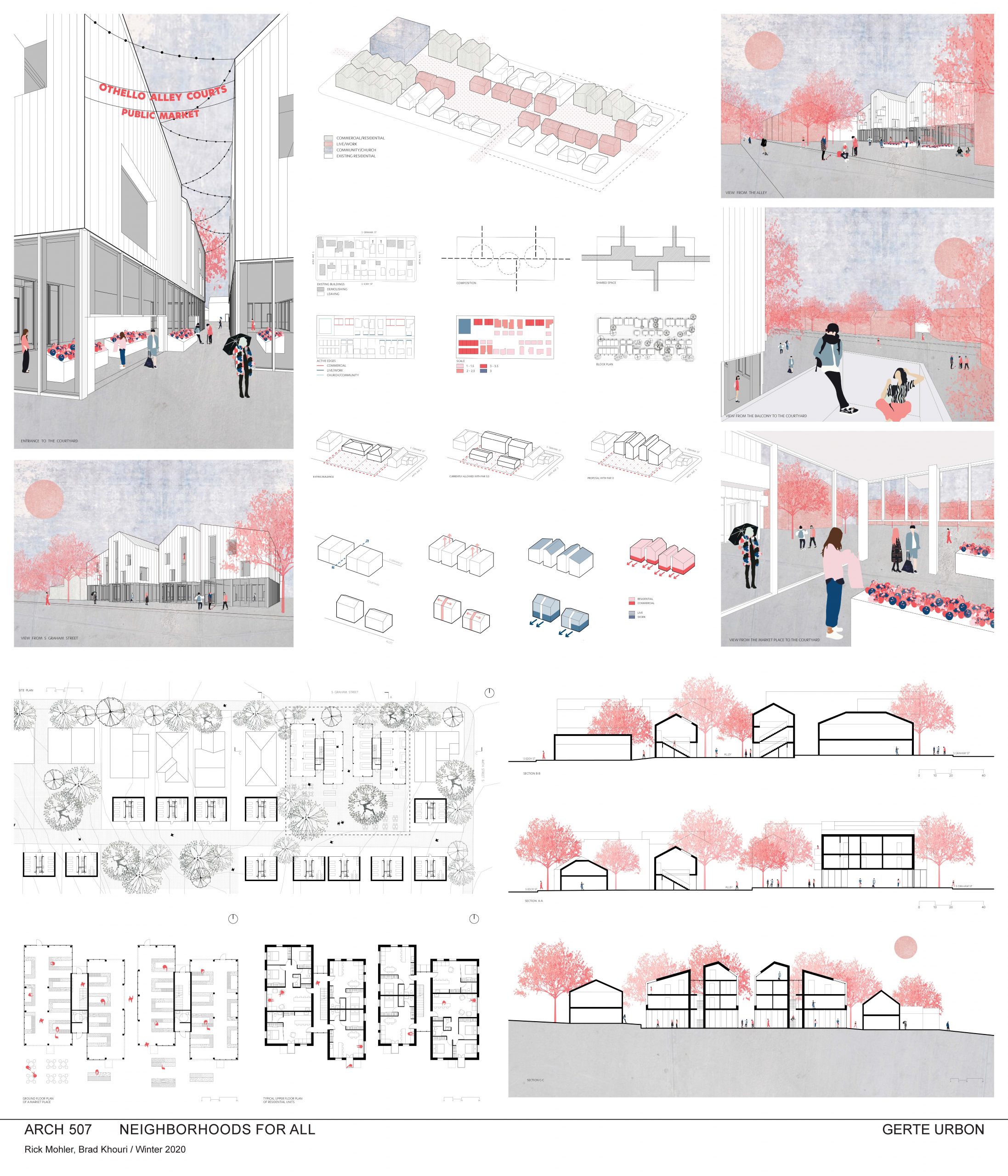
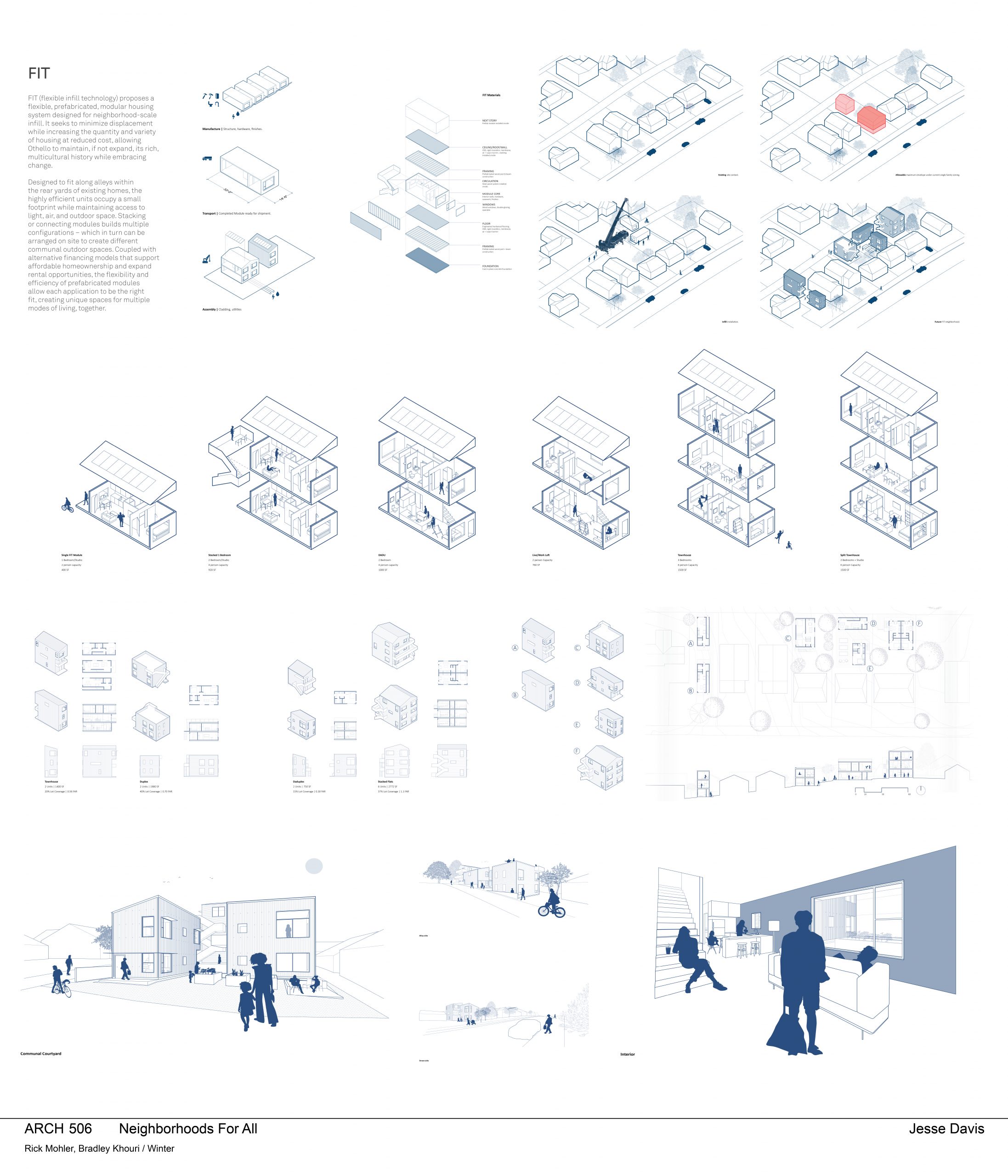
Neighborhoods for All


Rick Mohler, Brad Khouri Winter 2020

Course Description

This studio will investigate a sustainability and social equity issue garnering widespread attention in fast growing cities around the country – single family zoning. The studio will focus on Seattle as a case study but the findings will have applicability to cities nationwide. The goal of the studio is to have a positive impact on future land use policy in what are now single family zones in Seattle and beyond. The studio will work in collaboration with the Seattle Planning Commission to advance the work outlined in its nationally cited report, Neighborhoods for All: Expanding Opportunity in Seattle’s Single-Family Zones, released in December of 2018.

A challenge we face as a community is that we have spent, and continue to spend, enormous amounts of time and energy debating if single family neighborhoods should allow a greater variety of housing types. This has prevented us from having an informed conversation as to how this might happen and what form it might take. The studio will build upon the Planning Commission’s work, as well as the work of city staff and housing advocates in other cities nationwide, to advance this conversation and, ultimately, legislation. The studio will investigate what is most valued in these neighborhoods and how this might be retained in the context of change. The studio will explore how different strategies will yield different outcomes over time through incremental development. For example, if a priority is the retention of existing building stock, then a strategy that focuses on infill development might be in order. If retaining open space and tree canopy in the center of the block is a priority the demolition and replacement of existing structures may be the preferred strategy. Strategies that preserve, modify and expand existing homes for use as multi-family structures are also an option. Currently, Seattle considers only lot width and lot area in establishing development limits such as lot coverage or the allowable height of a backyard cottage. The studio will propose that lot typology, in addition to lot width and lot area, be considered in determining development capacity of a given parcel. For example, corner lots and lots with alleys have greater potential for development capacity than infill lots without alleys and this should be accounted for in the land use and zoning code. Finally, the studio will test a conceptual land use strategy employing a base Floor Area Ratio (FAR) with allowable increases to incentivize certain outcomes including the creation of multiple smaller units, the preservation of existing building stock or open space, the creation of affordable units and the development of corner and alley parcels.

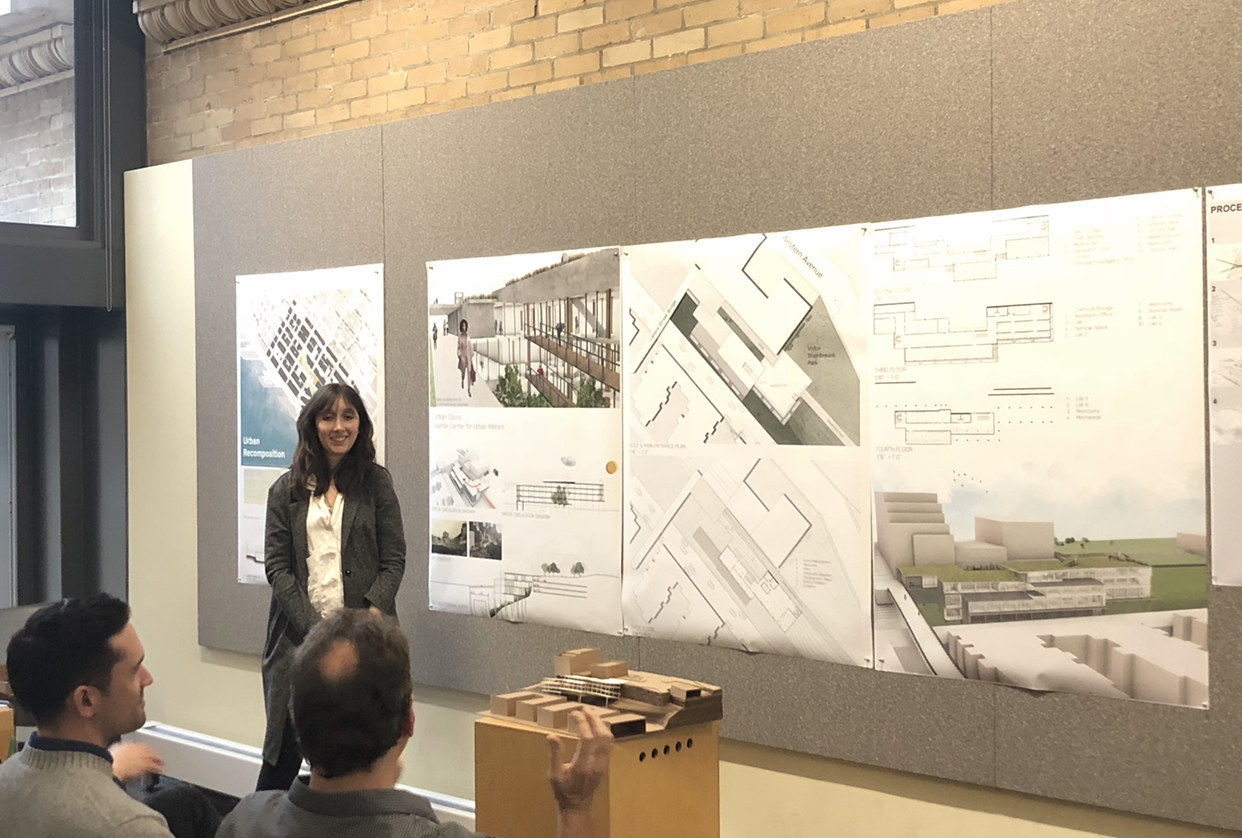
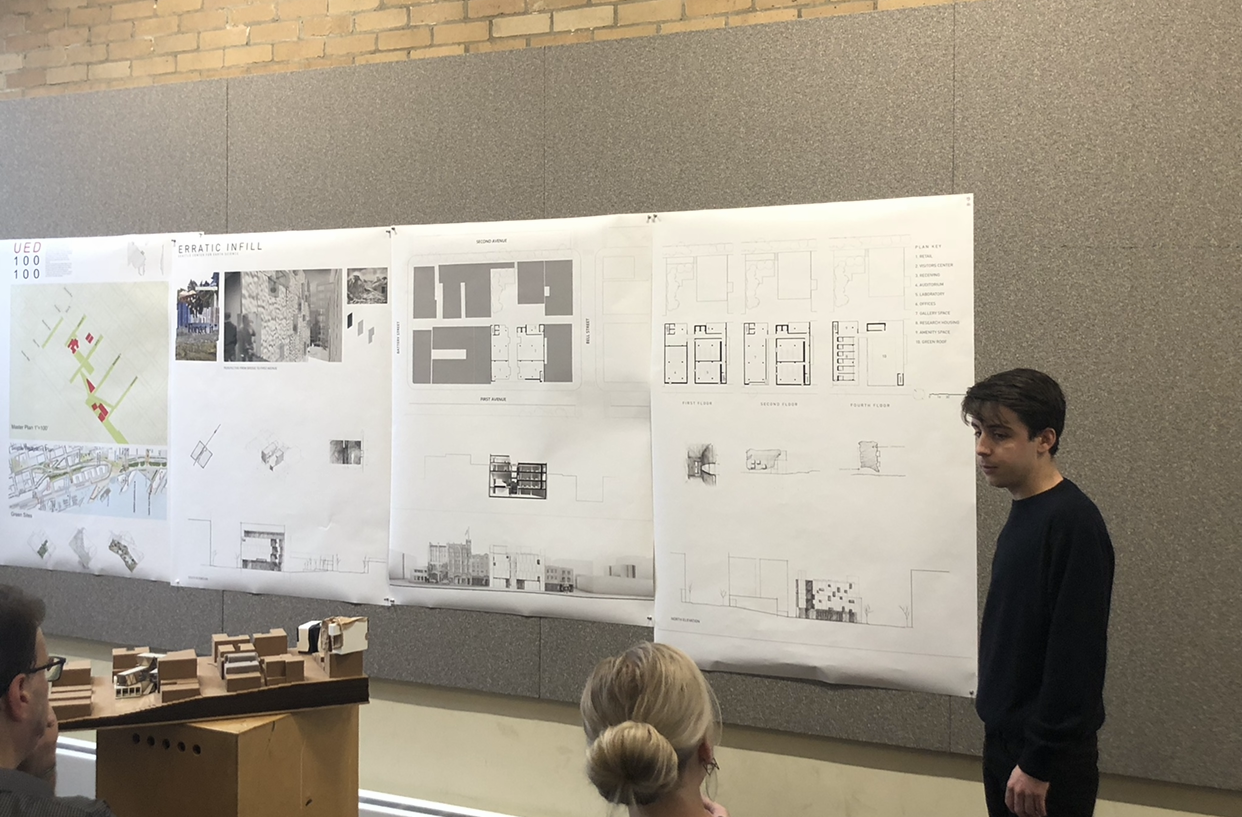
Urban Design Studio


Julia Nagele Autumn 2019

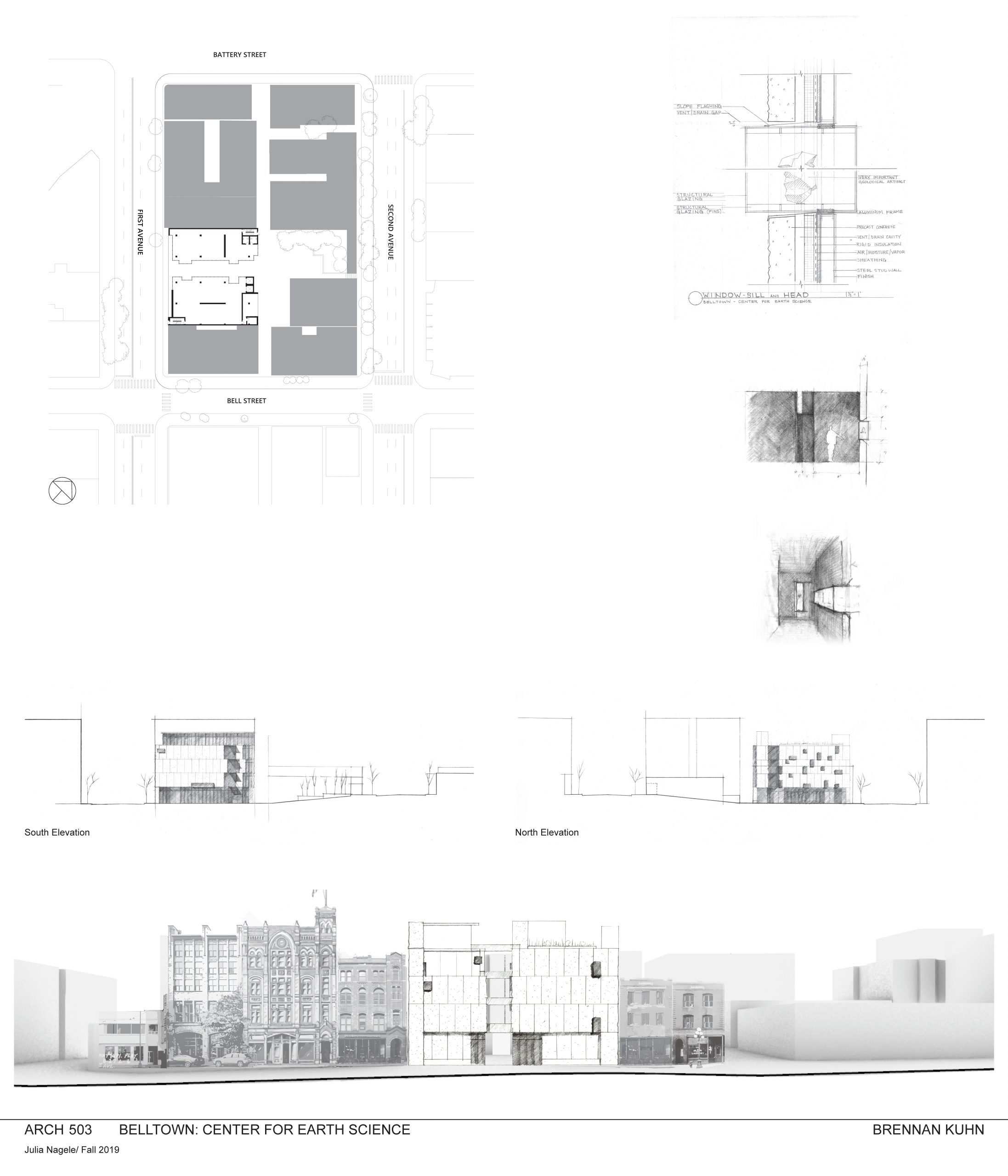
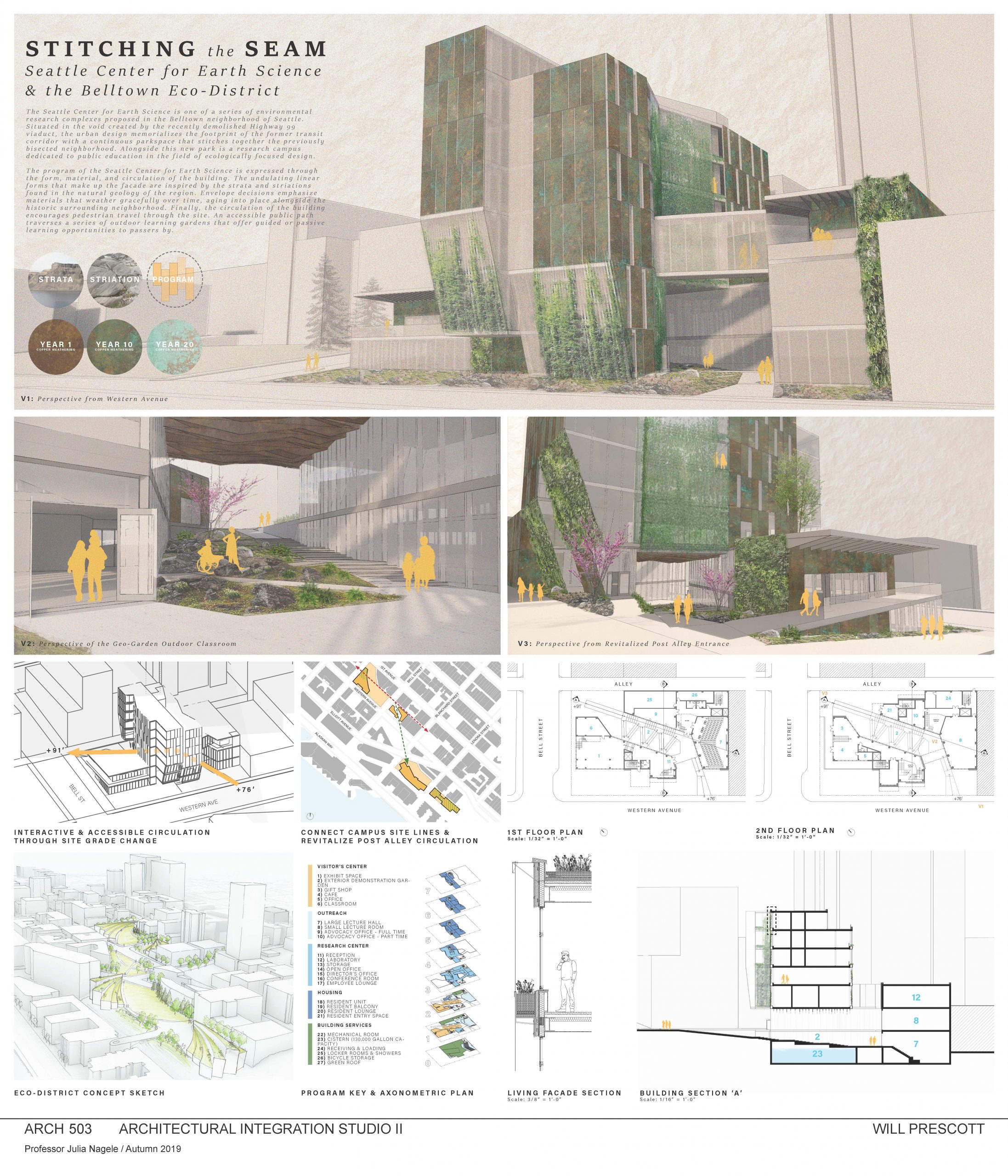
Seattle Center for Earth Science

A consortium of public agencies and private organizations are collaborating to develop a site in Belltown as a Center for Earth Science. The Center for Earth Science Building, part of a planned Urban Ecology District, will represent an institution focused on research and education concerned with earth’s surface and near surface: geology, soils, hydrology, seismology, volcanology, and glacier science. Seattle is an ideal spot for such an institution as it sits on land carved by glaciers, ringed by volcanoes, and susceptible to earthquakes and landslides. By working in collaboration with the Centers for Urban Waters, Energy and Environment, and Air Quality Research, The Center for Earth Science will emphasize how all earth’s systems are connected, and how to understand the past and future of the natural world in relation to the urban environment. For instance, topics of research might include how tides influence earthquakes, or how atmospheric carbon effects soil fertility. The activities of the Center will contribute to and demonstrate sustainable practices and study ways to mitigate
climate change.

Mission: The Center for Earth Science seeks to study and demonstrate to the public how the earth’s surface and what is under the surface is not a static system, but a changing ecology that has profound influence on how we occupy it. The Center is dedicated to improving understanding of the forces that made and are making our world, especially in the Puget Sound region. The Center aims to partner with other research institutions and advocacy organizations to increase] resiliency in the face of a changing world. The Center is especially committed to public outreach to a diverse audience and to the next generation.

Neighborhood Design Build

Steve Badanes, Jake LaBarre, Jorge Guzman Spring 2020

Course Description
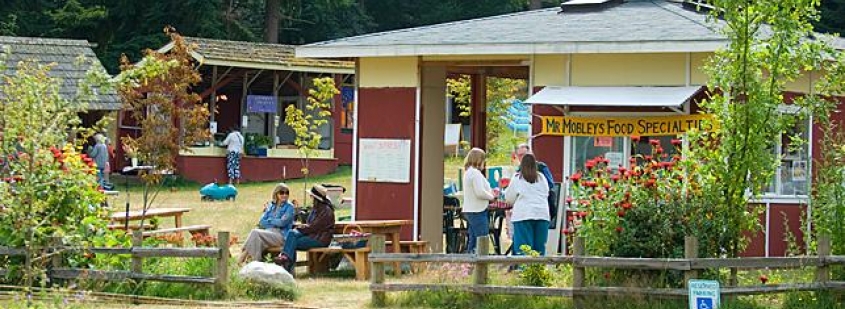
South Whidbey Tilth Association is an educational organization, the purpose of which is to support and promote biologically sound and socially equitable agriculture. Our commitment is to advocate, study and teach agricultural practices consistent with stewardship of the natural world. We promote and demonstrate principles and practices of sustainable agriculture, as well as cultivate a variety of opportunities for local market gardeners and farmers. The organization is organized exclusively for educational and scientific purposes. South Whidbey Tilth’s Sustainability Campus is 11.32 acres along State Route 525 at 2812 Thompson Road, Langley. The western half is a tax-exempt natural area with a Garry oak meadow, forest and a woodland trail. The eastern half includes community garden plots, several larger incubator farmer plots, farmers’ market area, orchard, permaculture demonstration garden, classroom/office, restrooms, children’s playhouse and sand box and a kitchen.

City and Food Research Studio


Gundula Proksch/ Rob Pena Spring 2020

Course Description

This research studio is exploring the potential of building typologies that combine resource-efficient food production systems integrated with commercial, office, housing and industrial uses. This work is a synthesis of sustainability research with speculative, future-oriented thinking into a creative design process to identify synergistic relationships between the flow of resources, social services and economic systems in the built environment.

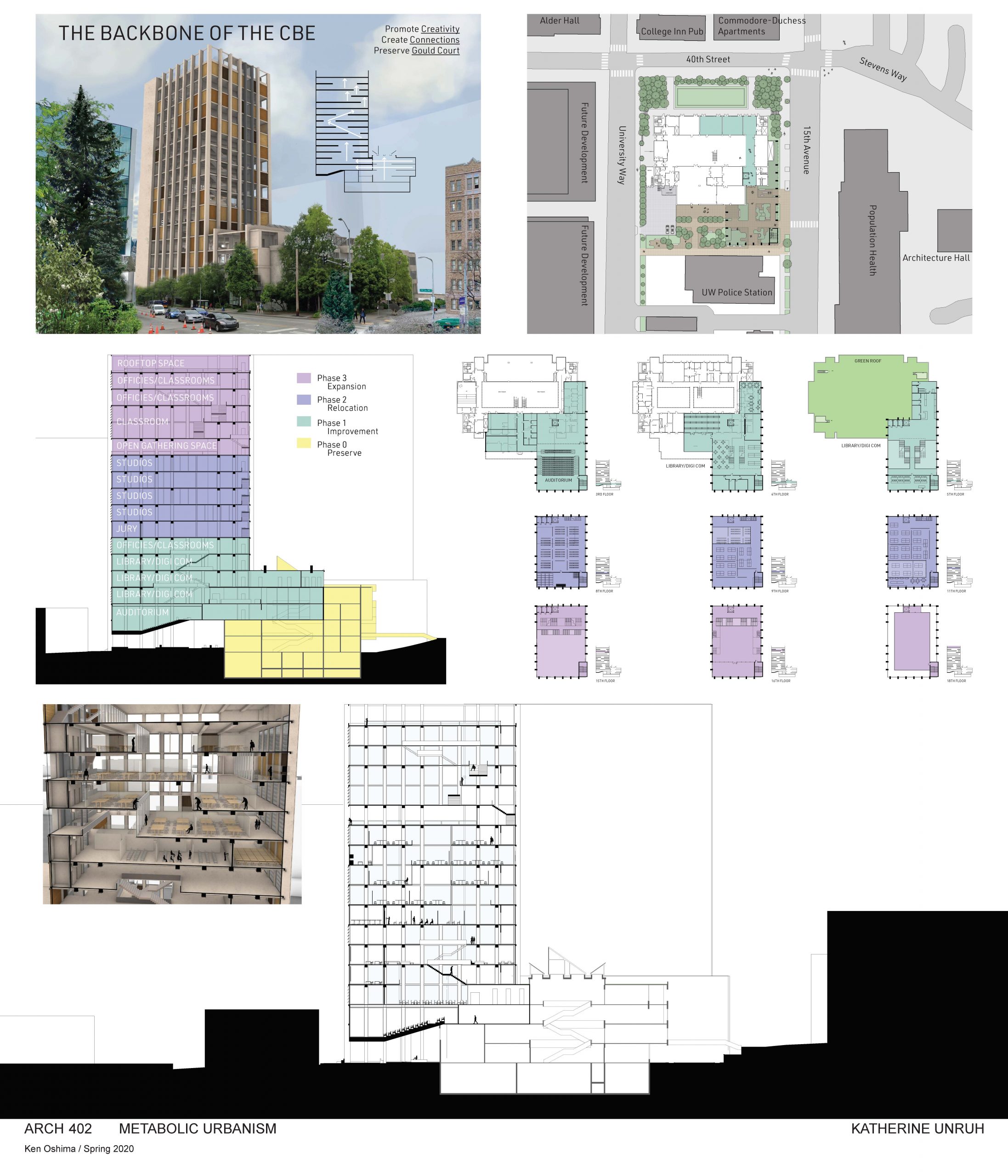
Metabolic Urbanism Studio


Ken Oshima, Spring 2020
Course Description

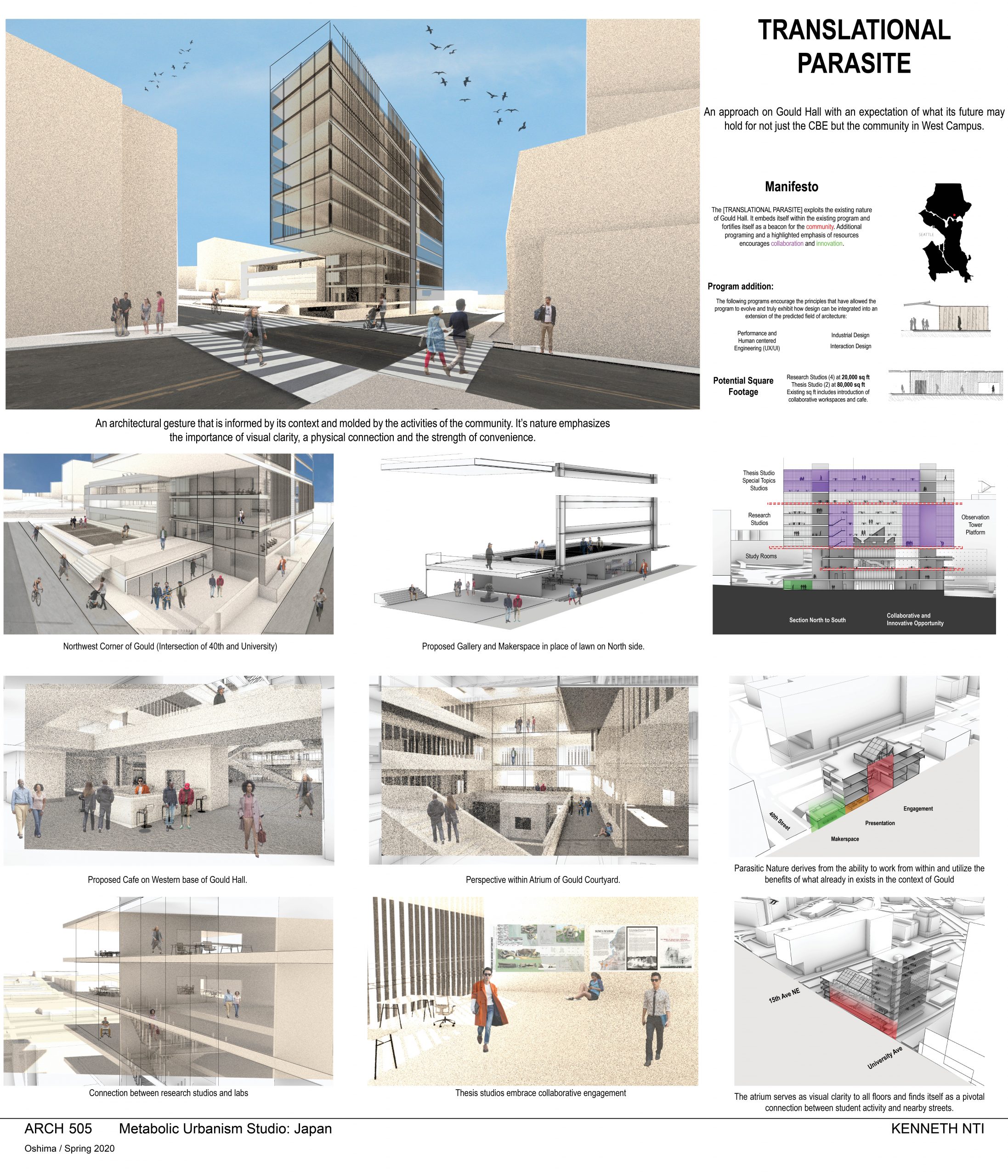
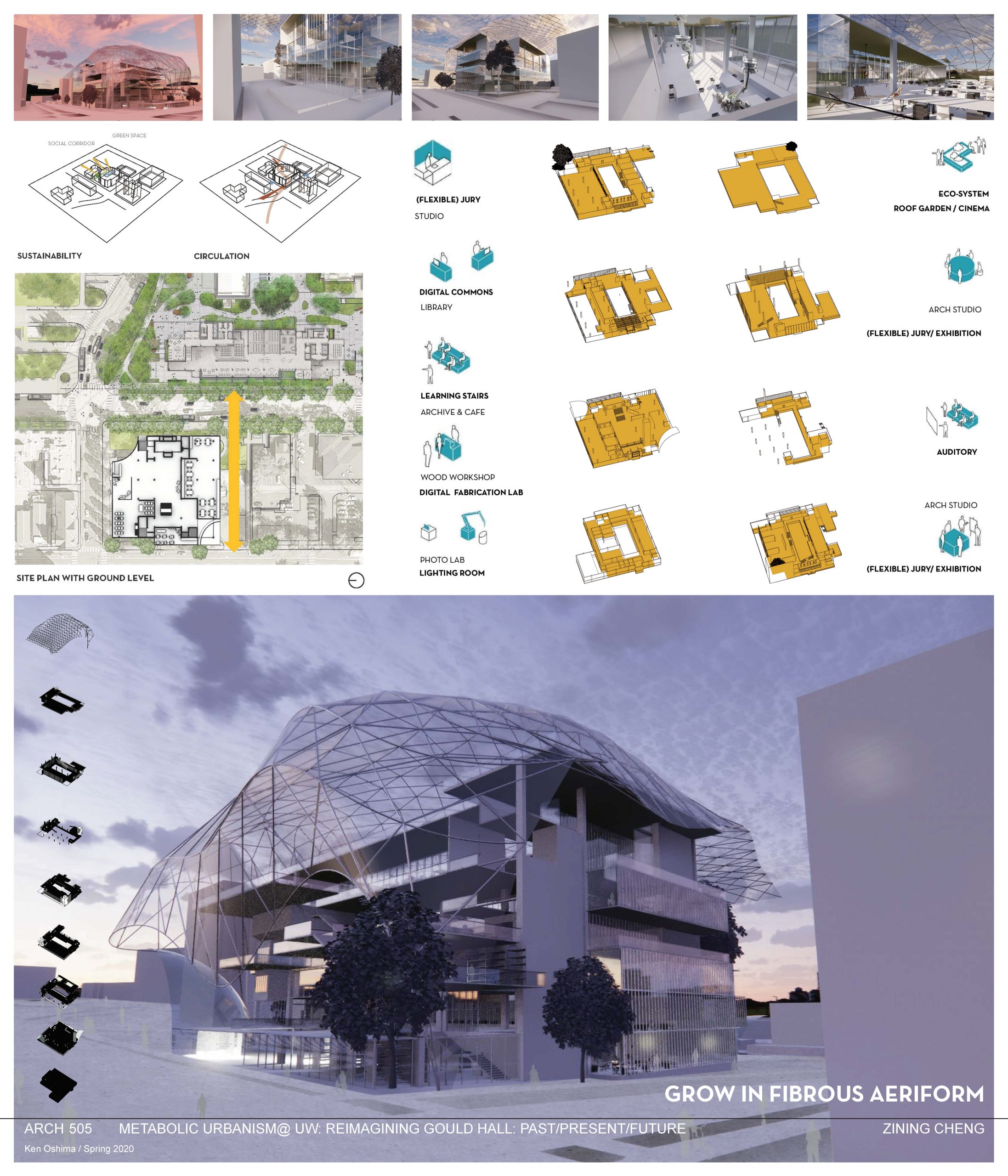
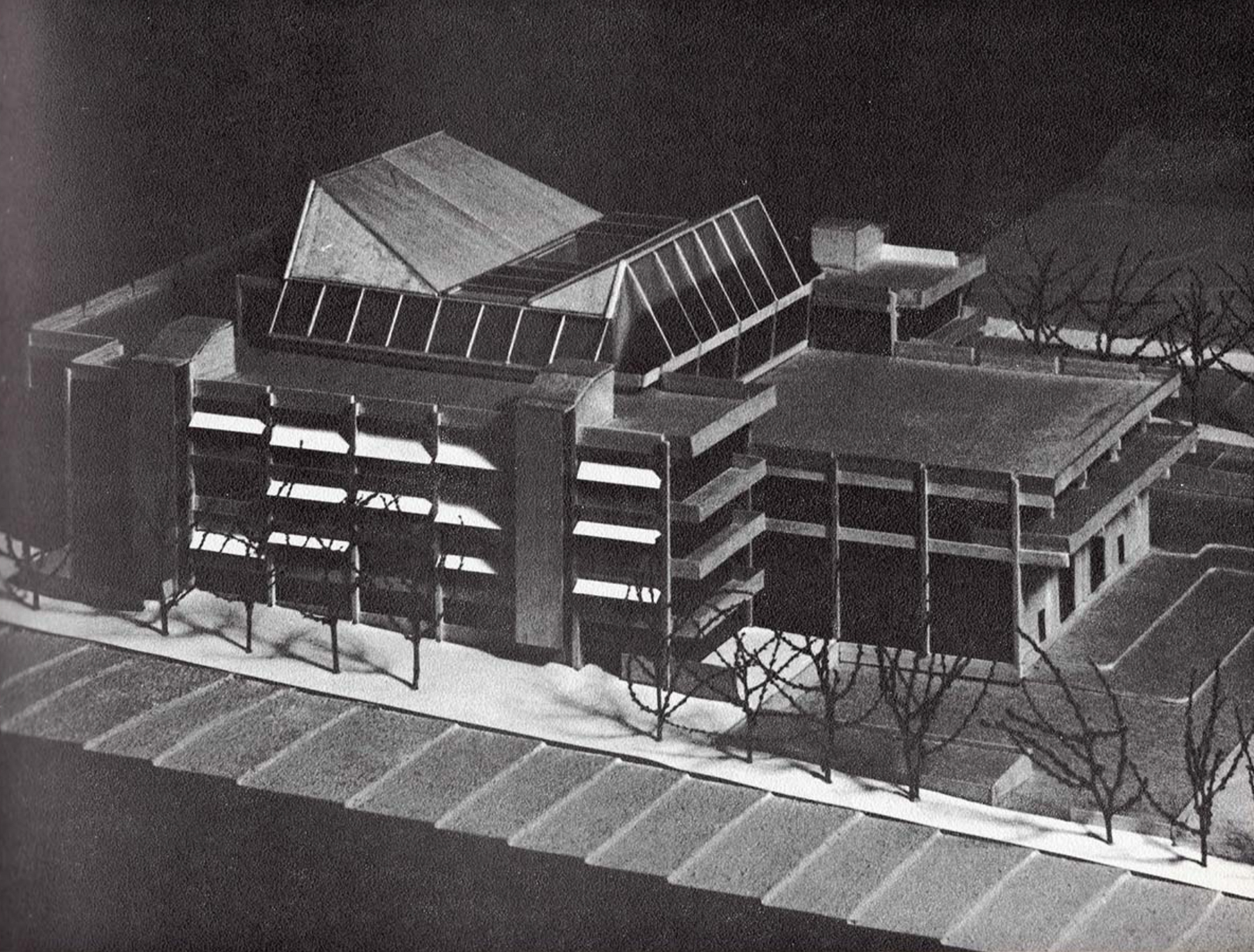
This vertical graduate/undergraduate architecture studio  investigates “metabolic urbanism” through the reimaging and continued design of Gould Hall (1969-72i). Built during the era of Metabolism in the 1960s and 70s in which buildings were conceived both as urban megastructures and organic platforms that could embrace change, the exposed reinforced concrete structure home to the UW College of Built Environments today is at a crossroads as the UW campus/ University District up zones as part of its ongoing masterplan.

In 2020, in a period of unprecedented change and uncertainty, the studio takes on the complex and rich context surrounding Gould Hall, proposing the potential for a new program, new uses and new transformative design through intervention, recontextualization, reorientation, contraction, or expansion. A new program typology may be necessary and a combination of diverse programs for different audiences may be called for. The studio will compile these narratives and assess their different possibilities for viability to plan for Gould Hall to meet the ongoing challenges of the 21st century.


Raft Museum

Jim Nicholls Spring 2020

Course Description

There is history of rafts, and a typology of rafts. Each raft has a story. Each is spatial. Each is material. Each stands for resilience in the face of adversity. Rafts are often lifeboats. Each raft is about the human condition. They represent the life of a refugee, a WWII sailor, a Titanic survivor, an oilrig evacuee… of Huckleberry Finn. They tell stories of survival and hope.
What would a museum of rafts look like?
What would a collection of rafts say?
What stories would your museum of rafts tell?
The studio project is to answer these questions on site at Pioneer Square, Seattle.


Barry Onouye Endowed Studio


Tyler Sprague/Mitsuhiro Kanada

Course Description

This is the 2020 offering of the Barry Onouye Endowed Studio, highlighting the intersection of architecture and structures. With the visiting endowed Chair, Mitsuhiro Kanada, this studio will explore the culture and use of a material common to both American and Japanese contexts: cedar. Cedar has powerful significance as part of a natural landscape, as a cultural material, as a part of communal life, and carries a long tradition of craft on both sides of the Pacific Ocean. As such, cedar can become a language of a cross- cultural conversation linking different places across time, and contributing to our broader understanding of architecture, structure, culture, technique and material processes. The work in this studio will still bring these larger themes in to the design, fabrication, treatment and connection of cedar elements into large scale structures.

Architecture and Fiction

Nicole Huber Spring 2020

Course Description

The Comprehensive Plan SEATTLE 2035 is: “A 20-year vision and roadmap for Seattle’s future. Our plan guides City decisions on where to build new jobs and houses, how to improve the transportation system, and where to make capital investments such as utilities, sidewalks, and libraries. The Comprehensive Plan is the framework for most of Seattle’s big-picture decisions on how to grow while preserving and improving neighbor-hoods.” Basing its plan on the data of demographic, social, economic, and environmental change, the city’s office of urban planning extrapolates from facts to create a vision of Seattle’s urban future.

This studio asked what if designers don’t base design on given facts but on speculative fiction? What if we don’t begin by analyzing present conditions to predict future settings but start by imagining future possibilities – however fantastic – to reveal our hopes, dreams, and desires? What if we translate our imaginaries into architectural design, into a project of social, cultural and environmental change? In this studio students used a variety of science fiction and fantasy movies, suggested and self-selected, to learn from their imaginativeness, from their narrative strategies, from their visionary and visual powers — to rethink design strategies for Downtown Seattle.

Othello Community Hub

Elizabeth Golden/ Rick Mohler Spring 2020

Course Description

The Othello Community Hub is an unprecedented collaboration between the City of Seattle, the University of Washington, the Low Income Housing Institute and the Boys and Girls Club of Seattle. Just as building typologies must evolve and hybridize in response to changing urban conditions, so must our urban institutions. Combining a variety of institutions and programs in a single neighborhood center allows for the efficiencies of shared spaces and infrastructure as well as the engagement and collaboration of participating institutions and members of the community.

The Hub is conceived as a focal point for all members of the Othello community. It is both a destination and a place of transition. Some engage the HUB only briefly but regularly by catching the bus, parking one’s bike, grabbing a coffee or making use of the urban rest stop. Others engage for longer periods of time as teens playing games or making music, young adults looking to launch their education at the UW or elder adults interested in continuing their education or contributing to their community.


Fashion and Architecture

 
Vikram Prakash Autumn 2019

Course Description

Does form really follow function? Is abstraction the path to ‘truth’? Chthonic vs the tectonic. This experimental studio seeks to tap deep creativity to deconstruct architectural design thinking by intersecting with one of the most world opening disciplines of our times – fashion. Both fashion and architecture are modalities of design thinking, ways of cognating the intelligible and the sensory into a coherent work. In particular, they are both concerned with the work of interfacing the human body to the world. They both cater to a fundamental human need, they both seek to house the human body in a manner that is comfortable and expressive, they both require an intimate knowledge of materials and the craft of making, and they are both obsessed with the complexities of structure and appearance. They are both, in other words, body-axial ways of interfacing with the world; fashion is ‘near-body-architecture’, in that it is architecture, only close to the body, while architecture conversely can be conceptualized as ‘far-body-fashion’.

The objective of this studio will be to design a conceptual body of work indexed as far-body-fashion. We are interested in the l’avenir, the unknowable but inevitable, future of architecture. We will not prognosticate; we will take baby steps on a world opening path. A cross-disciplinary seminar on design thinking, with invited guests from other disciplines on campus, will be integrated into the studio.

Thus studio will use fashion to offer an opportunity to expand the possibilities of what it is to think architecture. For two Reasons:

1. Architectural practice is changing rapidly, and traditional ways of thinking architecture in the new digital age are going to have to expand and become more versatile and

2. Both fashion and architecture mediate between the human body and the rest of the world. Yet, architecture has a disdain for fashion, while in fact fashion in recent decades has far outstripped architecture in its creativity, imagination and response to the exigencies of the day.

Seattle Exposed

 
Elizabeth Golden Autumn 2019

Course Description

Architecture and the built environment are manifestations of societal values; these structures also play a significant role in shaping social interactions within the city. In the words of writer/philosopher George Bataille, architecture “is the very soul of societies” with the “authority to command or prohibit.”

The built environment influences our lives and interactions, but whose values are actually reflected in the spaces and places we move through and inhabit each day? Who has been included or excluded from the development of neighborhoods, public buildings and spaces? Students in this studio will examine key moments in Seattle’s development and document the ways in which certain values, societal structures, and needs have shaped the city over time. More importantly, students will identify omissions and gaps within the city’s current physical structure, where alternative histories, “other” experiences and voices are absent or underrepresented. Students will develop architectural proposals that reveal and build on these invisible histories and stories in order to educate and inspire Seattle’s current and future inhabitants, as well as visitors to the city.

A list of potential sites will be provided, but students will have the option to propose their area of study and project site (in consultation with the studio instructor). Students will be challenged to think outside the box (figuratively and literally). We will explore speculative methods for making architecture, using both temporal strategies (events, art, temporary installations, digital technology, etc.) and more permanent materials.

Urban Design Studio


Mary Johnston Autumn 2019

Seattle Center for Urban Waters
A consortium of public agencies and private organizations are collaborating to develop a site along Western Avenue as a Center for Urban Waters. The site will contribute to advocacy for responsible approaches to water resources: drinking water, water for bathing, drainage and wastewater, streams, rivers, lakes and Puget Sound. The Center for Urban Waters Building will represent an institution focused on research and advocacy for water as a necessity and benefit to cities, globally. The activities of the Center will contribute to and demonstrate sustainable practices. The Building will also establish a place where the productive benefits of
responsible water policies are made apparent to the neighborhood and the entire city.

Mission: The Center for Urban Waters seeks to understand and raise awareness of the sources, pathways and impacts of chemical pollutants in urban waterways. The Center is dedicated to improving and safeguarding water quality throughout the Puget Sound region and, especially, within Seattle’s urban ecosystem. The Center aims to foreground water quality as a partner with other research institutions and advocacy organizations: urban water quality is fundamental to the social and environmental health of cities and the globe. The work of the Center for Urban Waters is familiar: analyzing water quality in water bodies and within the water distribution network. The Center also aims to display its work to the public to the greatest practical extent.

Seattle Center for Earth Science

A consortium of public agencies and private organizations are collaborating to develop a site in Belltown as a Center for Earth Science. The Center for Earth Science Building, part of a planned Urban Ecology District, will represent an institution focused on research and education concerned with earth’s surface and near surface: geology, soils, hydrology, seismology, volcanology, and glacier science. Seattle is an ideal spot for such an institution as it sits on land carved by glaciers, ringed by volcanoes, and susceptible to earthquakes and landslides. By working in collaboration with the Centers for Urban Waters, Energy and Environment, and Air Quality Research, The Center for Earth Science will emphasize how all earth’s systems are connected, and how to understand the past and future of the natural world in relation to the urban environment. For instance, topics of research might include how tides influence earthquakes, or how atmospheric carbon effects soil fertility. The activities of the Center will contribute to and demonstrate sustainable practices and study ways to mitigate climate change.

Mission: The Center for Earth Science seeks to study and demonstrate to the public how the earth’s surface and what is under the surface is not a static system, but a changing ecology that has profound influence on how we occupy it. The Center is dedicated to improving understanding of the forces that made and are making our world, especially in the Puget Sound region. The Center aims to partner with other research institutions and advocacy organizations to increase resiliency in the face of a changing world. The Center is especially committed to public outreach to a diverse audience and to the next generation.

Hybrid Hub at Interbay

BE Studio/Practicum – Hybrid Hub at Interbay

Rick Mohler, David Blum Autumn 2019

Course Description

The studio focused on alternative futures for Seattle’s industrial lands using the Armory Site in Interbay as a case study example. Industrial lands are an important contributor to Seattle’s economy and economic resilience. Industrial zoning classifications account for 12% of Seattle’s total land area and accommodate 16% of the city’s employment base. Many of these jobs are among the very few well-paying employment opportunities found within the city for those without a college education. Industrial activity accounts for roughly a third of Seattle’s sales and B&O tax base. They also provide economic diversity that is cited as a primary reason that the last recession had less of an impact on Seattle than on other cities. A very low vacancy rate of 2% within Seattle’s industrial zones indicates strong demand for industrial land. The majority of industrial stakeholders express an intention of staying within the city and even expanding operations. As a result, Seattle has taken a strong position to preserve its industrial lands by prohibiting non- industrial uses within them as outlined in its 1994 Comprehensive Plan. This position has been bolstered by subsequent studies and reports including: “The Future of Industrial Lands” released by the Seattle Planning Commission in July of 2007 and “Seattle’s Industrial Lands Mayor’s Recommendations” released in August of that same year. However, Seattle’s rapid growth is putting increased pressure on its industrial lands. Due to the relatively low cost of industrial land, many see it as an opportunity to accommodate the city’s growth and address the city’s housing affordability crisis. The expansion of light rail infrastructure is accelerating this conversation. There are currently two Sound Transit light rail stations – Stadium Station and SODO Station – that are within industrial zones. Leveraging our substantial investment in transit infrastructure mandates that we implement land use strategies to increase ridership by serving more intensive, higher density development with a mix of uses. In response, the Office of Planning and Development released its “Industrial Lands Policy Discussion – Summary and Recommendations” in 2015. While much of the report reinforces the position of previous studies, it introduces the potential of re-considering industrial zoning. Most notable is the “SODO Draft Concept”, a proposal to study a new hybrid building type consisting of ground floor industrial uses with commercial office space above.