Skip to content

Architecture in Rome

Architecture in Rome Food City

Ken Oshima Galen Minah Autumn 2019

Course Description
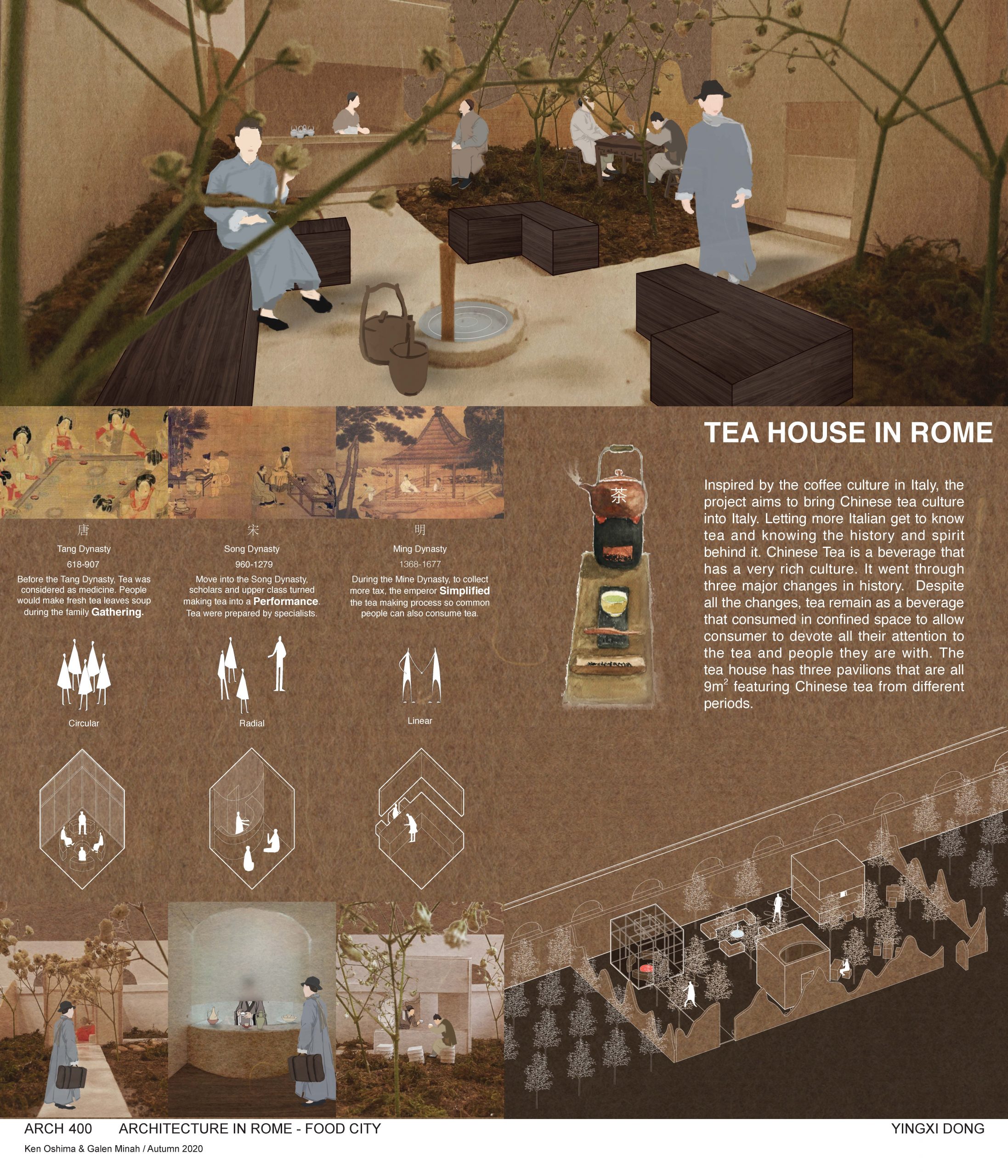
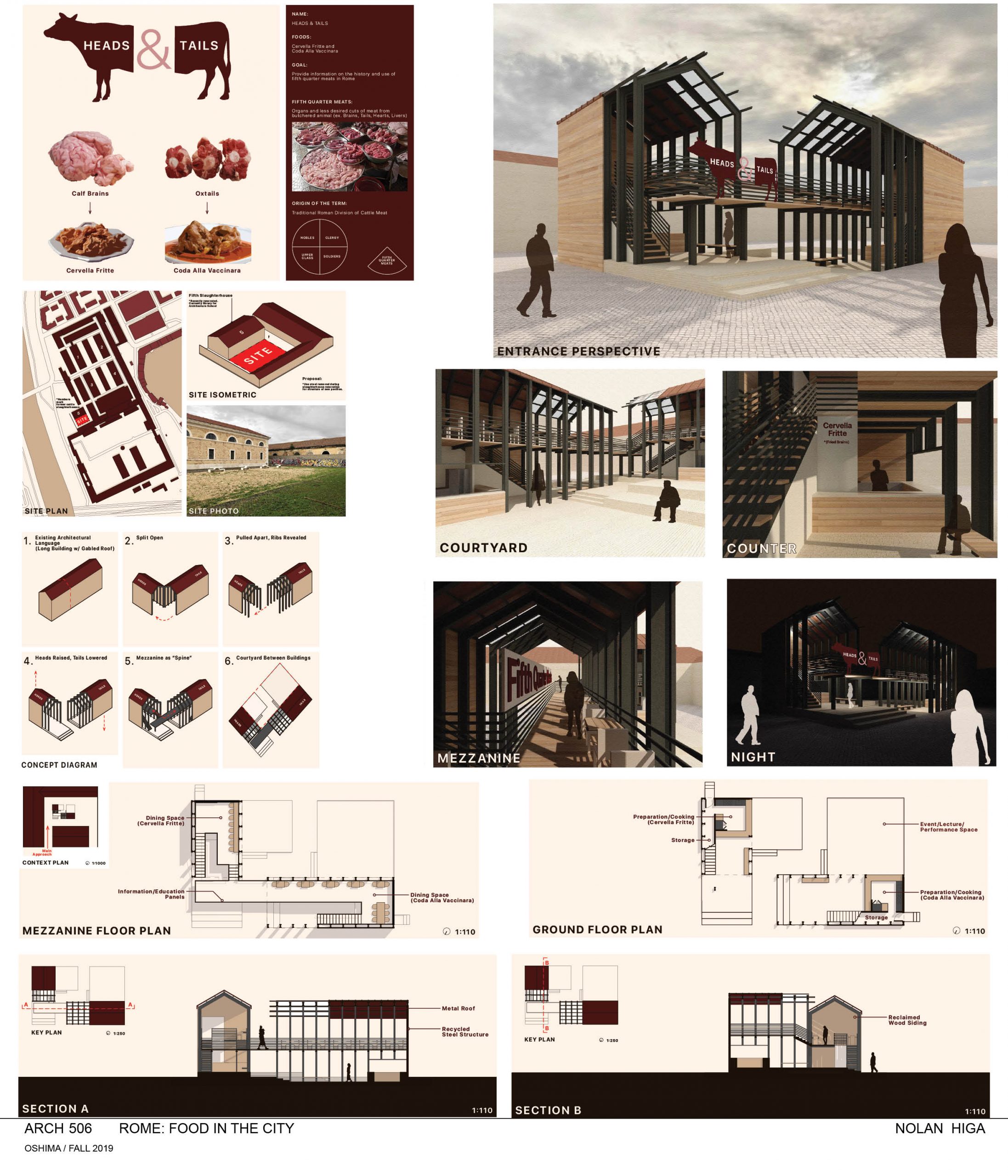
As a studio of 26 designers from around the world, students will be collectively designing the Global Food Expo 2020 to take place at the former Mattotoio al Testacchio slaughterhouse/Mount Testaccio. This design builds on the student’s pop up restaurant design, Food City analyses of Venice and Rome through markets and cafes linked to the urban fabric and global exhibition architecture at the Venice Biennale. Following Obrist’s suggestion, the student’s exhibition design should be “radical, experimental solutions,” a “laboratory” for interactive displays and direct partaking in global food culture. The design may be inside or outside the Mattotoio structure and engage the physical/historical context through a visionary architectural intervention/design. Designs will each feature a particular dish/regional cuisine/technique that may be inside or outside Italy and engages the context of Rome and the Mattotoio structure/site. Following the group site analysis, students will select their own individual sites and unique culinary perspective.
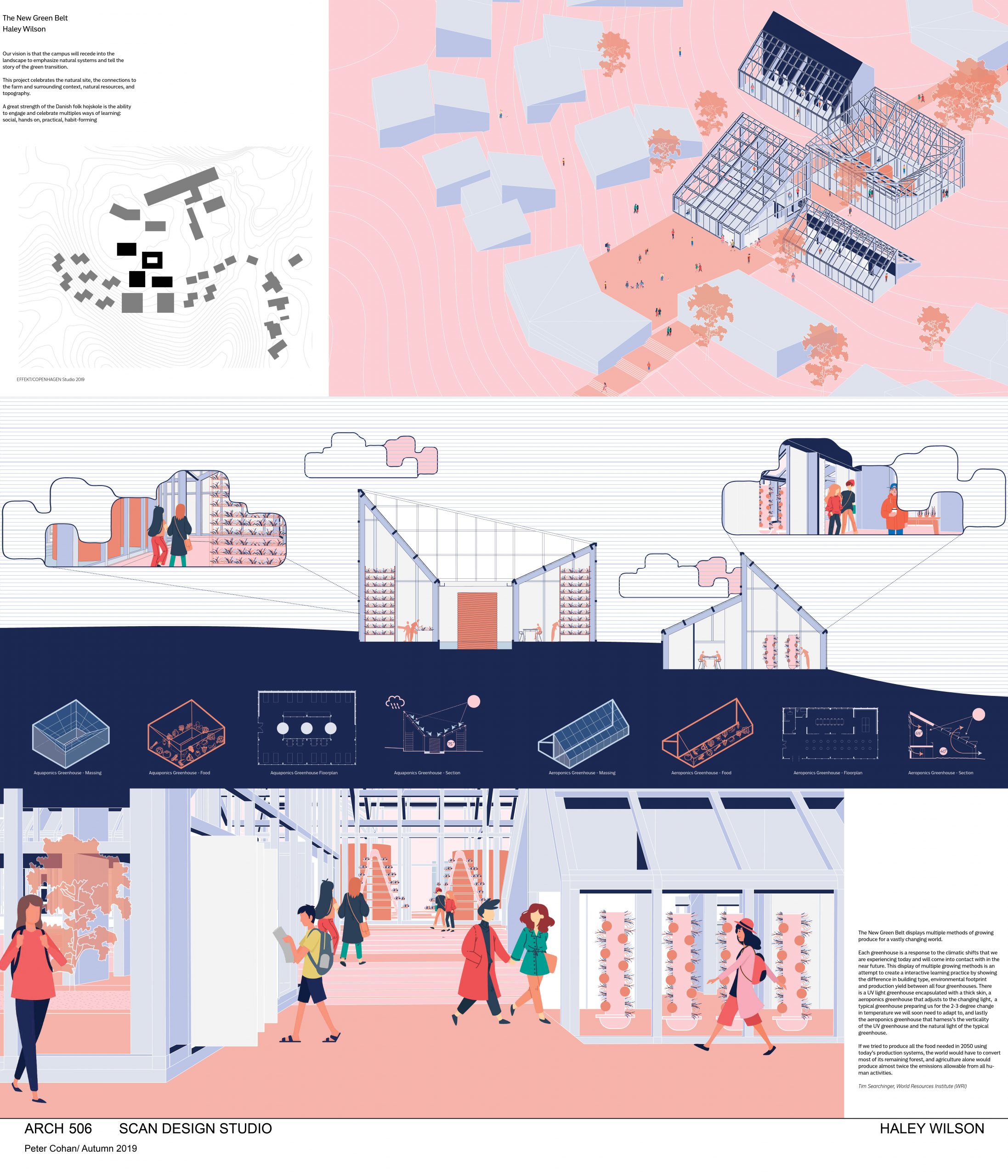
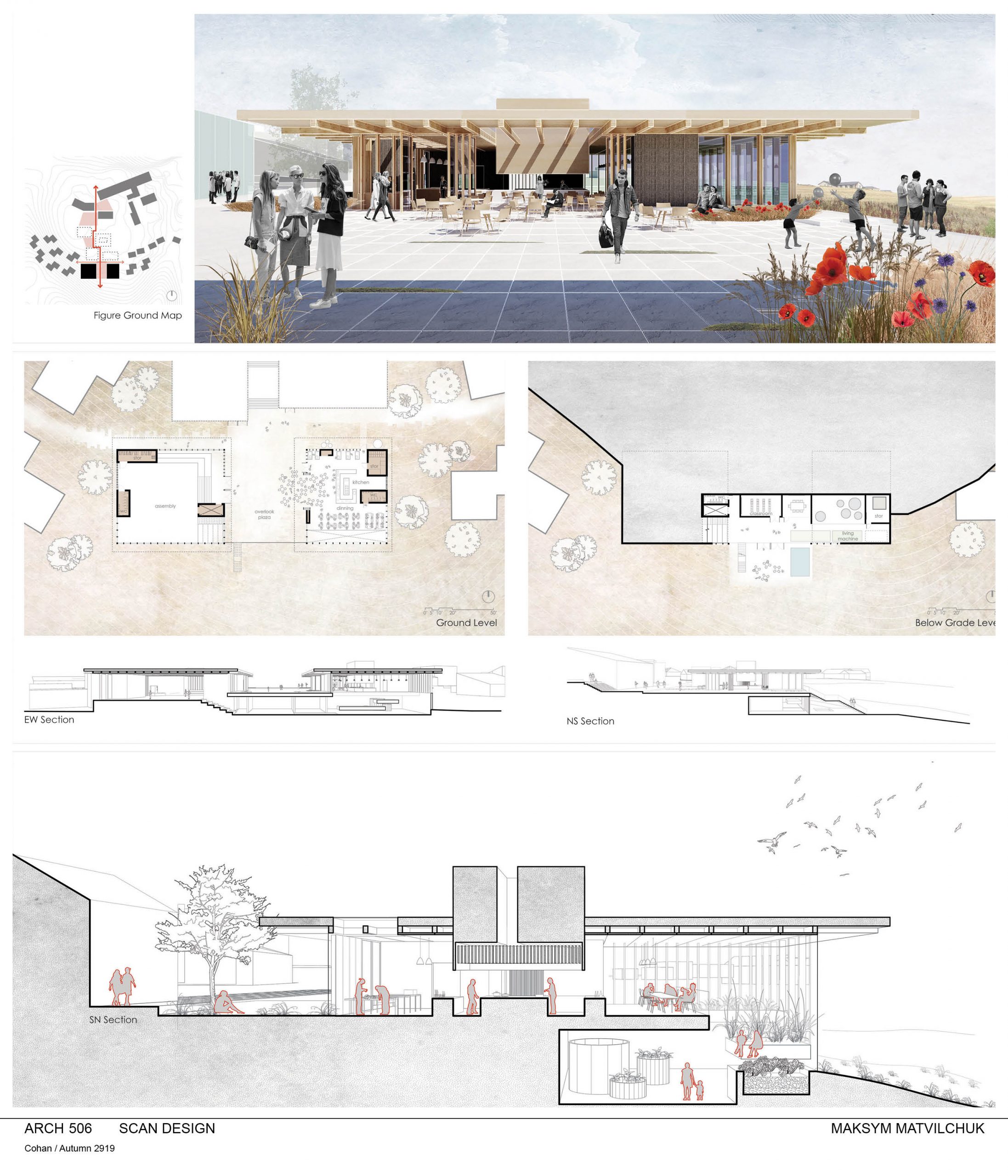
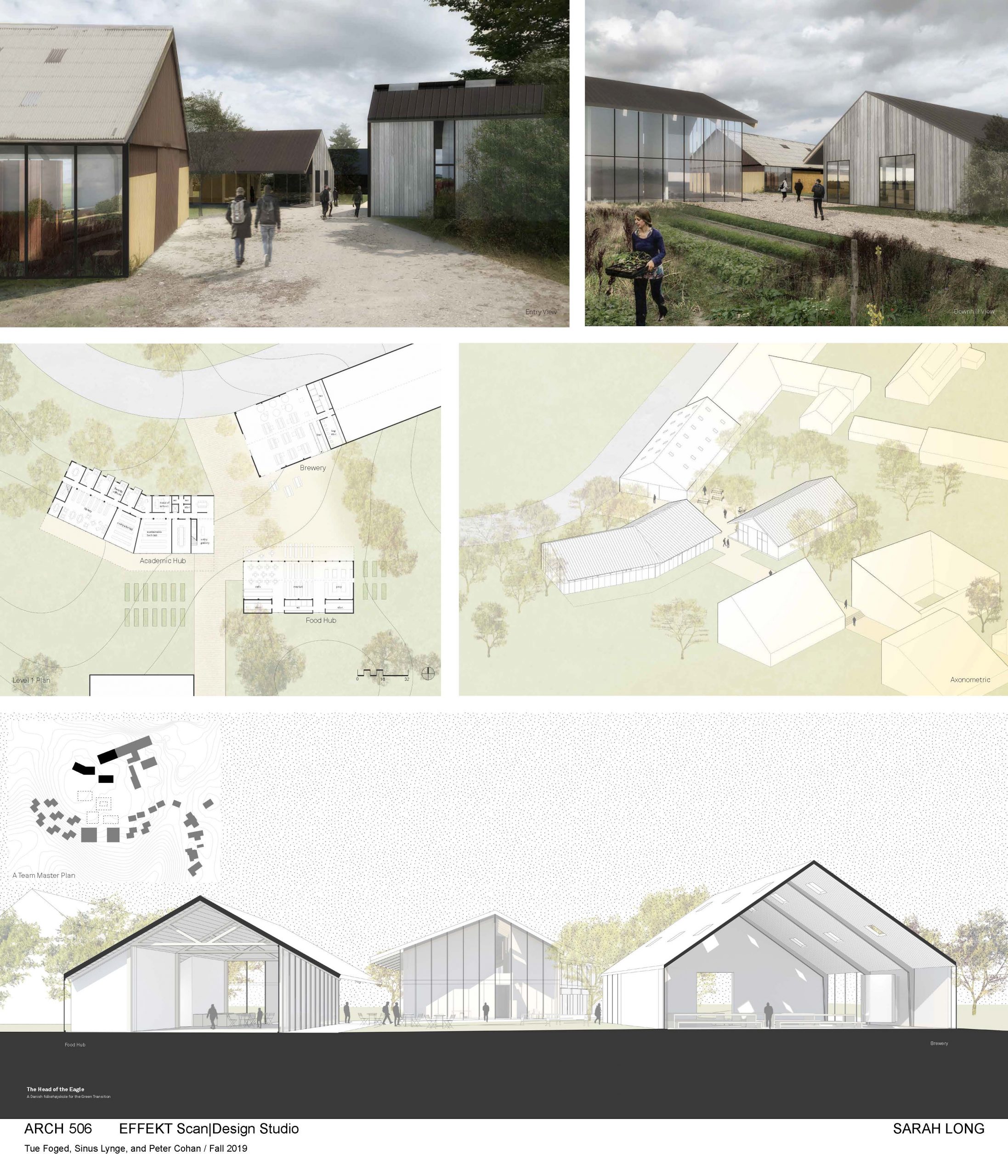
Scan Design/EFFEKT


Sinus Lynge and Tue Foged – EFFEKT Architects
Peter Cohan – UW Architecture
Autumn 2019

Course Description

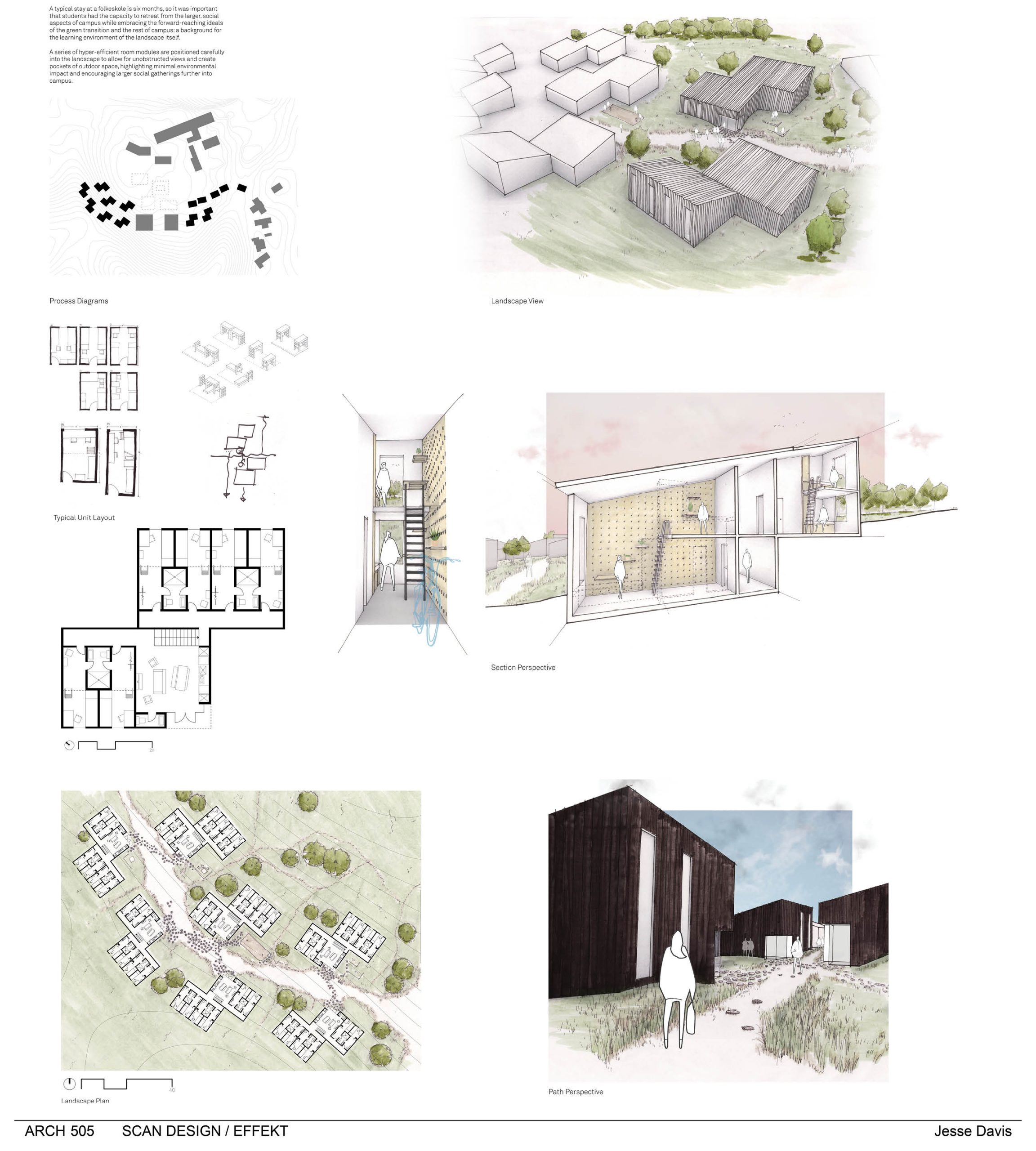
A Folkehøjskole for the Green Transition

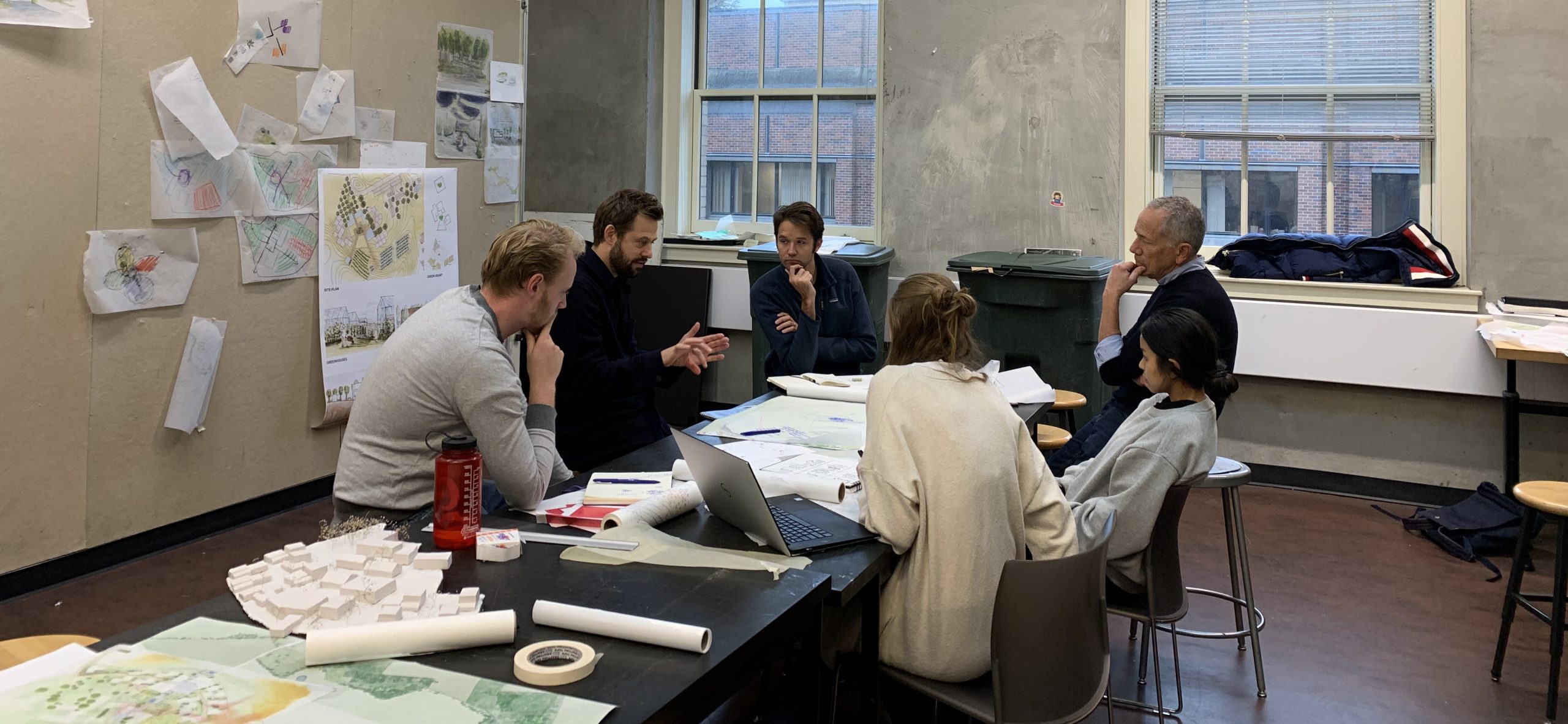
The primary objective for this studio is to develop design proposals for a real project that is currently in its early stages of development in the EFFEKT office. The client, Jakob Leth Fink, has asked EFFEKT to help him realize a vision for a new kind of Folk High School that will help Denmark move through the green transition to a sustainable and carbon-neutral future. The project is now in a critical phase in which there are still many unknown variables. With the exact site for the project yet to be determined and the program still being refined, this is an ideal opportunity to ask fundamental questions about such a critical  endeavor. What kinds of spaces and programs will be needed for this new school? How might they be configured to create an optimum learning environment?
In line with the spirit of EFFEKT projects such as the ReGen Villages, the Urban Village Project and Örestad Home, the studio is to be considered as a research project that has the possibility to provide valuable feedback for the client and EFFEKT in their effort to create a unique type of learning environment for the green transition. With that objective in mind, students are strongly encouraged to challenge conventions, explore radical ideas and push the envelope in their design explorations for this project.

Postive/Negative


Jennifer Dee, Kim Pham Autumn 2019

Course Description
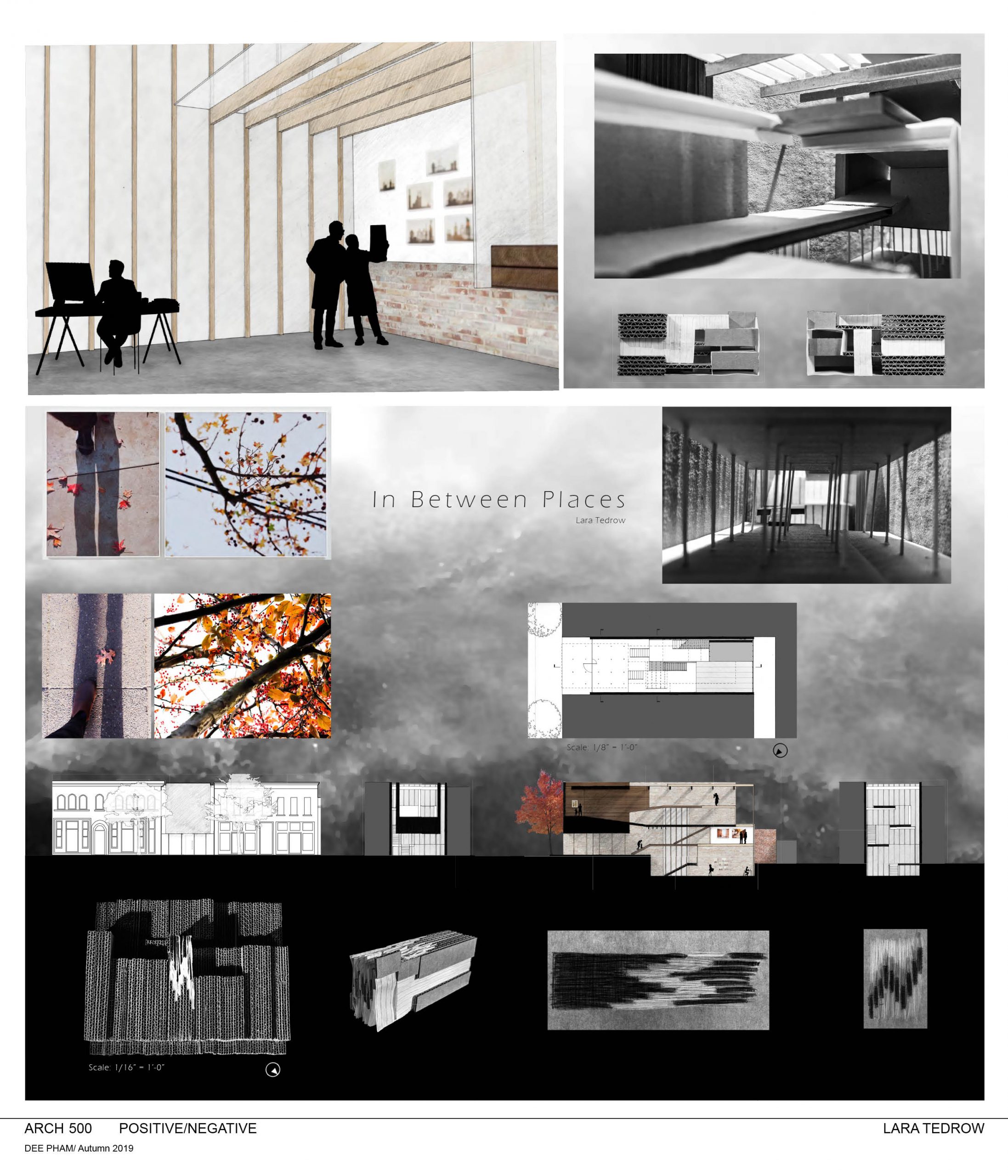
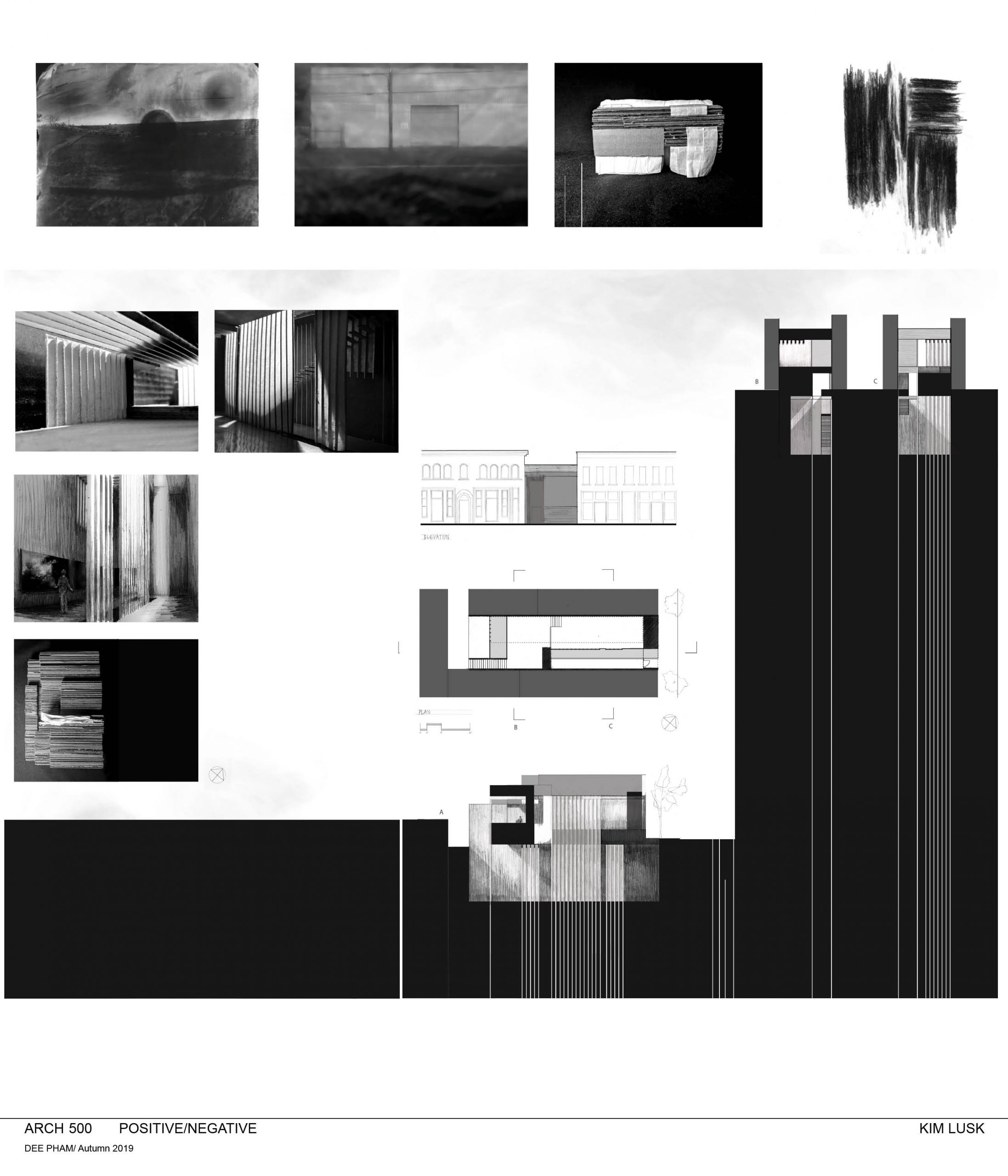
A photographer has purchased a 25′ X 100′ lot at 5223 Ballard Avenue NW, thus realizing a lifelong dream of constructing a place to make and exhibit photographic work on one site. This building will foster the photographer’s exploration of ideas and techniques of a particular photographer whose work has been inspirational, and will present the artist’s idea of image making to the public.

Students were challenged to go beyond the traditional graphic representations of the site – plan, section and elevation – each student individually analyzed the larger site context photographically. Students evoked the style of a particular photographer in documenting the neighborhood allowing for an unconventional way to explore the context of the site and draw inspiration for the resulting architecture.

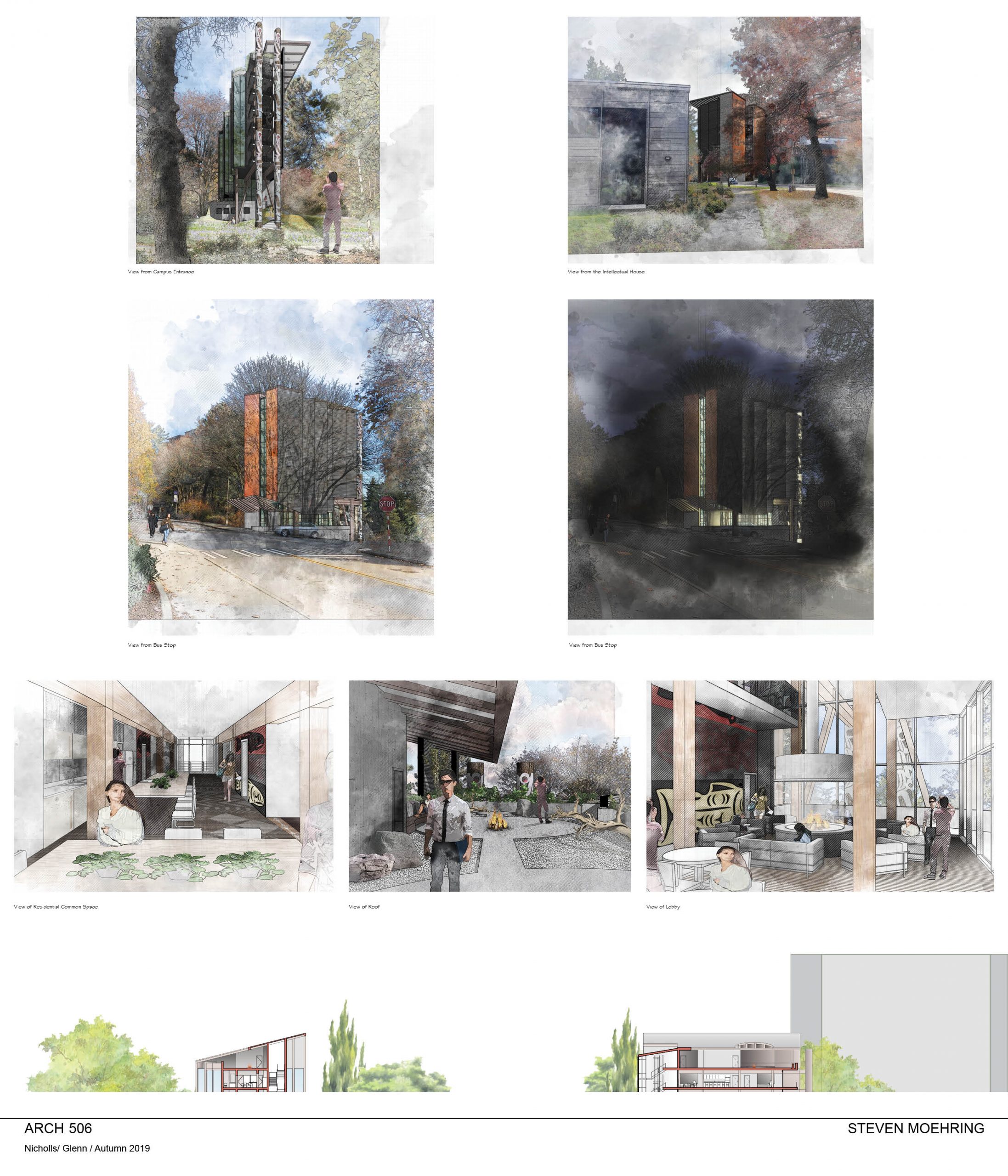
Seven Directions For Seven Generations

A Studio in NW Indigenous Architecture and Culture

Nicholls/Glenn Arch 506 Autumn 2019
Daniel Glenn – Seven Directions Architecture and Planning
Jim Nicholls – UW Architecture Department

Skokomish Community Center- Seven Directions Architecture

For generations, the UW campus area was the site of Indigenous villages. Forests were cut down, shorelines altered, food sources eliminated and cultures outlawed. A Native village, an ancestral home, became University Village, an affluent shopping mall.

The University now acknowledges that it exists on unceded territory. After years of colonization, reparation and reconciliation can begin. UW Intellectual House, a Native House of Knowledge, is a step towards that, the new Burke Museum, a Native House of Memory, will also be an asset in sharing knowledge. This studio proposes a Native House of Living for UW campus.

To support the presence of Native Cultures and Indigenous Life on Campus, a Native student housing and gathering space will provide a lost home and support center for Native students. A resident elder program will foster multigenerational exchange.

Studio time will be spent in close consultation with Native Students and Elders to determine the ideal program and campus location.

Comprehensive and integrated sustainability strategies will be showcased; mass timber will be utilized for structure. Multiple scales of social gather spaces will be nurtured and emphasized.


Urban Design Studio

.         
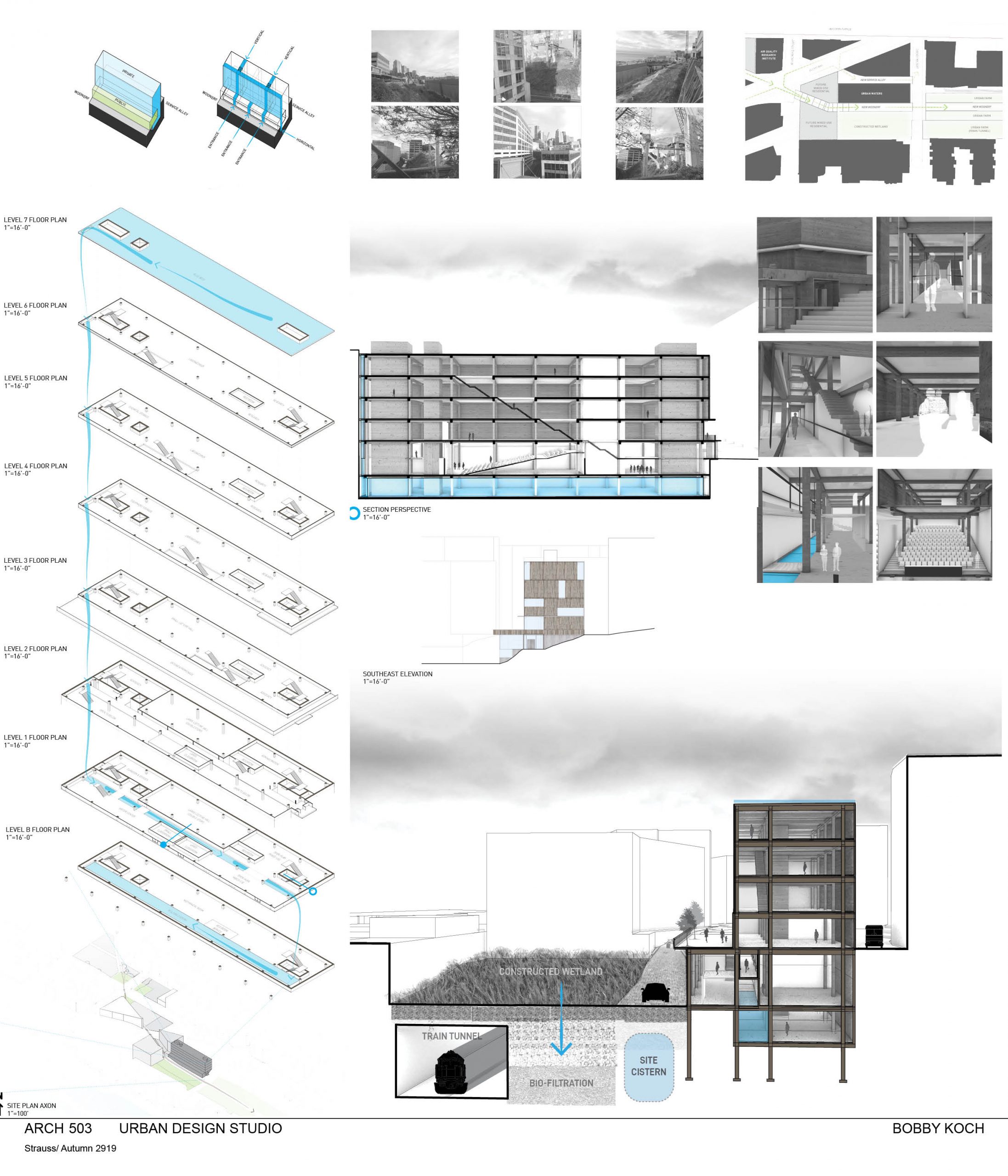
David Strauss Autumn 2019

Seattle Center for Urban Waters
A consortium of public agencies and private organizations are collaborating to develop a site along Western Avenue as a Center for Urban Waters. The site will contribute to advocacy for responsible approaches to water resources: drinking water, water for bathing, drainage and wastewater, streams, rivers, lakes and Puget Sound. The Center for Urban Waters Building will represent an institution focused on research and advocacy for water as a necessity and benefit to cities, globally. The activities of the Center will contribute to and demonstrate sustainable practices. The Building will also establish a place where the productive benefits of
responsible water policies are made apparent to the neighborhood and the entire city.

Mission: The Center for Urban Waters seeks to understand and raise awareness of the sources, pathways and impacts of chemical pollutants in urban waterways. The Center is dedicated to improving and safeguarding water quality throughout the Puget Sound region and, especially, within Seattle’s urban ecosystem. The Center aims to foreground water quality as a partner with other research institutions and advocacy organizations: urban water quality is fundamental to the social and environmental health of cities and the globe. The work of the Center for Urban Waters is familiar: analyzing water quality in water bodies and within the water distribution network. The Center also aims to display its work to the public to the greatest practical extent.

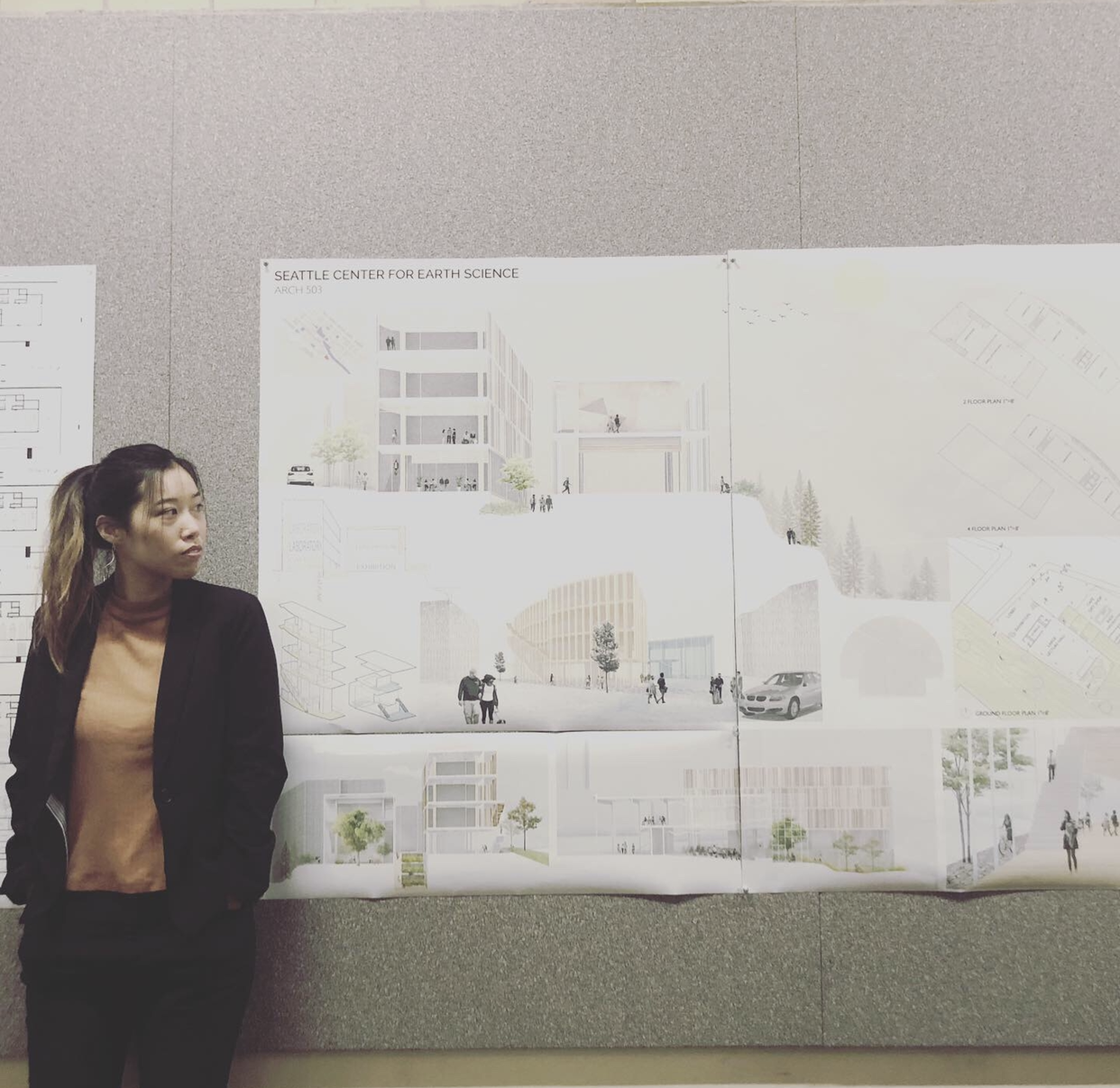
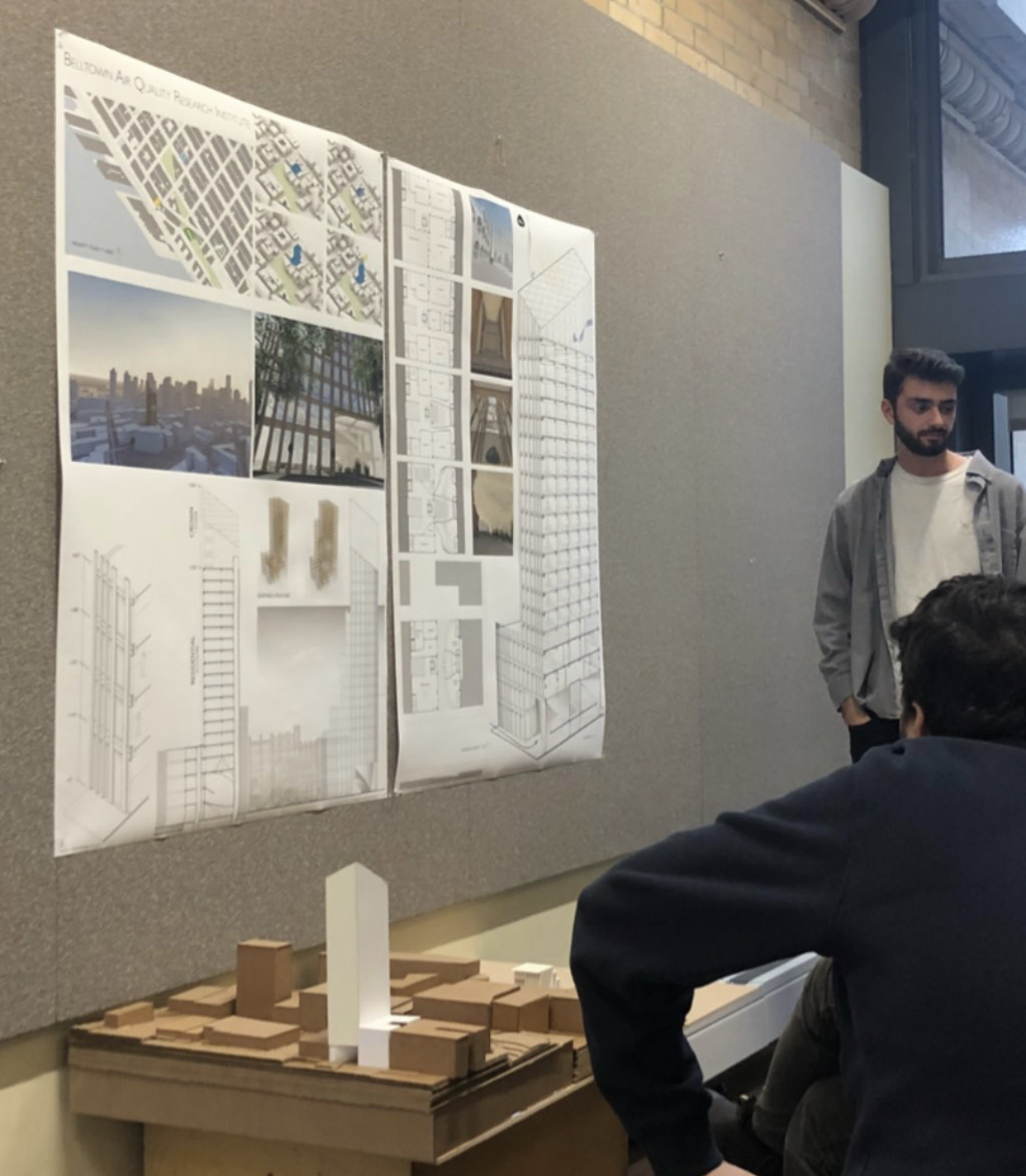
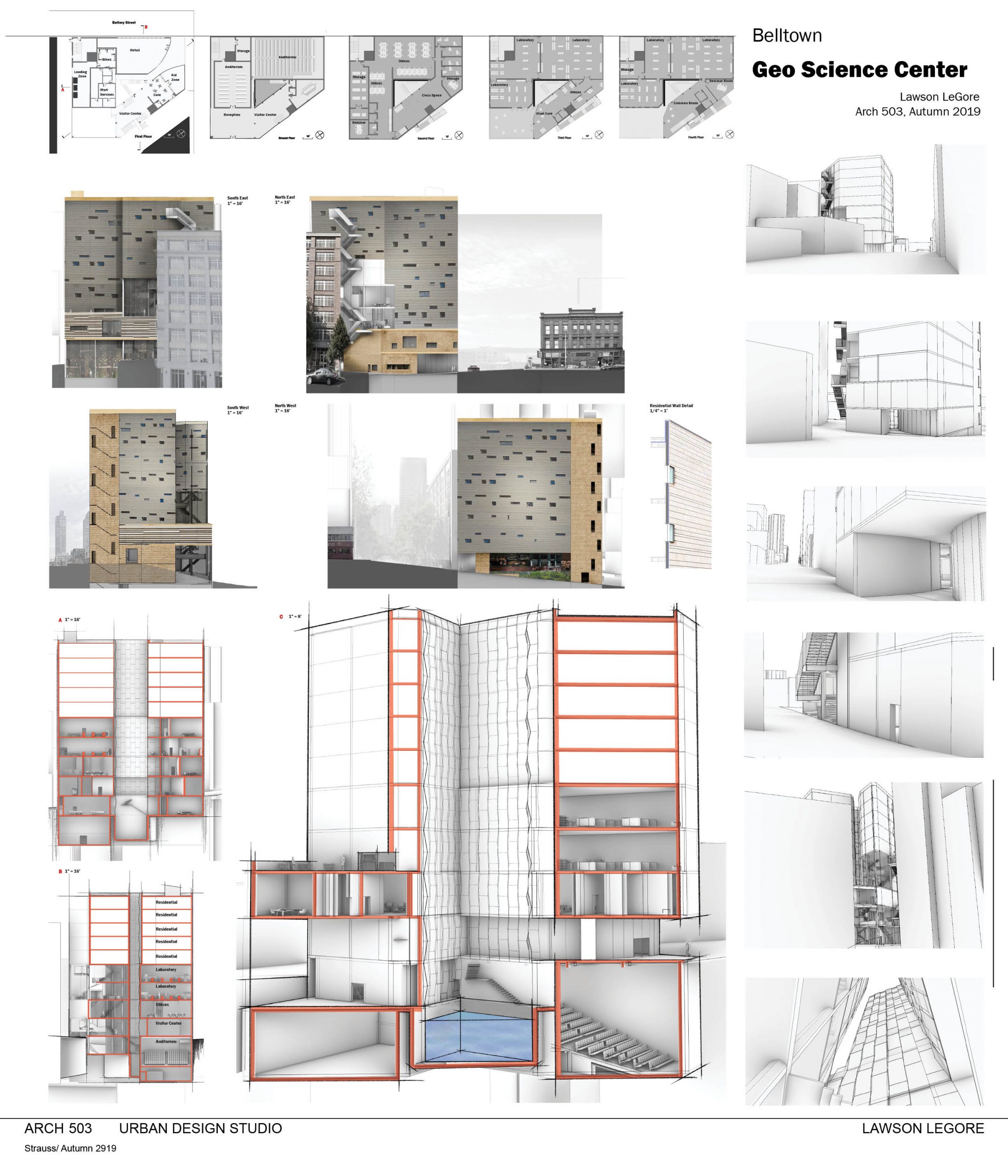
Seattle Center for Earth Science

A consortium of public agencies and private organizations are collaborating to develop a site in Belltown as a Center for Earth Science. The Center for Earth Science Building, part of a planned Urban Ecology District, will represent an institution focused on research and education concerned with earth’s surface and near surface: geology, soils, hydrology, seismology, volcanology, and glacier science. Seattle is an ideal spot for such an institution as it sits on land carved by glaciers, ringed by volcanoes, and susceptible to earthquakes and landslides. By working in collaboration with the Centers for Urban Waters, Energy and Environment, and Air Quality Research, The Center for Earth Science will emphasize how all earth’s systems are connected, and how to understand the past and future of the natural world in relation to the urban environment. For instance, topics of research might include how tides influence earthquakes, or how atmospheric carbon effects soil fertility. The activities of the Center will contribute to and demonstrate sustainable practices and study ways to mitigate climate change.

Mission: The Center for Earth Science seeks to study and demonstrate to the public how the earth’s surface and what is under the surface is not a static system, but a changing ecology that has profound influence on how we occupy it. The Center is dedicated to improving understanding of the forces that made and are making our world, especially in the Puget Sound region. The Center aims to partner with other research institutions and advocacy organizations to increase resiliency in the face of a changing world. The Center is especially committed to public outreach to a diverse audience and to the next generation.

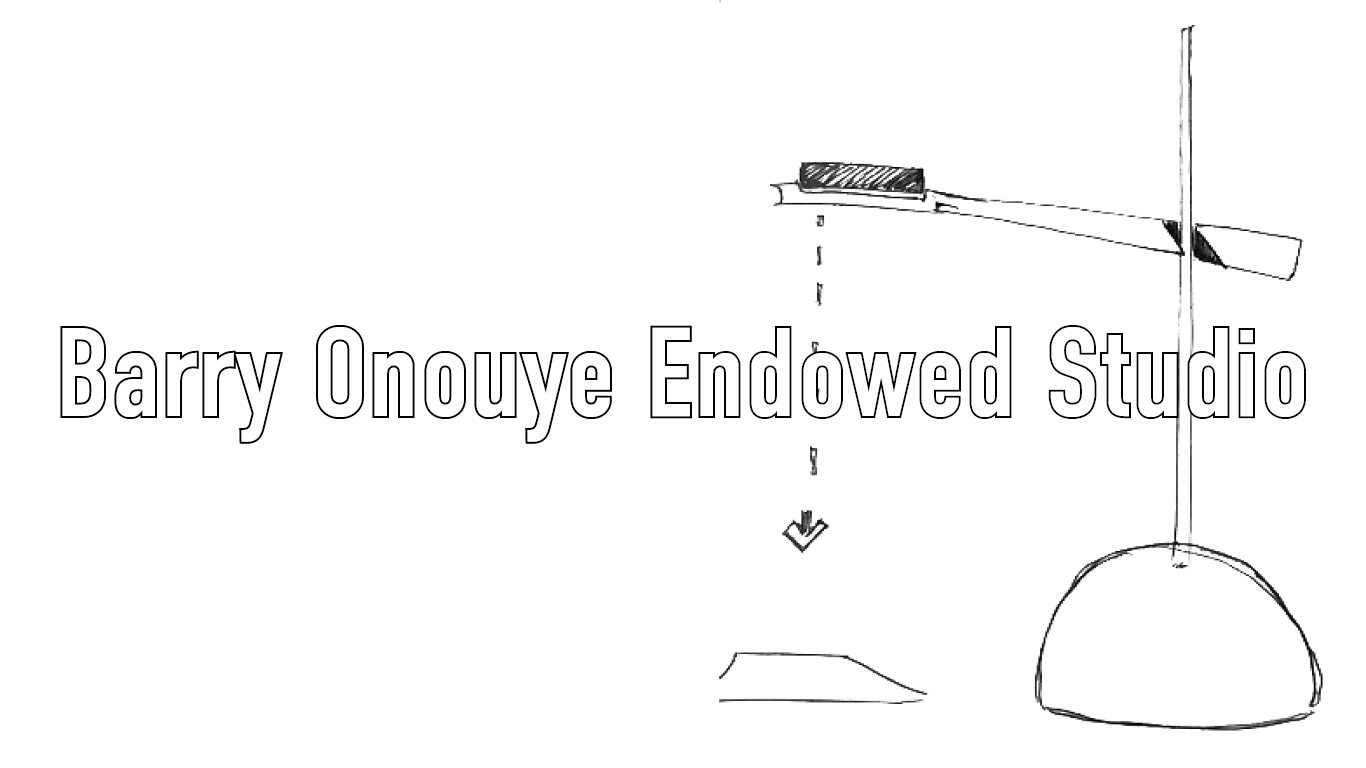
Barry Onouye Endowed Studio


The spring quarter has brought the unprecedented challenge of teaching studio completely online.  The Barry Onouye Endowed Studio annually highlights the intersection of architecture and structural engineering by constructing a pavilion-scale structure. This year, visiting chair Mitsuhiro Kanada and I were challenged to ensure each student could work effectively, and keep the hands-on, material/structural focus – despite limited contact and resources.

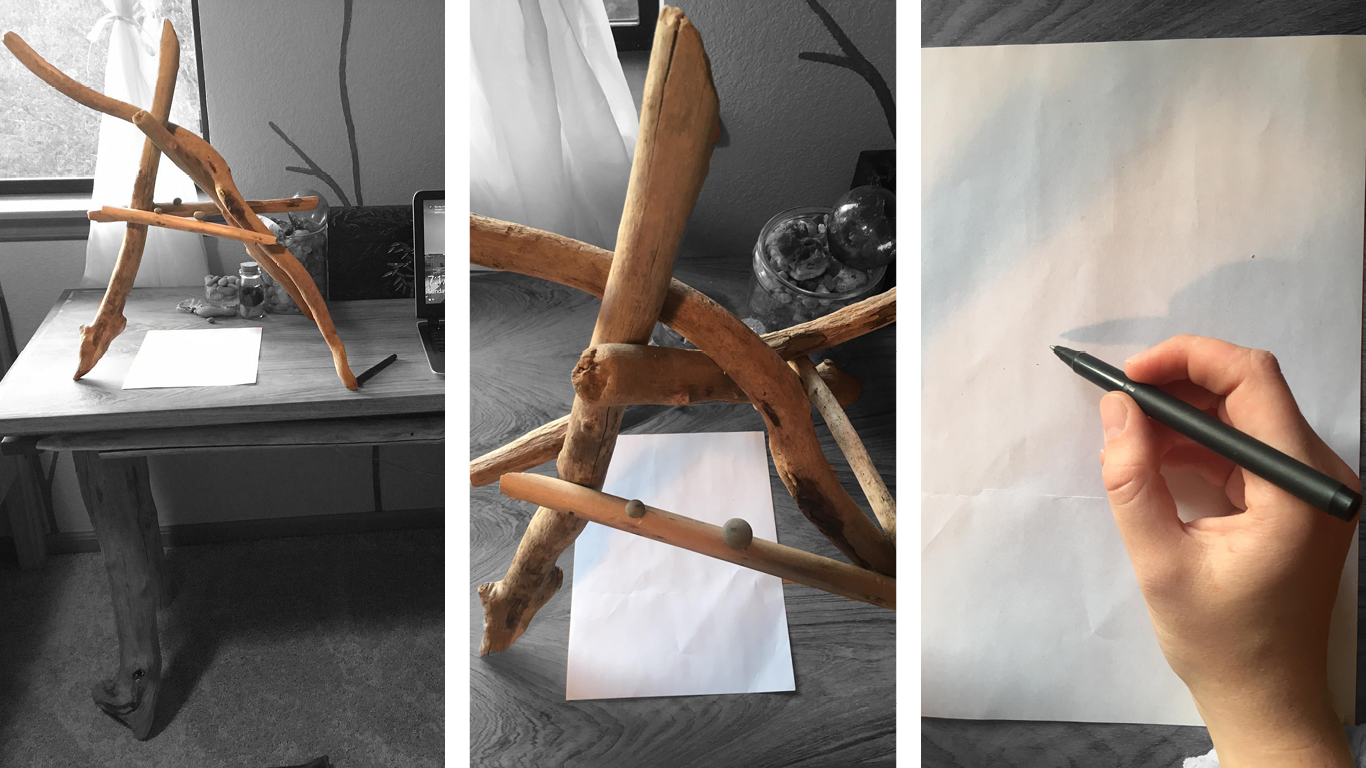
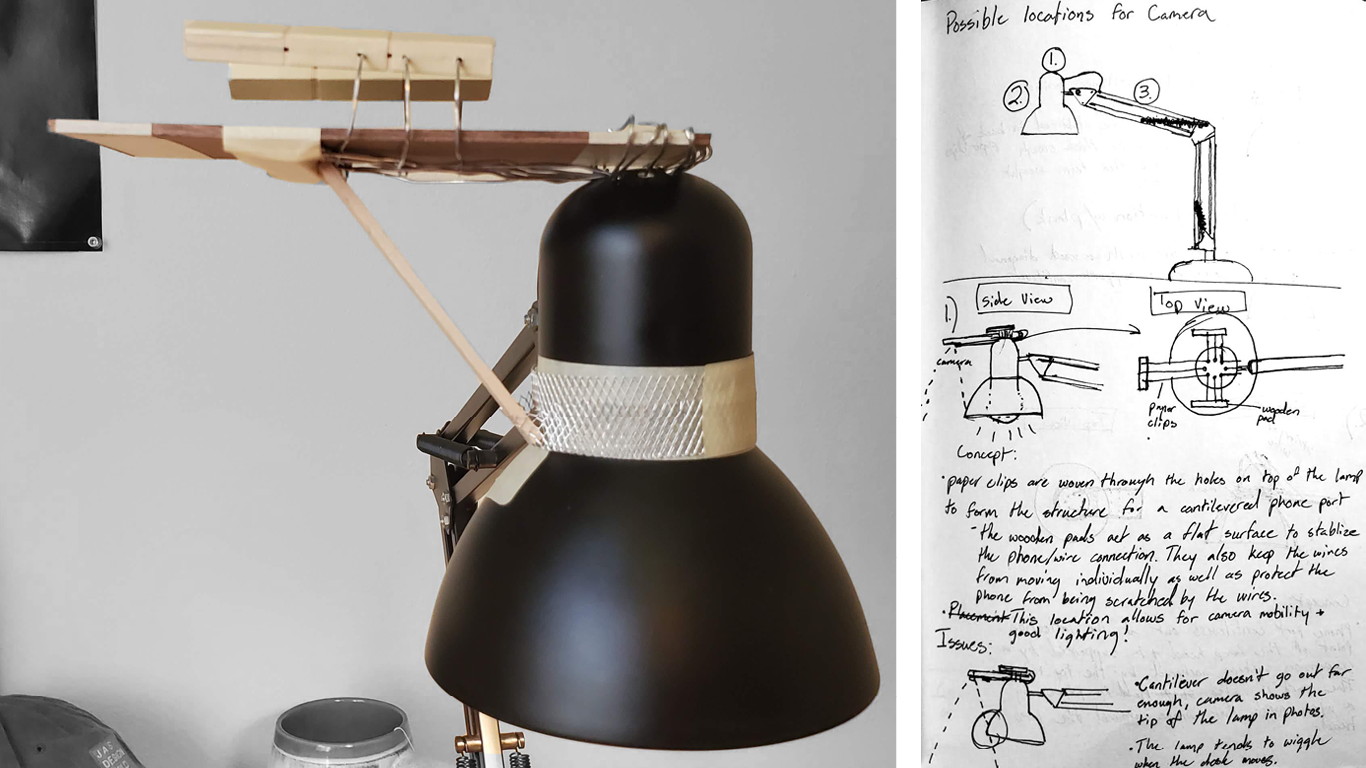
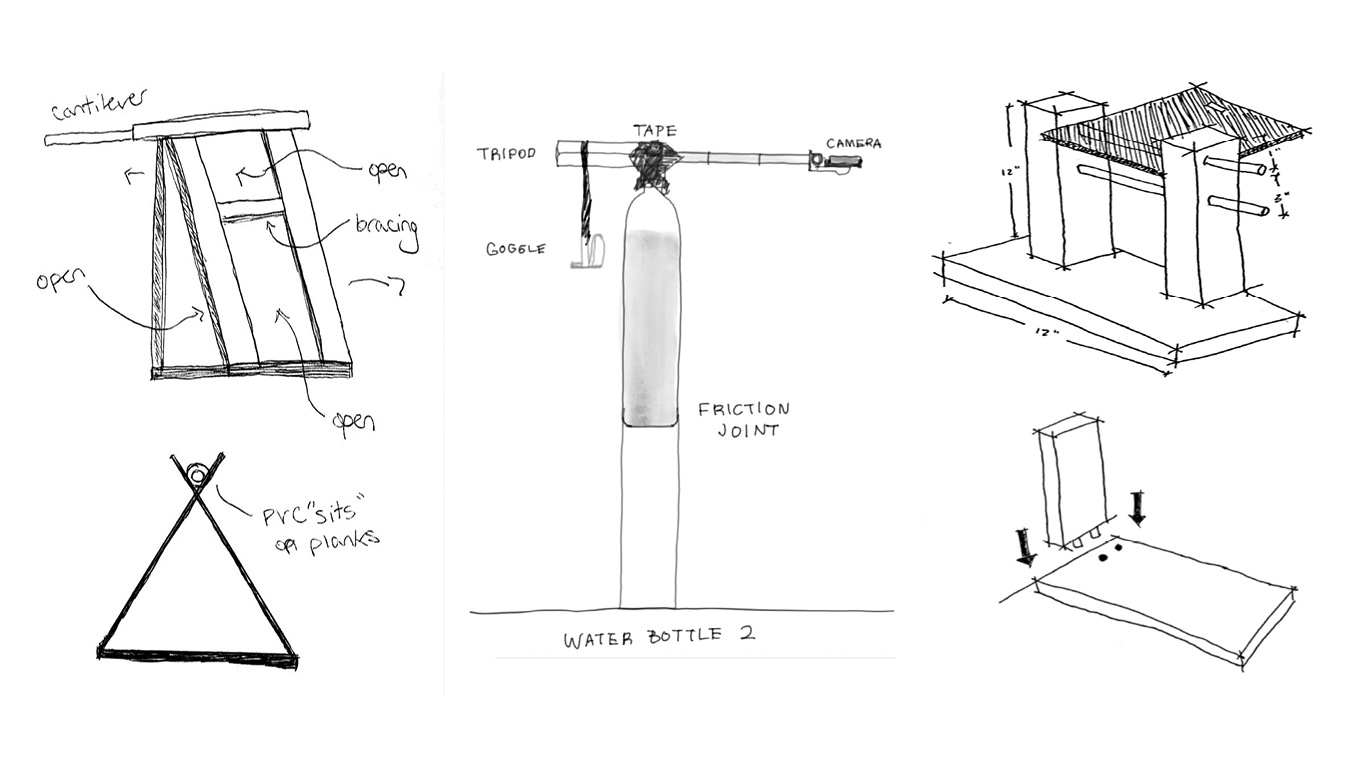
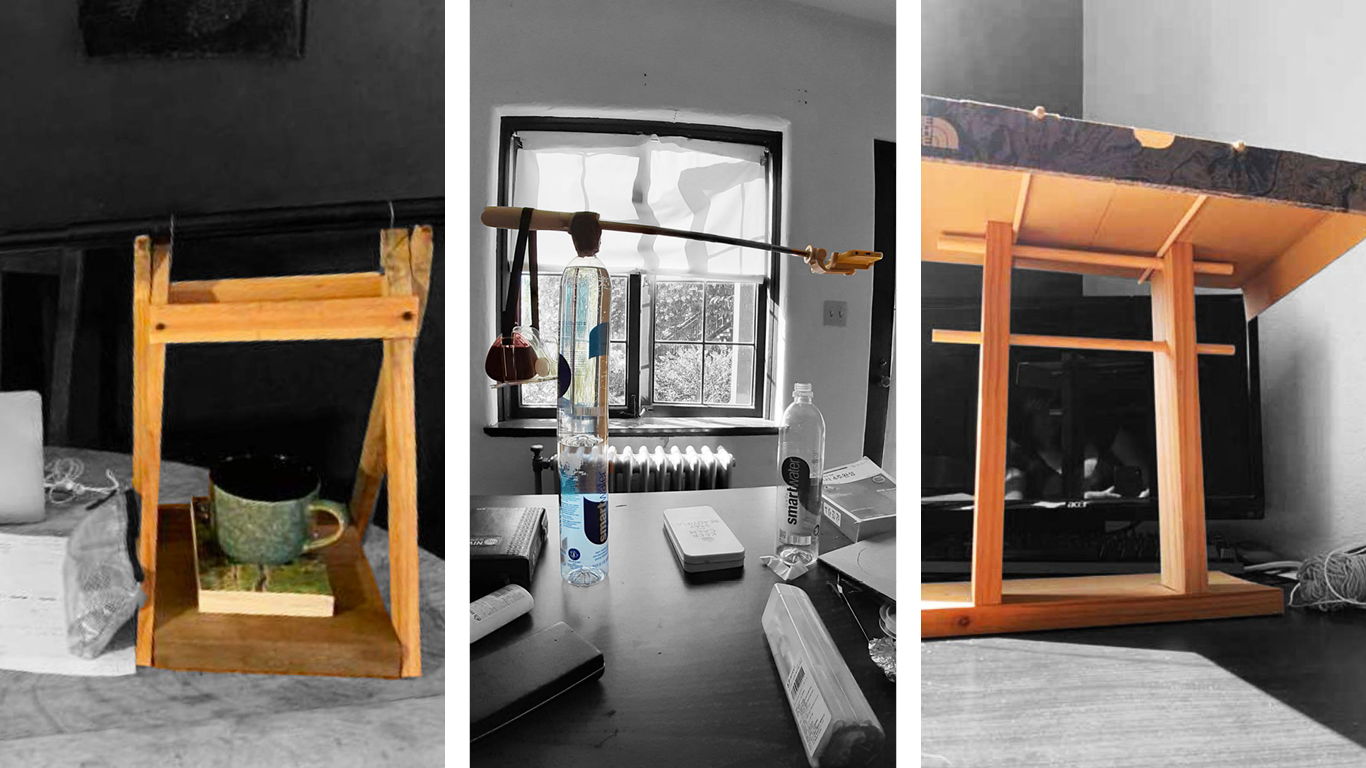
For our first exercise, each student was requested to make a phone/ camera-holding stand to allow for sharing sketches, active hand drawing, models and other physical objects. The design should suspend a camera above a flat desk surface.  By linking this camera into a Zoom account, students will be able to share their physical work during desk crits.

Becka Tova used drift-wood to create a camera holder that is both functional and beautiful.

This camera stand took a variety of forms, made of the material readily-available to the students (cardboard, wood, recycling, books, driftwood, string, etc.)  With weight to the camera and the need to move freely underneath, the objective was inherently structural.  Students had to choose – often intuitively – a structural strategy that matched their materials and specific space.

Avery Dehner used available objects like a desk lamp.

This exercise encouraged students to establish their ‘studio desk’ in their personal spaces for the quarter.  It also helped them consider how they will be working during the quarter, and then design an apparatus to assist them in this altered work environment.

Text by Associate Professor Tyler Sprague

Concept sketches from left to right: Isabella Boyd, Hyeeun Oh, Anna Murphy


Camera holders from left to right: Isabella Boyd, Hyeeun Oh, Anna Murphy


Seattle Exposed Studio

Studio Description: 

The built environment influences our lives and interactions, but whose values are actually reflected in the spaces and places we move through and inhabit each day? Who has been included or excluded from the development of neighborhoods, public buildings and spaces? 

Students in this studio examined key moments in Seattle’s development and document the ways in which certain values, societal structures, and needs have shaped the city over time. More importantly, students identified omissions and gaps within the city’s current physical structure, where alternative histories, “other” experiences and voices are absent or underrepresented. Students developed architectural proposals that reveal and built on these invisible histories and stories in order to educate and inspire Seattle’s current and future inhabitants, as well as visitors to the city. 


Images 1-4  Adrian Arief

Images 5-8   Tova Beck

Images 9-12  Clayton Cahaya

Images 13-16 Camille Fain

Project description by student:

“The International District Wellness Workshop provides a safe place for the community to come learn about and take care of their bodies. The facility houses a learning resource center for wellness education as well as activity spaces for physical connections with one’s health. The existing garden extends onto the roof of the building which wraps around to the central courtyard below.”

Reimagined Industrial Lands

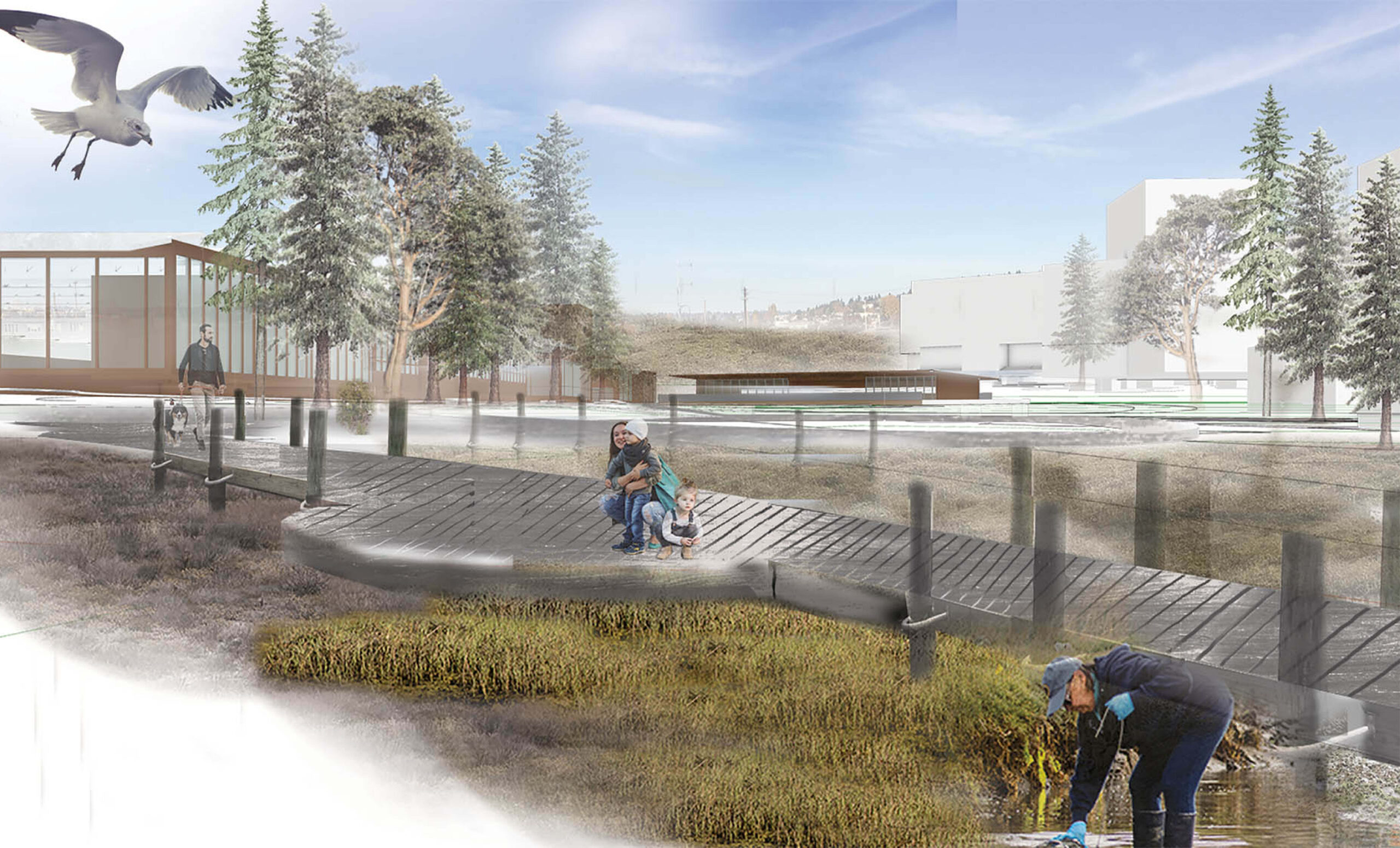
During the Autumn 2019 quarter, an interdisciplinary group of Built Environments students participated in a studio boldly envisioning transit oriented development and the future use of Seattle’s industrial lands. Co-taught by Associate Professor Rick Mohler (Architecture) and Affiliate Instructor David Blum (Urban Design and Planning), the studio considered the creation of a new neighborhood  in the Interbay area, northwest of downtown and connected via future light rail stations. Students worked in groups to imagine and develop visions for this new neighborhood, with proposals ranging from the restoration of tidal plains to the creation of hybrid land-use mixing residential and industrial building types. This studio challenged students to work together to imagine innovative and feasible concepts for Seattle’s future neighborhoods.

Click here to see a full post about this innovative studio.

The images featured here are the work of two interdisciplinary teams of students:

Images 1-5  Project: Eco Bay

Students: Eddie Kim, Sarah Lukins, Siiri Mikola, Miggi Wu

Eco Bay project description from students:

“This project defines maximum public benefit as an integrated mix of flexible industrial space, a vibrant pedestrian realm, a range of housing types and a robust response to sea level rise that provides unique outdoor spaces within Seattle.”

Images  6-10 Project: Convergence

Students: Tristan Hogenstijn, Alicia Kellogg, Tera Ponce, Daniel Vu 

Convergence project description from students:

“Part of a multidisciplinary BE studio led by Rick Mohler. Team members: Tristan Hogenstijn (Urban Planning exchange student from the Netherlands), Alicia Kellogg (MLArch), Tera Ponce (BArch), and Daniel Vu (MArch). The team represents 7 languages spoken, a wide variety of skills and expertise, but also uniform vision to create an Interbay neighborhood that has its own identity, self-sufficiency, urban density, industrial job opportunities, and attraction to visitors.”

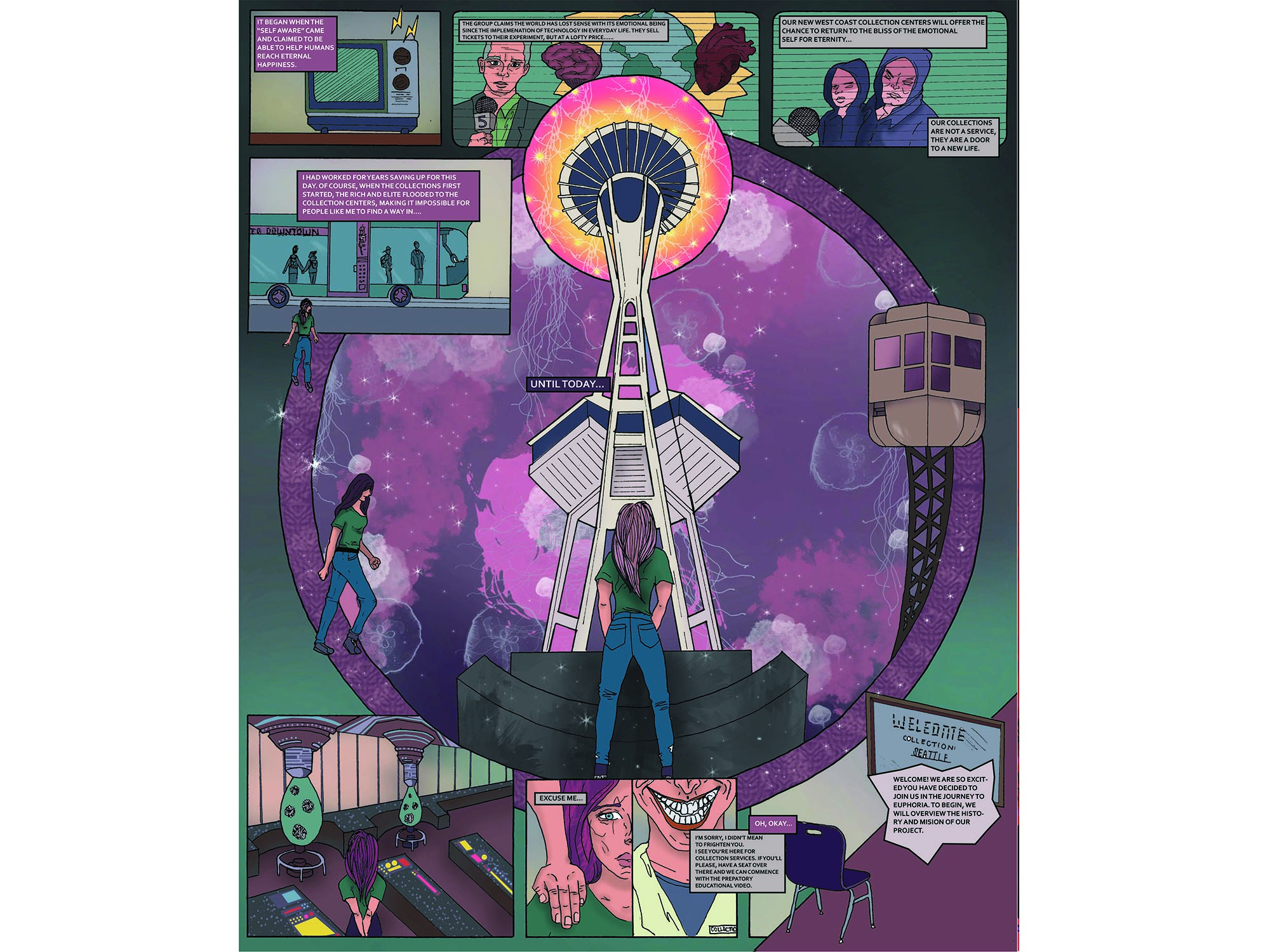
Seattle Science Fiction

julianneminnick_arch401_finalposter

The Comprehensive Plan SEATTLE 2035 is: “A 20-year vision and roadmap for Seattle’s future. Our plan guides City decisions on where to build new jobs and houses, how to improve the transportation system, and where to make capital investments such as utilities, sidewalks, and libraries. The Comprehensive Plan is the framework for most of Seattle’s big-picture decisions on how to grow while preserving and improving neighbor-hoods.” Basing its plan on the data of demographic, social, economic, and environmental change, the city’s office of urban planning extrapolates from facts to create a vision of Seattle’s urban future.

This studio asked what if designers don’t base design on given facts but on speculative fiction? What if we don’t begin by analyzing present conditions to predict future settings but start by imagining future possibilities – however fantastic – to reveal our hopes, dreams, and desires? What if we translate our imaginaries into architectural design, into a project of social, cultural and environmental change? In this studio students used a variety of science fiction and fantasy movies, suggested and self-selected, to learn from their imaginativeness, from their narrative strategies, from their visionary and visual powers — to rethink design strategies for Downtown Seattle.

The ASUW Shell House


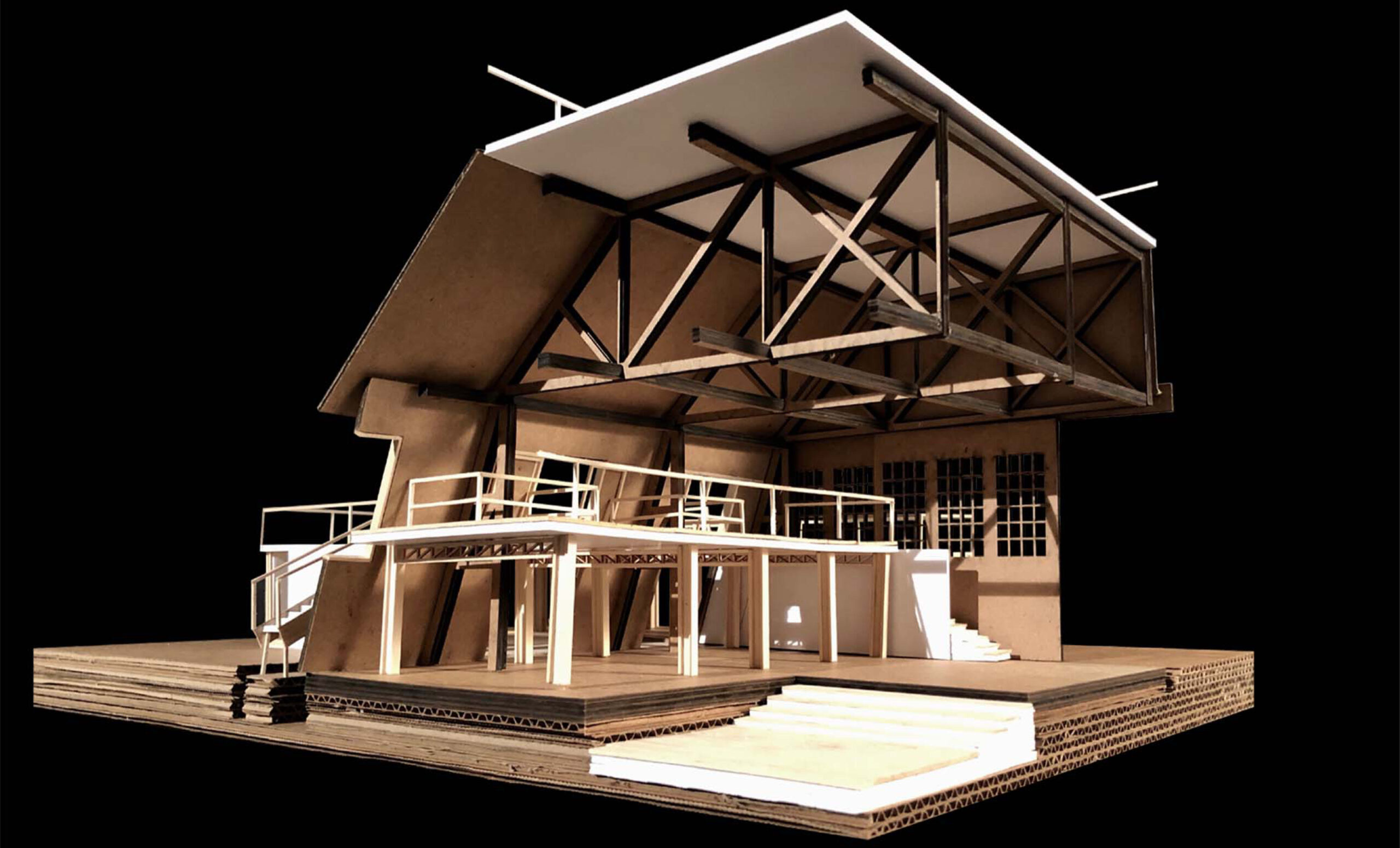
This studio focused on the creative adaptive reuse of one of the UW campus’s most iconic- yet unknownbuildings – the ASUW Shell House. Highlighted in the award winning book (and soon to be feature film), The Boys in the Boat: Nine Americans and Their Quest for Gold at the 1936 Olympics, the ASUW Shell House was first built in 1918 by the U.S. Navy during World War I on a site that was an important location for indigenous tribes, especially for local waterway connections across Lake Washington. This was a time when the UW campus was activated as a military zone and the building was to be used as a seaplane hangar, yet it was never used and was transformed into the home for UW crew from 1918-1974. It also was the location of the shell-building shop of world-class designers and builder George Yeoman Pocock, who was recruited to build racing shells for the team in 1912 before the war. For the next half century, nearly every collegiate and sport rowing program in America used wooden shells and oars built by Pocock that were constructed out of his shop in the UW Shell House.

ASUW Shell House renovation is currently in the beginning phase of fundraising and schematic design, therefore students have been working on imagining the site for uses by all communities; public use, student spaces, historic exhibits and landscape connections to the water and campus. As the first Seattle Landmark on the UW Campus, we will also explore these implications, yet will investigate all creative pathways to design a vibrant, connected, functional, building that will connect its rich history to the future of the UW Campus.